Aluminum Composite Panel Market Research Report 2033

Aluminum Composite Panel Market Research Report 2033

Segments - by Product Type (Polyethylene Core, Fire-Resistant Core, Others), by Application (Building & Construction, Advertising Boards, Transportation, Industrial, Others), by Coating Type (Polyvinylidene Fluoride (PVDF), Polyester, Laminating Coating, Oxide Film, Others), by Panel Type (Exterior, Interior)

https://growthmarketreports.com/Raksha
Author : Raksha Sharma
https://growthmarketreports.com/Vaibhav
Fact-checked by : V. Chandola
https://growthmarketreports.com/Rucha
Editor : Rucha Phatak

Upcoming | Report ID :CM-726 | 4.4 Rating | 95 Reviews | 261 Pages | Format : Docx PDF

Report Description


Aluminum Composite Panel Market Outlook

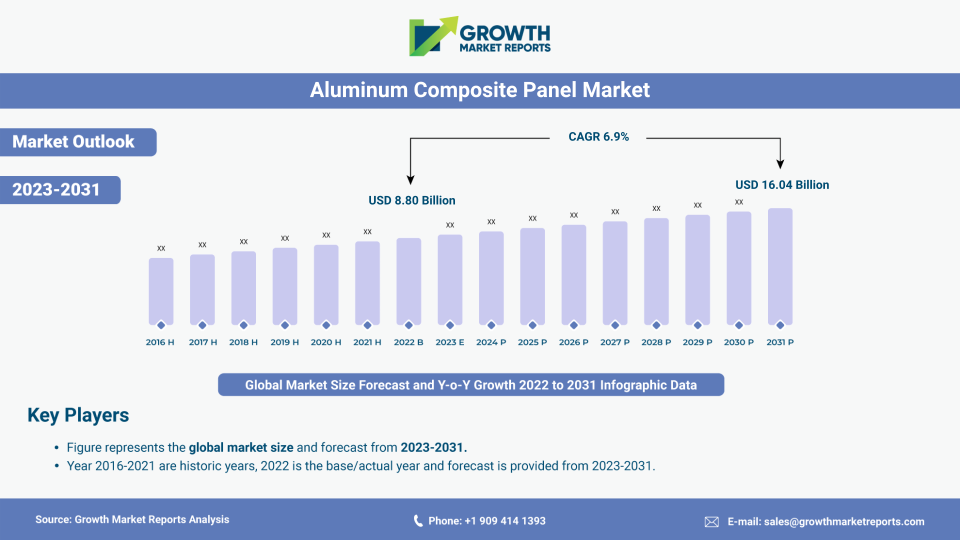
According to our latest research, the global Aluminum Composite Panel (ACP) market size stood at USD 7.8 billion in 2024, reflecting robust demand across diverse end-user industries. The market is expected to expand at a CAGR of 6.3% between 2025 and 2033, reaching an estimated USD 13.5 billion by 2033. This significant growth is propelled by the increasing adoption of ACPs in modern architecture, infrastructural developments, and a rising focus on sustainable and energy-efficient building materials. As per our comprehensive market analysis, the surge in urbanization, coupled with government initiatives for smart cities and green buildings, remains a primary growth catalyst for the global aluminum composite panel market.

One of the key growth factors driving the aluminum composite panel market is the escalating demand for aesthetically pleasing and durable construction materials in both residential and commercial sectors. ACPs offer a unique blend of lightweight properties, high structural rigidity, and exceptional surface flatness, making them ideal for innovative architectural designs. The increasing trend of high-rise buildings and the need for cost-effective cladding solutions have further fueled the adoption of aluminum composite panels. Additionally, the versatility in design, availability in a wide range of colors and finishes, and ease of fabrication and installation are encouraging architects and builders to prefer ACPs over traditional materials such as stone or concrete. The global shift towards energy-efficient and sustainable construction practices, coupled with stringent environmental regulations, is also prompting manufacturers to develop eco-friendly ACPs, thus broadening the market scope.

The rapid industrialization and infrastructural development in emerging economies, particularly in the Asia Pacific region, are contributing significantly to the expansion of the aluminum composite panel market. Countries like China, India, and Southeast Asian nations are witnessing a surge in investments in commercial real estate, transportation infrastructure, and public amenities. ACPs are increasingly being used for exterior cladding, interior partitions, signage, and advertising boards due to their superior weather resistance, fire-retardant properties, and low maintenance requirements. Furthermore, the growing awareness about the benefits of ACPs, including their recyclability and environmental compatibility, is driving their penetration into new application areas such as transportation and industrial sectors. The adoption of advanced coating technologies and innovative core materials is also enhancing the performance characteristics of ACPs, thereby attracting a larger customer base.

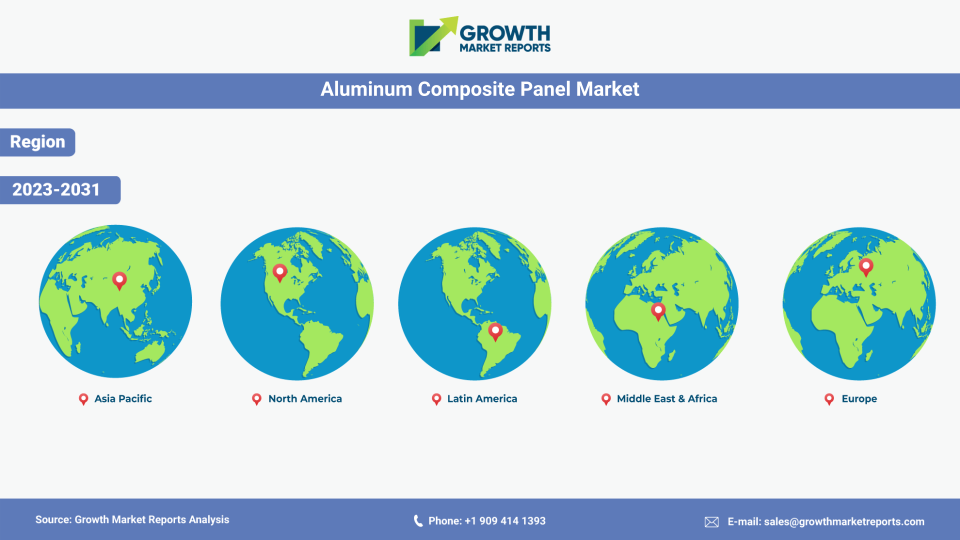
From a regional perspective, Asia Pacific holds the largest share in the global aluminum composite panel market, accounting for over 48% of the total revenue in 2024. This dominance is attributed to rapid urbanization, government investments in infrastructure, and the presence of leading ACP manufacturers in the region. North America and Europe are also significant markets, driven by stringent building codes, the emphasis on fire safety, and the demand for energy-efficient construction materials. Latin America and the Middle East & Africa are emerging as promising markets, supported by increasing construction activities and rising disposable incomes. The regional outlook indicates that Asia Pacific will continue to be the growth engine for the ACP market, with a CAGR surpassing 7% during the forecast period, while other regions are expected to witness steady growth fueled by technological advancements and evolving consumer preferences.

Global Aluminum Composite Panel Industry Outlook

Product Type Analysis

The aluminum composite panel market by product type is primarily segmented into Polyethylene Core, Fire-Resistant Core, and Others. Polyethylene core ACPs have traditionally dominated the market due to their lightweight nature, cost-effectiveness, and ease of fabrication. These panels are widely used in interior applications and signage, where fire resistance is not a critical requirement. However, the increasing focus on building safety and compliance with fire regulations has led to a surge in demand for fire-resistant core ACPs. These panels, typically made with mineral-filled cores, provide enhanced fire retardancy, making them suitable for exterior cladding and high-rise buildings. The "Others" segment includes innovative core materials such as honeycomb and foam, which are gaining traction for specialized applications requiring superior mechanical properties and insulation.

Polyethylene core aluminum composite panels continue to be the preferred choice for cost-sensitive projects, particularly in emerging markets where regulatory requirements are less stringent. Their flexibility, easy machinability, and availability in a variety of finishes make them ideal for creative architectural solutions. However, concerns regarding fire safety have prompted several countries to impose restrictions on the use of polyethylene core ACPs in certain applications, thereby influencing market dynamics. Manufacturers are increasingly investing in research and development to enhance the fire performance of these panels without compromising on cost or aesthetics.

Fire-resistant core ACPs are witnessing robust growth, especially in developed regions such as North America and Europe, where building codes mandate the use of non-combustible materials for façade applications. These panels are engineered to limit the spread of flames and reduce smoke emission, thereby ensuring occupant safety in the event of a fire. The adoption of fire-resistant core ACPs is further supported by insurance companies and regulatory authorities, who are advocating for safer building materials. As a result, this segment is expected to register the highest CAGR during the forecast period, outpacing polyethylene core panels in revenue contribution in several key markets.

The "Others" category, encompassing advanced core materials like honeycomb and foam, is gradually gaining market share as end-users seek enhanced performance attributes such as improved insulation, sound attenuation, and impact resistance. These panels are particularly favored in transportation and industrial applications, where weight reduction and durability are critical. The ongoing innovation in core materials, driven by the need for sustainable and high-performance solutions, is expected to create new growth avenues for the aluminum composite panel market. Manufacturers are also exploring the use of recycled and bio-based materials to align with global sustainability goals and cater to environmentally conscious customers.

Report Scope

Attributes Details
Report Title Aluminum Composite Panel Market Research Report 2033
By Product Type Polyethylene Core, Fire-Resistant Core, Others
By Application Building & Construction, Advertising Boards, Transportation, Industrial, Others
By Coating Type Polyvinylidene Fluoride (PVDF), Polyester, Laminating Coating, Oxide Film, Others
By Panel Type Exterior, Interior
Regions Covered North America, Europe, APAC, Latin America, MEA
Countries Covered North America (United States, Canada), Europe (Germany, France, Italy, United Kingdom, Spain, Russia, Rest of Europe), Asia Pacific (China, Japan, South Korea, India, Australia, South East Asia (SEA), Rest of Asia Pacific), Latin America (Mexico, Brazil, Rest of Latin America), Middle East & Africa (Saudi Arabia, South Africa, United Arab Emirates, Rest of Middle East & Africa)
Base Year 2024
Historic Data 2018-2023
Forecast Period 2025-2033
Number of Pages 261
Number of Tables & Figures 375
Customization Available Yes, the report can be customized as per your need.

Application Analysis

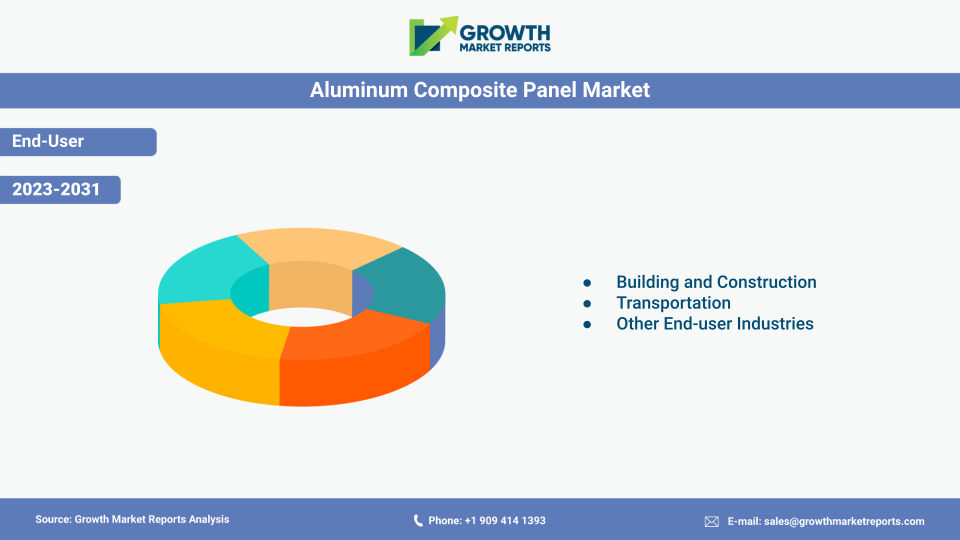
The application landscape of the aluminum composite panel market is diverse, encompassing Building & Construction, Advertising Boards, Transportation, Industrial, and Others. The Building & Construction segment remains the largest application area, accounting for more than 62% of the total market revenue in 2024. ACPs are extensively used for exterior cladding, curtain walls, roofing, and interior partitions in both residential and commercial buildings. Their ability to provide a modern aesthetic, combined with durability, weather resistance, and low maintenance, has made them a material of choice for architects and developers worldwide. The growing trend of sustainable and energy-efficient buildings is further boosting the adoption of ACPs in this segment.

Advertising boards represent another significant application, leveraging the lightweight, smooth surface, and vibrant finish of ACPs to create eye-catching signage and displays. The rapid expansion of the retail and hospitality sectors, coupled with increasing investments in outdoor advertising, is driving the demand for ACP-based advertising boards. These panels offer excellent printability, UV resistance, and ease of installation, making them ideal for both temporary and permanent signage solutions. The ability to customize ACPs in terms of color, thickness, and finish allows advertisers to create impactful visual communications that enhance brand visibility.

In the transportation sector, aluminum composite panels are gaining traction for use in vehicle bodies, railway coaches, and ship interiors. The lightweight nature of ACPs contributes to fuel efficiency and reduces overall vehicle weight, while their durability and resistance to corrosion ensure longevity in harsh operating environments. The increasing focus on lightweighting and sustainability in the automotive and aerospace industries is expected to drive further adoption of ACPs in transportation applications. Additionally, the use of ACPs in public transport infrastructure, such as metro stations and airport terminals, is on the rise, supported by government investments in modernizing transportation networks.

Industrial applications of ACPs include cleanroom partitions, machine enclosures, and protective barriers, where their chemical resistance, ease of cleaning, and structural stability are highly valued. The "Others" segment encompasses innovative uses of ACPs in areas such as furniture, modular kitchens, and exhibition stands. The versatility of aluminum composite panels, combined with ongoing product innovations, is enabling their penetration into new and emerging application areas. As industries continue to prioritize efficiency, aesthetics, and sustainability, the application spectrum of ACPs is expected to broaden further, driving overall market growth.

Coating Type Analysis

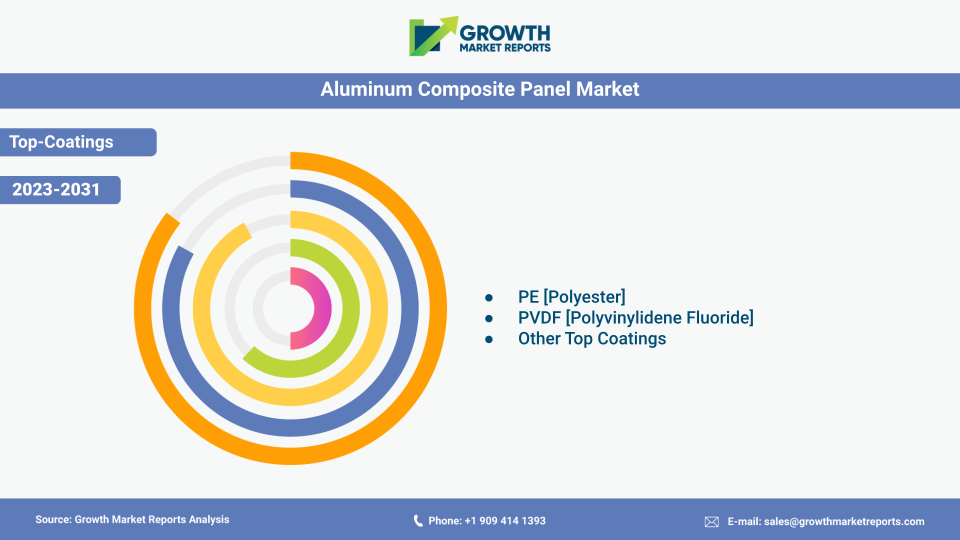
The aluminum composite panel market is segmented by coating type into Polyvinylidene Fluoride (PVDF), Polyester, Laminating Coating, Oxide Film, and Others. PVDF-coated ACPs are the most widely used, particularly for exterior applications, due to their superior resistance to UV radiation, weathering, and chemical exposure. These panels maintain their color and gloss over extended periods, making them ideal for building façades and curtain walls. The long-term durability and low maintenance requirements of PVDF-coated ACPs are key factors driving their popularity among architects and building owners. In 2024, PVDF coatings accounted for over 45% of the total market share.

Polyester-coated ACPs are preferred for interior applications and signage, where exposure to harsh environmental conditions is limited. These coatings offer good color retention, flexibility, and cost-effectiveness, making them suitable for a wide range of decorative and functional uses. The demand for polyester-coated panels is particularly strong in price-sensitive markets, where budget constraints influence material selection. However, the relatively lower weather resistance of polyester coatings compared to PVDF limits their suitability for exterior applications in regions with extreme climates.

Laminating coatings, which involve the application of decorative films or foils onto the panel surface, are gaining traction in both residential and commercial interiors. These coatings enable the replication of natural materials such as wood, stone, or metal, providing a premium look without the associated weight or cost. The growing preference for customized and visually appealing interiors is driving the adoption of laminating-coated ACPs. Additionally, advancements in lamination technology are enhancing the durability and scratch resistance of these panels, expanding their application scope.

Oxide film coatings, created through anodization, offer excellent corrosion resistance and a distinctive metallic finish. These panels are commonly used in architectural and industrial applications where both aesthetics and performance are critical. The "Others" category includes innovative coating technologies such as nano-coatings and anti-graffiti finishes, which are being developed to address specific customer needs. The continuous evolution of coating materials and processes is enabling manufacturers to deliver ACPs with enhanced functionality, durability, and design flexibility, thereby strengthening their competitive position in the market.

Panel Type Analysis

The aluminum composite panel market by panel type is divided into Exterior and Interior panels, each catering to distinct application requirements. Exterior ACPs are engineered to withstand harsh weather conditions, UV exposure, and environmental pollutants, making them ideal for building façades, curtain walls, and roofing. These panels are typically coated with high-performance finishes such as PVDF to ensure long-term durability and color stability. The demand for exterior ACPs is driven by the global construction boom, particularly in urban centers where modern architectural designs and energy efficiency are prioritized. In 2024, exterior panels accounted for approximately 68% of the total market revenue.

Interior ACPs, on the other hand, are designed for use in partitions, ceilings, wall linings, and decorative elements within buildings. These panels are often coated with polyester or laminating finishes, providing a wide range of design options and surface textures. The growing trend of interior remodeling and the increasing focus on aesthetic enhancement in commercial spaces are fueling the demand for interior ACPs. Their lightweight nature, ease of installation, and ability to conceal wiring and plumbing make them a preferred choice for modern interiors.

The performance requirements for exterior and interior ACPs differ significantly, with exterior panels necessitating higher resistance to weathering, impact, and fire. Manufacturers are investing in advanced material technologies and testing protocols to ensure that their products meet international standards for safety and performance. The integration of fire-resistant cores and innovative coatings is enabling the development of ACPs that offer superior protection and longevity in demanding environments.

The distinction between exterior and interior panels is becoming increasingly blurred as architects and designers seek seamless transitions between indoor and outdoor spaces. This trend is driving the development of multi-functional ACPs that can be used in both settings without compromising on performance or aesthetics. The ongoing innovation in panel design, coupled with the rising demand for customized solutions, is expected to create new growth opportunities for the aluminum composite panel market across both exterior and interior applications.

Opportunities & Threats

The aluminum composite panel market presents significant opportunities for growth, particularly in the context of sustainable construction and smart city initiatives. The increasing adoption of green building standards and energy-efficient materials is driving demand for ACPs with enhanced thermal insulation, recyclability, and low environmental impact. Manufacturers are responding by developing eco-friendly panels using recycled aluminum and non-toxic core materials, thereby aligning with global sustainability goals. The integration of advanced digital printing and customization technologies is also enabling the production of ACPs with unique designs, textures, and branding options, catering to the evolving preferences of architects and end-users. These trends are expected to create lucrative opportunities for market players, particularly in regions undergoing rapid urbanization and infrastructural transformation.

The expansion of the aluminum composite panel market into new application areas such as transportation, industrial equipment, and consumer goods offers additional growth prospects. The lightweight, durable, and corrosion-resistant properties of ACPs make them ideal for use in vehicle exteriors, train interiors, and modular construction components. The growing emphasis on lightweighting in the automotive and aerospace industries is expected to drive further adoption of ACPs, supported by ongoing innovations in core materials and coating technologies. Furthermore, the increasing demand for fire-safe and weather-resistant building materials in regions prone to natural disasters presents a significant opportunity for the development and deployment of advanced ACP solutions.

However, the market faces certain restraining factors, the most notable being concerns related to fire safety and regulatory compliance. The use of polyethylene core ACPs in high-rise buildings has come under scrutiny following incidents of fire outbreaks attributed to combustible core materials. Several countries have implemented stringent regulations restricting the use of non-fire-rated ACPs in specific applications, impacting market growth in some regions. Manufacturers are required to invest in rigorous testing and certification processes to ensure compliance with evolving building codes and safety standards. The rising cost of raw materials, particularly aluminum, and the volatility of global supply chains also pose challenges for market participants, necessitating strategic sourcing and cost management initiatives.

Regional Outlook

Asia Pacific remains the dominant region in the aluminum composite panel market, accounting for a substantial USD 3.8 billion in revenue in 2024, which is more than 48% of the global market. The region’s growth is fueled by rapid urbanization, government investments in infrastructure, and the proliferation of high-rise buildings in countries such as China, India, and Japan. The construction boom, coupled with increasing awareness of sustainable building practices, is driving the demand for ACPs in both residential and commercial sectors. Asia Pacific is expected to maintain its leadership position throughout the forecast period, with a projected CAGR of 7.1% from 2025 to 2033, outpacing other regions in terms of both volume and value growth.

North America represents a mature but steadily growing market for aluminum composite panels, with a market size of approximately USD 1.6 billion in 2024. The region’s growth is underpinned by stringent building codes, a strong emphasis on fire safety, and the increasing adoption of energy-efficient construction materials. The United States and Canada are witnessing a resurgence in commercial construction, particularly in urban centers and metropolitan areas, which is driving the demand for high-performance ACPs. The focus on sustainable and green building certifications, such as LEED, is encouraging the use of recyclable and fire-resistant ACPs, further supporting market expansion in North America.

Europe holds a significant share in the global aluminum composite panel market, valued at around USD 1.4 billion in 2024. The region’s market dynamics are shaped by strict regulatory frameworks governing building safety, fire performance, and environmental sustainability. Countries such as Germany, the United Kingdom, and France are at the forefront of adopting advanced ACP solutions for both new construction and renovation projects. The demand for aesthetically appealing and durable façade materials is driving innovation in panel design and coating technologies. Meanwhile, Latin America and the Middle East & Africa are emerging as high-potential markets, collectively accounting for over USD 1 billion in 2024, with growth supported by rising construction activities, increasing urbanization, and government-led infrastructure development initiatives.

Aluminum Composite Panel Market Statistics

Competitor Outlook

The aluminum composite panel market is characterized by intense competition, with a mix of global giants and regional players vying for market share. Leading companies focus on product innovation, technological advancements, and strategic collaborations to strengthen their market position. The competitive landscape is shaped by constant efforts to enhance product performance, expand application areas, and comply with evolving regulatory standards. Research and development activities are centered on developing fire-resistant, eco-friendly, and customizable ACPs that meet the diverse needs of customers across different industries. Companies are also investing in capacity expansions, geographic diversification, and mergers and acquisitions to gain a competitive edge and tap into emerging markets.

The market is witnessing a growing trend of vertical integration, with manufacturers seeking to control the entire value chain from raw material sourcing to panel fabrication and distribution. This approach enables companies to ensure consistent quality, reduce production costs, and respond swiftly to changing market demands. The adoption of advanced manufacturing technologies, such as continuous lamination and digital printing, is enabling the production of high-quality ACPs with enhanced design flexibility and performance attributes. Sustainability is emerging as a key differentiator, with companies investing in recycling initiatives, green certifications, and the use of environmentally friendly materials to appeal to eco-conscious customers and comply with global sustainability standards.

Major players in the aluminum composite panel market include 3A Composites, Arconic, Mitsubishi Chemical Corporation, Alubond U.S.A., and Yaret Industrial Group. These companies have established strong brand recognition, extensive distribution networks, and a broad portfolio of ACP products catering to various end-user segments. 3A Composites, for instance, is renowned for its ALUCOBOND brand, which is synonymous with quality and innovation in architectural cladding. Arconic leverages its expertise in aluminum manufacturing to deliver high-performance ACPs for both building and industrial applications. Mitsubishi Chemical Corporation is at the forefront of developing fire-safe and sustainable ACP solutions, while Alubond U.S.A. and Yaret Industrial Group have a strong presence in the Asia Pacific and Middle Eastern markets, respectively.

These companies are actively engaged in strategic partnerships, joint ventures, and acquisitions to expand their market reach and enhance their product offerings. For example, 3A Composites has invested in digital printing technologies to offer customized ACP solutions for the signage and advertising sectors. Arconic focuses on developing lightweight and energy-efficient panels for the transportation and automotive industries. Mitsubishi Chemical Corporation is committed to sustainability, with initiatives aimed at reducing carbon footprint and promoting circular economy practices. The competitive rivalry is expected to intensify further as new entrants and regional players introduce innovative products and leverage digital marketing strategies to capture market share. Overall, the aluminum composite panel market is poised for dynamic growth, driven by technological innovation, evolving customer preferences, and the relentless pursuit of quality and sustainability by leading players.

Key Players

  • 3A Composites GmbH
  • Alubond U.S.A.
  • Arconic Inc.
  • Alstrong Enterprises India Pvt Ltd
  • Alpolic (Mitsubishi Chemical Corporation)
  • Jyi Shyang Industrial Co., Ltd.
  • Yaret Industrial Group
  • Alucoil S.A.
  • Alubond Europe
  • FunderMax GmbH
  • Interplast (Harwal Group)
  • Almaxco
  • Shanghai Huayuan New Composite Materials Co., Ltd.
  • Guangzhou Xinghe ACP Co., Ltd.
  • Pivot New Material Co., Ltd.
  • Mulford Plastics
  • Viva Composite Panel Pvt. Ltd.
  • Eurobond
  • Hindalco Industries Limited
  • Jiangsu Kingertai New Material Technology Co., Ltd.
Aluminum Composite Panel Market Overview

Segments

The Aluminum Composite Panel market has been segmented on the basis of

Product Type

  • Polyethylene Core
  • Fire-Resistant Core
  • Others

Application

  • Building & Construction
  • Advertising Boards
  • Transportation
  • Industrial
  • Others

Coating Type

  • Polyvinylidene Fluoride (PVDF)
  • Polyester
  • Laminating Coating
  • Oxide Film
  • Others

Panel Type

  • Exterior
  • Interior

Competitive Landscape

Key players competing in the aluminum composite panel market include 3A Composites GmbH, Jyi Shyang Industrial Co., Ltd., Arconic Inc., Alstrong Enterprises India (Pvt) Ltd, and Alubond U.S.A.
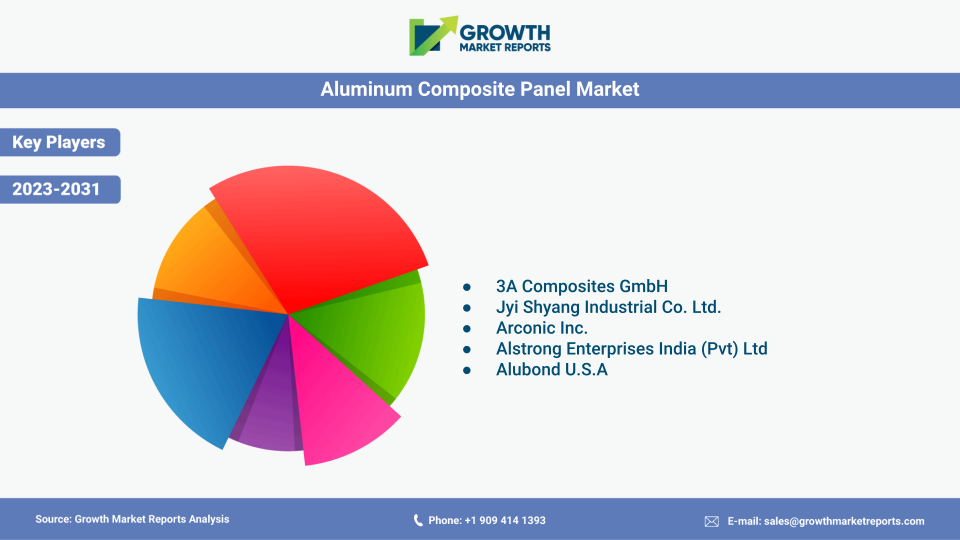

 Aluminum Composite Panel Market Key Players

Frequently Asked Questions

The market is segmented into Exterior and Interior panels. Exterior panels are designed for weather resistance and durability, while interior panels focus on aesthetics and ease of installation for indoor applications.

Major companies include 3A Composites (ALUCOBOND), Arconic, Mitsubishi Chemical Corporation, Alubond U.S.A., and Yaret Industrial Group. These players focus on innovation, sustainability, and strategic partnerships.

Challenges include fire safety concerns with polyethylene core panels, evolving regulatory requirements, rising raw material costs (especially aluminum), and supply chain volatility.

Trends include the shift towards sustainable and recyclable ACPs, adoption of advanced coating and core technologies, digital printing for customization, and expanding use in transportation and industrial sectors.

Common coatings include Polyvinylidene Fluoride (PVDF) for superior weather and UV resistance (mainly for exteriors), Polyester for interiors and signage, Laminating Coating for decorative finishes, and Oxide Film for corrosion resistance.

ACPs are widely used in building and construction (exterior cladding, curtain walls, roofing, interior partitions), advertising boards, transportation (vehicle bodies, railway coaches), industrial uses (cleanroom partitions, machine enclosures), and other areas like furniture and modular kitchens.

The main types of ACPs are Polyethylene Core, Fire-Resistant Core, and Others (such as honeycomb and foam cores). Polyethylene core panels are popular for interior use, while fire-resistant cores are preferred for exterior and high-rise applications.

Asia Pacific holds the largest share of the ACP market, accounting for over 48% of global revenue in 2024, followed by North America and Europe. Latin America and the Middle East & Africa are emerging as promising markets.

Key growth drivers include rising demand for modern and energy-efficient building materials, rapid urbanization, government initiatives for smart cities and green buildings, and the need for aesthetically pleasing, durable, and cost-effective cladding solutions.

The global aluminum composite panel (ACP) market was valued at USD 7.8 billion in 2024 and is projected to reach USD 13.5 billion by 2033, growing at a CAGR of 6.3% from 2025 to 2033.

Table Of Content

Chapter 1 Executive Summary
Chapter 2 Assumptions and Acronyms Used
Chapter 3 Research Methodology
Chapter 4 Aluminum Composite Panel Market Overview
   4.1 Introduction
      4.1.1 Market Taxonomy
      4.1.2 Market Definition
      4.1.3 Macro-Economic Factors Impacting the Market Growth
   4.2 Aluminum Composite Panel Market Dynamics
      4.2.1 Market Drivers
      4.2.2 Market Restraints
      4.2.3 Market Opportunity
   4.3 Aluminum Composite Panel Market - Supply Chain Analysis
      4.3.1 List of Key Suppliers
      4.3.2 List of Key Distributors
      4.3.3 List of Key Consumers
   4.4 Key Forces Shaping the Aluminum Composite Panel Market
      4.4.1 Bargaining Power of Suppliers
      4.4.2 Bargaining Power of Buyers
      4.4.3 Threat of Substitution
      4.4.4 Threat of New Entrants
      4.4.5 Competitive Rivalry
   4.5 Global Aluminum Composite Panel Market Size & Forecast, 2023-2032
      4.5.1 Aluminum Composite Panel Market Size and Y-o-Y Growth
      4.5.2 Aluminum Composite Panel Market Absolute $ Opportunity

Chapter 5 Global Aluminum Composite Panel Market Analysis and Forecast By Product Type
   5.1 Introduction
      5.1.1 Key Market Trends & Growth Opportunities By Product Type
      5.1.2 Basis Point Share (BPS) Analysis By Product Type
      5.1.3 Absolute $ Opportunity Assessment By Product Type
   5.2 Aluminum Composite Panel Market Size Forecast By Product Type
      5.2.1 Polyethylene Core
      5.2.2 Fire-Resistant Core
      5.2.3 Others
   5.3 Market Attractiveness Analysis By Product Type

Chapter 6 Global Aluminum Composite Panel Market Analysis and Forecast By Application
   6.1 Introduction
      6.1.1 Key Market Trends & Growth Opportunities By Application
      6.1.2 Basis Point Share (BPS) Analysis By Application
      6.1.3 Absolute $ Opportunity Assessment By Application
   6.2 Aluminum Composite Panel Market Size Forecast By Application
      6.2.1 Building & Construction
      6.2.2 Advertising Boards
      6.2.3 Transportation
      6.2.4 Industrial
      6.2.5 Others
   6.3 Market Attractiveness Analysis By Application

Chapter 7 Global Aluminum Composite Panel Market Analysis and Forecast By Coating Type
   7.1 Introduction
      7.1.1 Key Market Trends & Growth Opportunities By Coating Type
      7.1.2 Basis Point Share (BPS) Analysis By Coating Type
      7.1.3 Absolute $ Opportunity Assessment By Coating Type
   7.2 Aluminum Composite Panel Market Size Forecast By Coating Type
      7.2.1 Polyvinylidene Fluoride (PVDF)
      7.2.2 Polyester
      7.2.3 Laminating Coating
      7.2.4 Oxide Film
      7.2.5 Others
   7.3 Market Attractiveness Analysis By Coating Type

Chapter 8 Global Aluminum Composite Panel Market Analysis and Forecast By Panel Type
   8.1 Introduction
      8.1.1 Key Market Trends & Growth Opportunities By Panel Type
      8.1.2 Basis Point Share (BPS) Analysis By Panel Type
      8.1.3 Absolute $ Opportunity Assessment By Panel Type
   8.2 Aluminum Composite Panel Market Size Forecast By Panel Type
      8.2.1 Exterior
      8.2.2 Interior
   8.3 Market Attractiveness Analysis By Panel Type

Chapter 9 Global Aluminum Composite Panel Market Analysis and Forecast by Region
   9.1 Introduction
      9.1.1 Key Market Trends & Growth Opportunities By Region
      9.1.2 Basis Point Share (BPS) Analysis By Region
      9.1.3 Absolute $ Opportunity Assessment By Region
   9.2 Aluminum Composite Panel Market Size Forecast By Region
      9.2.1 North America
      9.2.2 Europe
      9.2.3 Asia Pacific
      9.2.4 Latin America
      9.2.5 Middle East & Africa (MEA)
   9.3 Market Attractiveness Analysis By Region

Chapter 10 Coronavirus Disease (COVID-19) Impact 
   10.1 Introduction 
   10.2 Current & Future Impact Analysis 
   10.3 Economic Impact Analysis 
   10.4 Government Policies 
   10.5 Investment Scenario

Chapter 11 North America Aluminum Composite Panel Analysis and Forecast
   11.1 Introduction
   11.2 North America Aluminum Composite Panel Market Size Forecast by Country
      11.2.1 U.S.
      11.2.2 Canada
   11.3 Basis Point Share (BPS) Analysis by Country
   11.4 Absolute $ Opportunity Assessment by Country
   11.5 Market Attractiveness Analysis by Country
   11.6 North America Aluminum Composite Panel Market Size Forecast By Product Type
      11.6.1 Polyethylene Core
      11.6.2 Fire-Resistant Core
      11.6.3 Others
   11.7 Basis Point Share (BPS) Analysis By Product Type 
   11.8 Absolute $ Opportunity Assessment By Product Type 
   11.9 Market Attractiveness Analysis By Product Type
   11.10 North America Aluminum Composite Panel Market Size Forecast By Application
      11.10.1 Building & Construction
      11.10.2 Advertising Boards
      11.10.3 Transportation
      11.10.4 Industrial
      11.10.5 Others
   11.11 Basis Point Share (BPS) Analysis By Application 
   11.12 Absolute $ Opportunity Assessment By Application 
   11.13 Market Attractiveness Analysis By Application
   11.14 North America Aluminum Composite Panel Market Size Forecast By Coating Type
      11.14.1 Polyvinylidene Fluoride (PVDF)
      11.14.2 Polyester
      11.14.3 Laminating Coating
      11.14.4 Oxide Film
      11.14.5 Others
   11.15 Basis Point Share (BPS) Analysis By Coating Type 
   11.16 Absolute $ Opportunity Assessment By Coating Type 
   11.17 Market Attractiveness Analysis By Coating Type
   11.18 North America Aluminum Composite Panel Market Size Forecast By Panel Type
      11.18.1 Exterior
      11.18.2 Interior
   11.19 Basis Point Share (BPS) Analysis By Panel Type 
   11.20 Absolute $ Opportunity Assessment By Panel Type 
   11.21 Market Attractiveness Analysis By Panel Type

Chapter 12 Europe Aluminum Composite Panel Analysis and Forecast
   12.1 Introduction
   12.2 Europe Aluminum Composite Panel Market Size Forecast by Country
      12.2.1 Germany
      12.2.2 France
      12.2.3 Italy
      12.2.4 U.K.
      12.2.5 Spain
      12.2.6 Russia
      12.2.7 Rest of Europe
   12.3 Basis Point Share (BPS) Analysis by Country
   12.4 Absolute $ Opportunity Assessment by Country
   12.5 Market Attractiveness Analysis by Country
   12.6 Europe Aluminum Composite Panel Market Size Forecast By Product Type
      12.6.1 Polyethylene Core
      12.6.2 Fire-Resistant Core
      12.6.3 Others
   12.7 Basis Point Share (BPS) Analysis By Product Type 
   12.8 Absolute $ Opportunity Assessment By Product Type 
   12.9 Market Attractiveness Analysis By Product Type
   12.10 Europe Aluminum Composite Panel Market Size Forecast By Application
      12.10.1 Building & Construction
      12.10.2 Advertising Boards
      12.10.3 Transportation
      12.10.4 Industrial
      12.10.5 Others
   12.11 Basis Point Share (BPS) Analysis By Application 
   12.12 Absolute $ Opportunity Assessment By Application 
   12.13 Market Attractiveness Analysis By Application
   12.14 Europe Aluminum Composite Panel Market Size Forecast By Coating Type
      12.14.1 Polyvinylidene Fluoride (PVDF)
      12.14.2 Polyester
      12.14.3 Laminating Coating
      12.14.4 Oxide Film
      12.14.5 Others
   12.15 Basis Point Share (BPS) Analysis By Coating Type 
   12.16 Absolute $ Opportunity Assessment By Coating Type 
   12.17 Market Attractiveness Analysis By Coating Type
   12.18 Europe Aluminum Composite Panel Market Size Forecast By Panel Type
      12.18.1 Exterior
      12.18.2 Interior
   12.19 Basis Point Share (BPS) Analysis By Panel Type 
   12.20 Absolute $ Opportunity Assessment By Panel Type 
   12.21 Market Attractiveness Analysis By Panel Type

Chapter 13 Asia Pacific Aluminum Composite Panel Analysis and Forecast
   13.1 Introduction
   13.2 Asia Pacific Aluminum Composite Panel Market Size Forecast by Country
      13.2.1 China
      13.2.2 Japan
      13.2.3 South Korea
      13.2.4 India
      13.2.5 Australia
      13.2.6 South East Asia (SEA)
      13.2.7 Rest of Asia Pacific (APAC)
   13.3 Basis Point Share (BPS) Analysis by Country
   13.4 Absolute $ Opportunity Assessment by Country
   13.5 Market Attractiveness Analysis by Country
   13.6 Asia Pacific Aluminum Composite Panel Market Size Forecast By Product Type
      13.6.1 Polyethylene Core
      13.6.2 Fire-Resistant Core
      13.6.3 Others
   13.7 Basis Point Share (BPS) Analysis By Product Type 
   13.8 Absolute $ Opportunity Assessment By Product Type 
   13.9 Market Attractiveness Analysis By Product Type
   13.10 Asia Pacific Aluminum Composite Panel Market Size Forecast By Application
      13.10.1 Building & Construction
      13.10.2 Advertising Boards
      13.10.3 Transportation
      13.10.4 Industrial
      13.10.5 Others
   13.11 Basis Point Share (BPS) Analysis By Application 
   13.12 Absolute $ Opportunity Assessment By Application 
   13.13 Market Attractiveness Analysis By Application
   13.14 Asia Pacific Aluminum Composite Panel Market Size Forecast By Coating Type
      13.14.1 Polyvinylidene Fluoride (PVDF)
      13.14.2 Polyester
      13.14.3 Laminating Coating
      13.14.4 Oxide Film
      13.14.5 Others
   13.15 Basis Point Share (BPS) Analysis By Coating Type 
   13.16 Absolute $ Opportunity Assessment By Coating Type 
   13.17 Market Attractiveness Analysis By Coating Type
   13.18 Asia Pacific Aluminum Composite Panel Market Size Forecast By Panel Type
      13.18.1 Exterior
      13.18.2 Interior
   13.19 Basis Point Share (BPS) Analysis By Panel Type 
   13.20 Absolute $ Opportunity Assessment By Panel Type 
   13.21 Market Attractiveness Analysis By Panel Type

Chapter 14 Latin America Aluminum Composite Panel Analysis and Forecast
   14.1 Introduction
   14.2 Latin America Aluminum Composite Panel Market Size Forecast by Country
      14.2.1 Brazil
      14.2.2 Mexico
      14.2.3 Rest of Latin America (LATAM)
   14.3 Basis Point Share (BPS) Analysis by Country
   14.4 Absolute $ Opportunity Assessment by Country
   14.5 Market Attractiveness Analysis by Country
   14.6 Latin America Aluminum Composite Panel Market Size Forecast By Product Type
      14.6.1 Polyethylene Core
      14.6.2 Fire-Resistant Core
      14.6.3 Others
   14.7 Basis Point Share (BPS) Analysis By Product Type 
   14.8 Absolute $ Opportunity Assessment By Product Type 
   14.9 Market Attractiveness Analysis By Product Type
   14.10 Latin America Aluminum Composite Panel Market Size Forecast By Application
      14.10.1 Building & Construction
      14.10.2 Advertising Boards
      14.10.3 Transportation
      14.10.4 Industrial
      14.10.5 Others
   14.11 Basis Point Share (BPS) Analysis By Application 
   14.12 Absolute $ Opportunity Assessment By Application 
   14.13 Market Attractiveness Analysis By Application
   14.14 Latin America Aluminum Composite Panel Market Size Forecast By Coating Type
      14.14.1 Polyvinylidene Fluoride (PVDF)
      14.14.2 Polyester
      14.14.3 Laminating Coating
      14.14.4 Oxide Film
      14.14.5 Others
   14.15 Basis Point Share (BPS) Analysis By Coating Type 
   14.16 Absolute $ Opportunity Assessment By Coating Type 
   14.17 Market Attractiveness Analysis By Coating Type
   14.18 Latin America Aluminum Composite Panel Market Size Forecast By Panel Type
      14.18.1 Exterior
      14.18.2 Interior
   14.19 Basis Point Share (BPS) Analysis By Panel Type 
   14.20 Absolute $ Opportunity Assessment By Panel Type 
   14.21 Market Attractiveness Analysis By Panel Type

Chapter 15 Middle East & Africa (MEA) Aluminum Composite Panel Analysis and Forecast
   15.1 Introduction
   15.2 Middle East & Africa (MEA) Aluminum Composite Panel Market Size Forecast by Country
      15.2.1 Saudi Arabia
      15.2.2 South Africa
      15.2.3 UAE
      15.2.4 Rest of Middle East & Africa (MEA)
   15.3 Basis Point Share (BPS) Analysis by Country
   15.4 Absolute $ Opportunity Assessment by Country
   15.5 Market Attractiveness Analysis by Country
   15.6 Middle East & Africa (MEA) Aluminum Composite Panel Market Size Forecast By Product Type
      15.6.1 Polyethylene Core
      15.6.2 Fire-Resistant Core
      15.6.3 Others
   15.7 Basis Point Share (BPS) Analysis By Product Type 
   15.8 Absolute $ Opportunity Assessment By Product Type 
   15.9 Market Attractiveness Analysis By Product Type
   15.10 Middle East & Africa (MEA) Aluminum Composite Panel Market Size Forecast By Application
      15.10.1 Building & Construction
      15.10.2 Advertising Boards
      15.10.3 Transportation
      15.10.4 Industrial
      15.10.5 Others
   15.11 Basis Point Share (BPS) Analysis By Application 
   15.12 Absolute $ Opportunity Assessment By Application 
   15.13 Market Attractiveness Analysis By Application
   15.14 Middle East & Africa (MEA) Aluminum Composite Panel Market Size Forecast By Coating Type
      15.14.1 Polyvinylidene Fluoride (PVDF)
      15.14.2 Polyester
      15.14.3 Laminating Coating
      15.14.4 Oxide Film
      15.14.5 Others
   15.15 Basis Point Share (BPS) Analysis By Coating Type 
   15.16 Absolute $ Opportunity Assessment By Coating Type 
   15.17 Market Attractiveness Analysis By Coating Type
   15.18 Middle East & Africa (MEA) Aluminum Composite Panel Market Size Forecast By Panel Type
      15.18.1 Exterior
      15.18.2 Interior
   15.19 Basis Point Share (BPS) Analysis By Panel Type 
   15.20 Absolute $ Opportunity Assessment By Panel Type 
   15.21 Market Attractiveness Analysis By Panel Type

Chapter 16 Competition Landscape 
   16.1 Aluminum Composite Panel Market: Competitive Dashboard
   16.2 Global Aluminum Composite Panel Market: Market Share Analysis, 2023
   16.3 Company Profiles (Details – Overview, Financials, Developments, Strategy) 
      16.3.1 3A Composites GmbH
Alubond U.S.A.
Arconic Inc.
Alstrong Enterprises India Pvt Ltd
Alpolic (Mitsubishi Chemical Corporation)
Jyi Shyang Industrial Co., Ltd.
Yaret Industrial Group
Alucoil S.A.
Alubond Europe
FunderMax GmbH
Interplast (Harwal Group)
Almaxco
Shanghai Huayuan New Composite Materials Co., Ltd.
Guangzhou Xinghe ACP Co., Ltd.
Pivot New Material Co., Ltd.
Mulford Plastics
Viva Composite Panel Pvt. Ltd.
Eurobond
Hindalco Industries Limited
Jiangsu Kingertai New Material Technology Co., Ltd.

Methodology

Our Clients

FedEx Logistics
Honda Motor Co. Ltd.
Dassault Aviation
Pfizer
General Mills
The John Holland Group
General Electric
Deloitte