Air Filtration Market Research Report 2033

Air Filtration Market Research Report 2033

Segments - by Product Type (HEPA Filters, Activated Carbon Filters, Electrostatic Precipitators, Ionic Filters, UV Filters, Others), by Application (Residential, Commercial, Industrial, Healthcare, Automotive, Others), by Technology (Mechanical, Electronic, Hybrid), by Distribution Channel (Online, Offline), by End-User (Households, Offices, Hospitals, Manufacturing, Transportation, Others)

https://growthmarketreports.com/Raksha
Author : Raksha Sharma
https://growthmarketreports.com/Vaibhav
Fact-checked by : V. Chandola
https://growthmarketreports.com/Shruti
Editor : Shruti Bhat

Upcoming | Report ID :CM-2056 | 4.5 Rating | 5 Reviews | 269 Pages | Format : Docx PDF

Report Description


Air Filtration Market Outlook

According to our latest research, the global air filtration market size reached USD 15.8 billion in 2024, reflecting the increasing emphasis on air quality and environmental safety worldwide. The market is expected to grow at a CAGR of 7.1% from 2025 to 2033, reaching a projected value of USD 29.5 billion by the end of the forecast period. This robust growth is primarily driven by heightened concerns over airborne pollutants, stringent regulatory mandates, and the growing adoption of advanced air filtration technologies across various industries.

The air filtration market is witnessing rapid expansion due to escalating health awareness among consumers and a global push for cleaner indoor and outdoor air. The proliferation of urbanization and industrialization, especially in developing economies, has led to a surge in air pollution levels, prompting both governments and private organizations to invest heavily in air purification systems. Additionally, the COVID-19 pandemic has intensified the focus on indoor air quality, with residential, commercial, and healthcare sectors prioritizing the installation of high-efficiency filtration solutions to mitigate the spread of airborne pathogens. These factors collectively contribute to the upward trajectory of the air filtration market, making it a critical component of public health infrastructure.

Another significant growth driver for the air filtration market is the tightening of global environmental and occupational safety regulations. Regulatory bodies such as the Environmental Protection Agency (EPA), Occupational Safety and Health Administration (OSHA), and the European Environment Agency (EEA) have set rigorous standards for air quality in industrial and commercial settings. Compliance with these standards necessitates the adoption of advanced filtration technologies, including HEPA filters, activated carbon filters, and UV filtration systems. Industries such as manufacturing, healthcare, and automotive are investing in state-of-the-art air filtration systems to ensure regulatory compliance, safeguard employee health, and enhance operational efficiency, further fueling market growth.

Technological advancements and innovation are also propelling the air filtration market forward. The integration of IoT-enabled smart filters, real-time air quality monitoring, and hybrid filtration technologies has revolutionized the sector, offering enhanced performance and energy efficiency. These innovations are not only improving the efficacy of air filtration systems but also reducing operational costs and maintenance requirements. As a result, both end-users and manufacturers are increasingly adopting cutting-edge solutions to address evolving air quality challenges. The convergence of digital technologies with traditional filtration methods is expected to unlock new growth avenues for the market in the coming years.

Regionally, Asia Pacific dominates the global air filtration market, accounting for the largest share in 2024, followed closely by North America and Europe. The rapid industrialization, urban population growth, and rising disposable incomes in countries like China, India, and Japan are driving substantial investments in air filtration infrastructure. Meanwhile, North America and Europe continue to witness steady demand due to stringent air quality regulations and growing awareness about the health risks associated with poor air quality. Emerging markets in Latin America and the Middle East & Africa are also showing promising growth potential, supported by increasing government initiatives and private sector investments in air purification technologies.

Electrostatic Air Filtration is gaining traction as a pivotal technology in the air filtration market due to its ability to efficiently capture fine particulates such as dust, smoke, and fumes. Unlike traditional filters, electrostatic air filtration systems use electrically charged plates to attract and trap particles, offering a high-efficiency solution for industrial applications. This technology is particularly beneficial in environments where high-volume air cleaning is essential, such as power plants and manufacturing facilities. The reduced maintenance requirements and long lifespan of electrostatic filters make them an attractive option for industries seeking cost-effective and reliable air purification solutions. As concerns about air quality continue to rise, the adoption of electrostatic air filtration is expected to grow, contributing significantly to the market's expansion.

Global Air Filtration Industry Outlook

Product Type Analysis

The air filtration market by product type is segmented into HEPA filters, activated carbon filters, electrostatic precipitators, ionic filters, UV filters, and others. HEPA filters continue to dominate the market owing to their exceptional efficiency in trapping fine particles, allergens, and pathogens. Widely adopted in healthcare, residential, and industrial settings, HEPA filters are renowned for their ability to capture up to 99.97% of airborne particles as small as 0.3 microns. The increasing prevalence of respiratory diseases and the demand for sterile environments in hospitals and laboratories have significantly boosted the adoption of HEPA filtration systems. Additionally, technological advancements have led to the development of next-generation HEPA filters with enhanced durability and lower energy consumption, further solidifying their market position.

Activated carbon filters are gaining traction, particularly in applications where the removal of odors, gases, and volatile organic compounds (VOCs) is crucial. These filters leverage the adsorptive properties of activated carbon to capture chemical pollutants, making them ideal for use in commercial kitchens, industrial plants, and automotive cabins. The growing awareness of the harmful effects of VOCs and toxic gases has driven the demand for activated carbon filtration solutions, especially in urban environments with elevated pollution levels. Moreover, the integration of activated carbon filters with HEPA and UV technologies is creating hybrid systems that offer comprehensive air purification, addressing both particulate and gaseous contaminants.

Electrostatic precipitators and ionic filters represent advanced filtration technologies that utilize electrical charges to remove airborne particles. Electrostatic precipitators are widely used in industrial applications, such as power plants and manufacturing facilities, where high-volume air cleaning is required. Their ability to efficiently capture fine particulates, including dust, smoke, and fumes, makes them indispensable in heavy-duty environments. Ionic filters, on the other hand, are increasingly being adopted in residential and commercial air purifiers due to their silent operation and low maintenance requirements. However, concerns regarding ozone generation and potential health risks have prompted manufacturers to develop safer and more efficient variants of these technologies.

UV filters are emerging as a critical component in the fight against airborne pathogens, particularly in healthcare and laboratory environments. These filters utilize ultraviolet light to deactivate bacteria, viruses, and mold spores, providing an additional layer of protection against infectious diseases. The COVID-19 pandemic has accelerated the adoption of UV filtration systems in hospitals, clinics, and public spaces, as organizations seek to enhance their infection control protocols. The combination of UV filters with traditional mechanical and electronic filtration methods is gaining popularity, offering multi-stage purification that addresses a broad spectrum of contaminants.

Hygienic Air Filtration is becoming increasingly important in sectors where maintaining ultra-clean environments is crucial, such as healthcare and food processing. These systems are designed to meet stringent hygiene standards by effectively removing airborne pathogens, allergens, and contaminants. The integration of hygienic air filtration solutions in hospitals and laboratories is essential for infection control, ensuring patient safety and compliance with health regulations. In the food industry, these systems help prevent contamination and ensure product safety, which is vital for consumer trust and regulatory adherence. As industries strive for higher standards of cleanliness and safety, the demand for hygienic air filtration is set to rise, driving innovation and growth in the air filtration market.

The "others" category in product type includes innovative filtration solutions such as photocatalytic filters, plasma filters, and nanofiber filters. These emerging technologies are designed to target specific pollutants and offer superior performance in specialized applications. As research and development efforts continue to advance, the market is expected to witness the introduction of novel air filtration products that cater to evolving consumer needs and regulatory requirements. The diversification of product offerings is anticipated to drive competition and foster innovation within the air filtration market.

Report Scope

Attributes Details
Report Title Air Filtration Market Research Report 2033
By Product Type HEPA Filters, Activated Carbon Filters, Electrostatic Precipitators, Ionic Filters, UV Filters, Others
By Application Residential, Commercial, Industrial, Healthcare, Automotive, Others
By Technology Mechanical, Electronic, Hybrid
By Distribution Channel Online, Offline
By End-User Households, Offices, Hospitals, Manufacturing, Transportation, Others
Regions Covered North America, Europe, APAC, Latin America, MEA
Base Year 2024
Historic Data 2018-2023
Forecast Period 2025-2033
Number of Pages 269
Number of Tables & Figures 285
Customization Available Yes, the report can be customized as per your need.

Application Analysis

The air filtration market is segmented by application into residential, commercial, industrial, healthcare, automotive, and others. The residential segment has experienced significant growth in recent years, driven by rising consumer awareness of indoor air pollution and its adverse health effects. The proliferation of smart homes and the increasing adoption of air purifiers equipped with advanced filtration technologies have contributed to the expansion of this segment. Consumers are increasingly prioritizing indoor air quality, especially in urban areas where outdoor pollution levels are high. The demand for compact, energy-efficient, and aesthetically pleasing air filtration solutions is shaping product innovation in the residential sector.

The commercial segment encompasses offices, retail spaces, educational institutions, and hospitality establishments. The emphasis on creating healthy and comfortable indoor environments for employees, customers, and guests has led to widespread adoption of air filtration systems in commercial buildings. Regulatory requirements for air quality in public spaces, coupled with the growing focus on employee well-being and productivity, are driving investments in high-performance filtration solutions. The integration of air filtration systems with building management and HVAC systems is becoming increasingly common, enabling real-time monitoring and optimization of indoor air quality.

In the industrial segment, air filtration plays a critical role in ensuring workplace safety, protecting equipment, and maintaining product quality. Industries such as pharmaceuticals, food and beverage, electronics, and chemicals require specialized filtration systems to remove dust, fumes, and hazardous substances from the air. The implementation of stringent environmental and occupational safety regulations has compelled manufacturers to upgrade their air filtration infrastructure. The demand for robust, high-capacity filtration systems capable of operating in harsh industrial environments is fueling innovation and driving market growth in this segment.

The healthcare segment is characterized by the need for ultra-clean environments to prevent the spread of infections and protect vulnerable patients. Hospitals, clinics, and laboratories rely on advanced air filtration technologies, such as HEPA and UV filters, to maintain sterile conditions in operating rooms, isolation wards, and intensive care units. The COVID-19 pandemic has underscored the importance of air filtration in healthcare settings, leading to increased investments in state-of-the-art purification systems. The ongoing emphasis on infection control and patient safety is expected to sustain the demand for air filtration solutions in the healthcare sector.

The automotive segment is witnessing growing adoption of air filtration systems, particularly in passenger vehicles and commercial fleets. The focus on enhancing in-cabin air quality and protecting occupants from pollutants, allergens, and pathogens is driving the integration of advanced filters in automotive HVAC systems. Automakers are increasingly offering air filtration as a standard or optional feature, catering to consumer demand for healthier and more comfortable driving experiences. The rise of electric vehicles and autonomous transportation is expected to further accelerate innovation in automotive air filtration technologies.

Technology Analysis

The air filtration market is segmented by technology into mechanical, electronic, and hybrid filtration systems. Mechanical filtration remains the most widely used technology, leveraging physical barriers such as fibrous media to trap airborne particles. HEPA and ULPA filters are prime examples of mechanical filtration, offering high efficiency in removing dust, pollen, and microorganisms. The simplicity, reliability, and cost-effectiveness of mechanical filters make them a popular choice across residential, commercial, and industrial applications. Ongoing advancements in filter media, including the use of nanofibers and antimicrobial coatings, are enhancing the performance and longevity of mechanical filtration systems.

Electronic filtration encompasses technologies such as electrostatic precipitators and ionic filters, which utilize electrical charges to capture and remove airborne particles. These systems are particularly effective in industrial and commercial settings where high-volume air cleaning is required. Electronic filtration offers advantages such as low pressure drop, minimal maintenance, and the ability to capture ultrafine particles. However, concerns regarding ozone generation and potential health risks have prompted manufacturers to invest in research and development to create safer and more efficient electronic filtration solutions. The adoption of electronic filtration is expected to grow as innovations address these challenges and regulatory standards evolve.

Hybrid filtration systems represent a convergence of mechanical and electronic technologies, offering multi-stage purification that targets a wide range of contaminants. These systems combine the strengths of different filtration methods, such as HEPA, activated carbon, UV, and electrostatic technologies, to deliver comprehensive air cleaning. Hybrid filters are gaining popularity in environments that require high levels of air purity, such as hospitals, cleanrooms, and laboratories. The flexibility to customize hybrid systems based on specific application requirements is driving their adoption across diverse end-user segments. As air quality challenges become more complex, hybrid filtration technologies are expected to play an increasingly important role in the market.

The integration of smart technologies and IoT capabilities is transforming the air filtration landscape. Modern filtration systems are equipped with sensors and connectivity features that enable real-time monitoring of air quality, filter performance, and maintenance needs. This data-driven approach allows users to optimize system operation, reduce energy consumption, and ensure timely filter replacement. The adoption of smart air filtration solutions is gaining momentum in both residential and commercial sectors, as consumers and organizations seek to enhance indoor air quality while minimizing operational costs.

Ongoing research and development efforts are focused on improving the efficiency, sustainability, and cost-effectiveness of air filtration technologies. Innovations such as self-cleaning filters, biodegradable filter media, and energy-efficient designs are addressing the evolving needs of end-users. The push for greener and more sustainable solutions is expected to drive the adoption of next-generation air filtration technologies, creating new opportunities for market growth and differentiation.

Distribution Channel Analysis

The air filtration market is segmented by distribution channel into online and offline channels. The offline segment continues to hold a significant share of the market, driven by the preference for in-person consultations, product demonstrations, and after-sales support. Traditional brick-and-mortar stores, specialty retailers, and authorized distributors play a crucial role in educating customers, providing installation services, and ensuring product authenticity. The complexity and technical nature of air filtration systems often necessitate professional guidance, especially for industrial and commercial applications. As a result, offline channels remain the primary choice for bulk purchases and customized solutions.

However, the online segment is witnessing rapid growth, fueled by the increasing penetration of e-commerce platforms and the convenience of digital shopping. Consumers are increasingly turning to online channels to research, compare, and purchase air filtration products, leveraging the availability of detailed product information, customer reviews, and competitive pricing. The COVID-19 pandemic has accelerated the shift towards online shopping, as restrictions on physical stores and concerns over personal safety have prompted consumers to embrace digital channels. Manufacturers and retailers are investing in robust online platforms, digital marketing, and virtual consultation services to cater to the evolving preferences of tech-savvy customers.

The rise of direct-to-consumer (DTC) brands and third-party e-commerce marketplaces is further transforming the distribution landscape. DTC brands are leveraging digital channels to build direct relationships with customers, offer personalized recommendations, and provide subscription-based filter replacement services. This approach not only enhances customer loyalty but also enables manufacturers to gather valuable insights into consumer preferences and usage patterns. Third-party marketplaces such as Amazon, Alibaba, and Flipkart are expanding their air filtration product offerings, providing a wide range of options for consumers and businesses alike.

Hybrid distribution models are emerging as a key strategy for market players seeking to maximize reach and customer engagement. Companies are integrating online and offline channels to offer seamless shopping experiences, including options such as click-and-collect, in-store pickup, and virtual consultations. This omnichannel approach allows customers to enjoy the benefits of both digital convenience and personalized service, driving higher satisfaction and repeat purchases. The ability to provide consistent product availability, timely delivery, and responsive customer support is becoming a critical differentiator in the competitive air filtration market.

As the distribution landscape evolves, manufacturers and retailers are focusing on enhancing supply chain efficiency, reducing lead times, and ensuring product authenticity. Investments in logistics, inventory management, and digital infrastructure are enabling companies to meet the growing demand for air filtration products across diverse end-user segments. The continued expansion of online and hybrid distribution channels is expected to drive market growth, improve accessibility, and foster innovation in product offerings and customer service.

End-User Analysis

The air filtration market by end-user is segmented into households, offices, hospitals, manufacturing, transportation, and others. The household segment is experiencing robust growth as consumers become increasingly aware of the health risks associated with indoor air pollution. The rise of urbanization, the prevalence of respiratory diseases, and the impact of allergens and pollutants on overall well-being have prompted households to invest in advanced air purification systems. Manufacturers are responding to this demand by offering a wide range of products that cater to different room sizes, budgets, and aesthetic preferences. The integration of smart features, such as air quality sensors and mobile app controls, is enhancing the appeal of air filtration solutions in the residential market.

The offices segment is characterized by the growing emphasis on employee health, productivity, and comfort. Organizations are increasingly recognizing the importance of maintaining optimal indoor air quality to create a conducive work environment and reduce absenteeism. The adoption of air filtration systems in office buildings is being driven by regulatory requirements, corporate wellness programs, and the desire to attract and retain top talent. The integration of filtration solutions with building management systems and HVAC infrastructure is enabling real-time monitoring and optimization of air quality, ensuring a healthy and productive workspace.

In the hospitals segment, air filtration is a critical component of infection control and patient safety protocols. Hospitals, clinics, and healthcare facilities rely on advanced filtration technologies, such as HEPA and UV filters, to maintain sterile environments and prevent the spread of airborne pathogens. The COVID-19 pandemic has underscored the importance of air filtration in healthcare settings, leading to increased investments in state-of-the-art purification systems. The ongoing focus on infection prevention, regulatory compliance, and patient care is expected to sustain the demand for air filtration solutions in the healthcare sector.

The manufacturing segment encompasses a wide range of industries, including pharmaceuticals, food and beverage, electronics, and chemicals. Air filtration systems are essential for ensuring product quality, protecting sensitive equipment, and maintaining a safe working environment. The implementation of stringent environmental and occupational safety regulations has compelled manufacturers to upgrade their air filtration infrastructure. The demand for high-capacity, durable, and energy-efficient filtration systems is driving innovation and market growth in the manufacturing sector. Customization and scalability are key factors influencing purchasing decisions in this segment.

The transportation segment includes automotive, aviation, railways, and marine applications. The focus on enhancing passenger comfort and safety, reducing exposure to pollutants, and complying with regulatory standards is driving the adoption of air filtration systems in transportation. Automakers are integrating advanced filters into vehicle HVAC systems, while airlines and railway operators are investing in purification solutions to improve cabin air quality. The rise of electric vehicles, autonomous transportation, and shared mobility services is expected to further accelerate innovation in transportation air filtration technologies. The "others" category includes specialized end-users such as cleanrooms, data centers, and research laboratories, where air purity is critical for operational efficiency and safety.

Opportunities & Threats

The air filtration market presents numerous opportunities for growth and innovation, driven by increasing global awareness of air quality issues and the need for effective pollution control solutions. One of the most significant opportunities lies in the development and commercialization of next-generation filtration technologies that offer higher efficiency, lower energy consumption, and enhanced sustainability. The integration of IoT, artificial intelligence, and data analytics into air filtration systems enables real-time monitoring, predictive maintenance, and personalized air quality management. These advancements create new value propositions for end-users and open up additional revenue streams for manufacturers. Furthermore, the expanding adoption of air filtration systems in emerging markets, supported by government initiatives and infrastructure development, offers untapped growth potential.

Another key opportunity in the air filtration market is the increasing demand for hybrid and multi-functional filtration systems. As air quality challenges become more complex, end-users are seeking comprehensive solutions that can address a wide range of contaminants, including particulates, gases, and biological agents. The development of hybrid systems that combine mechanical, electronic, and chemical filtration methods is gaining traction in sectors such as healthcare, manufacturing, and transportation. Additionally, the growing trend towards green and sustainable products is driving innovation in biodegradable filter media, energy-efficient designs, and eco-friendly manufacturing processes. Companies that can deliver high-performance, sustainable, and cost-effective solutions are well-positioned to capture market share and drive long-term growth.

Despite the positive outlook, the air filtration market faces several restraining factors that could hinder its growth. One of the primary challenges is the high initial cost associated with advanced filtration systems, particularly for large-scale industrial and commercial applications. The need for regular maintenance, filter replacement, and energy consumption can also add to the total cost of ownership, deterring price-sensitive customers. Additionally, the lack of standardized regulations and certification processes in some regions can create barriers to market entry and limit the adoption of high-quality filtration solutions. Addressing these challenges requires ongoing investment in research and development, cost optimization, and collaboration with regulatory bodies to establish clear standards and best practices.

Regional Outlook

Asia Pacific leads the global air filtration market, accounting for the largest share of USD 6.3 billion in 2024. The regionÂ’s dominance is attributed to rapid industrialization, urbanization, and a burgeoning middle class in countries such as China, India, and Japan. These factors have resulted in elevated air pollution levels, prompting governments and private organizations to invest heavily in air purification infrastructure. The implementation of stringent environmental regulations and the increasing adoption of smart city initiatives are further driving demand for advanced air filtration solutions. With a projected CAGR of 8.2% from 2025 to 2033, Asia Pacific is expected to maintain its leadership position and reach a market value of USD 12.1 billion by 2033.

North America is the second-largest market, with a value of USD 4.7 billion in 2024. The region benefits from well-established regulatory frameworks, high consumer awareness, and significant investments in healthcare, commercial, and industrial infrastructure. The United States, in particular, is a major contributor to market growth, driven by the adoption of advanced filtration technologies in sectors such as healthcare, manufacturing, and transportation. The emphasis on indoor air quality, energy efficiency, and sustainability is shaping product innovation and market dynamics in North America. The region is expected to maintain steady growth, supported by ongoing investments in research, development, and infrastructure upgrades.

Europe follows closely, with a market size of USD 3.2 billion in 2024. The region is characterized by stringent environmental and occupational safety regulations, high standards of living, and a strong focus on sustainability. Countries such as Germany, the United Kingdom, and France are leading adopters of air filtration solutions, driven by regulatory compliance, corporate social responsibility, and consumer demand for healthier environments. The European market is also witnessing growth in the adoption of smart and energy-efficient filtration technologies, supported by government incentives and green building initiatives. Latin America and the Middle East & Africa collectively account for the remaining market share, with values of USD 1.1 billion and USD 0.5 billion respectively in 2024. These regions are experiencing gradual growth, supported by increasing urbanization, infrastructure development, and rising awareness of air quality issues.

Air Filtration Market Statistics

Competitor Outlook

The global air filtration market is highly competitive, characterized by the presence of numerous multinational corporations, regional players, and innovative startups. The competitive landscape is shaped by factors such as product quality, technological innovation, brand reputation, and customer service. Leading companies are investing heavily in research and development to introduce next-generation filtration technologies, expand their product portfolios, and address evolving customer needs. Strategic partnerships, mergers and acquisitions, and geographic expansion are common strategies employed by market players to strengthen their market position and gain a competitive edge.

Innovation is a key differentiator in the air filtration market, with companies focusing on the development of smart, energy-efficient, and sustainable solutions. The integration of IoT, AI, and data analytics into air filtration systems is enabling manufacturers to offer value-added services such as real-time monitoring, predictive maintenance, and personalized air quality management. Companies are also exploring new materials, such as nanofibers and biodegradable filter media, to enhance filtration efficiency and reduce environmental impact. The ability to deliver high-performance, cost-effective, and eco-friendly solutions is becoming increasingly important in attracting and retaining customers.

Customer-centricity is another critical factor driving competition in the air filtration market. Leading companies are prioritizing customer engagement, education, and support to build long-term relationships and foster brand loyalty. The provision of comprehensive after-sales services, including installation, maintenance, and filter replacement, is a key value proposition for both residential and commercial customers. Companies are also leveraging digital channels and omnichannel distribution strategies to enhance accessibility, convenience, and customer satisfaction.

Some of the major players in the global air filtration market include 3M Company, Honeywell International Inc., Daikin Industries Ltd., Camfil AB, MANN+HUMMEL Group, Parker Hannifin Corporation, Donaldson Company Inc., Cummins Inc., and AAF International. These companies are recognized for their extensive product offerings, technological expertise, and global reach. For example, 3M Company is known for its innovative filtration solutions and strong focus on research and development. Honeywell International Inc. offers a wide range of air purification products for residential, commercial, and industrial applications, with a strong emphasis on smart and connected solutions. Daikin Industries Ltd. is a leading provider of air conditioning and filtration systems, leveraging advanced technologies to deliver high-performance and energy-efficient products.

Camfil AB and MANN+HUMMEL Group are renowned for their expertise in industrial and commercial air filtration, offering customized solutions for diverse applications. Parker Hannifin Corporation and Donaldson Company Inc. are key players in the industrial filtration segment, providing robust and durable systems for challenging environments. Cummins Inc. and AAF International specialize in filtration solutions for the automotive and transportation sectors, addressing the unique needs of vehicle manufacturers and operators. These companies are continuously investing in innovation, sustainability, and customer service to maintain their competitive advantage and drive market growth.

Key Players

  • 3M
  • Parker Hannifin Corporation
  • MANN+HUMMEL Group
  • Donaldson Company, Inc.
  • Camfil Group
  • Ahlstrom-Munksjö
  • Freudenberg Filtration Technologies
  • Cummins Filtration
  • Daikin Industries, Ltd.
  • Lydall, Inc.
  • Atlas Copco AB
  • Honeywell International Inc.
  • Clarcor Inc.
  • Filtration Group Corporation
  • General Electric Company
  • Sogefi Group
  • Absolent Group
  • AAF International (American Air Filter)
  • Nederman Holding AB
  • Koch Filter Corporation
Air Filtration Market Overview

Segments

The Air Filtration market has been segmented on the basis of

Product Type

  • HEPA Filters
  • Activated Carbon Filters
  • Electrostatic Precipitators
  • Ionic Filters
  • UV Filters
  • Others

Application

  • Residential
  • Commercial
  • Industrial
  • Healthcare
  • Automotive
  • Others

Technology

  • Mechanical
  • Electronic
  • Hybrid

Distribution Channel

  • Online
  • Offline

End-User

  • Households
  • Offices
  • Hospitals
  • Manufacturing
  • Transportation
  • Others

Competitive Landscape

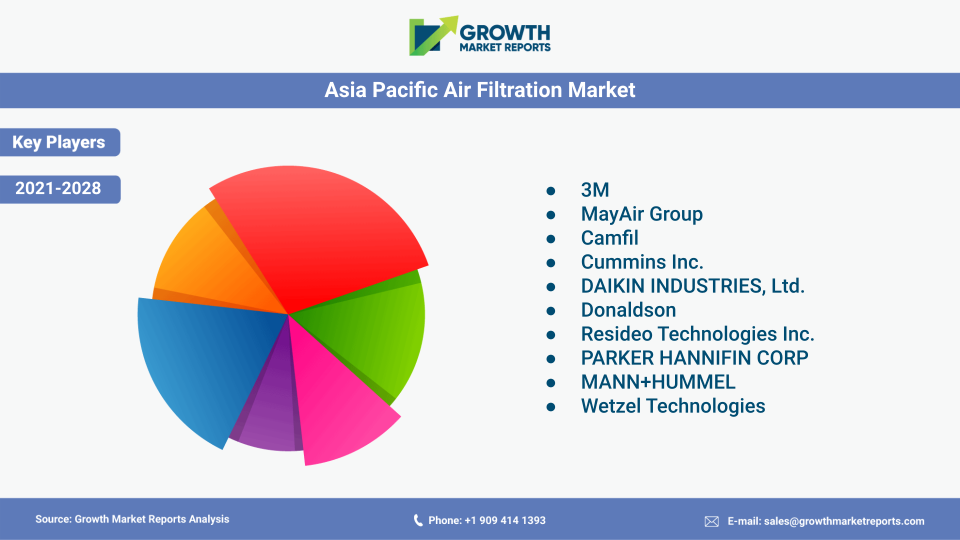
Key players in the air filtration market are 3M, MayAir Group, Camfil, Cummins Inc., DAIKIN INDUSTRIES, Ltd., Donaldson, Resideo Technologies Inc., PARKER HANNIFIN CORP, MANN+HUMMEL, and Wetzel Technologies.

The players are adopting key strategies such as product development, geographical expansion, mergers and acquisition, and many other strategies to cater the increasing demand for air filters. For instance, in June 2021, DAIKIN INDUSTRIES, Ltd., entered into a partnership with American Air Filter (AAF) to distribute its air filtration product in the market in Australia. With this initiative, the company intends to expand its business presence.

Asia Pacific Air Filtration Market Keyplayers


Video Summary for Air Filtration Market

Frequently Asked Questions

Additional company profiles can be provided on request.

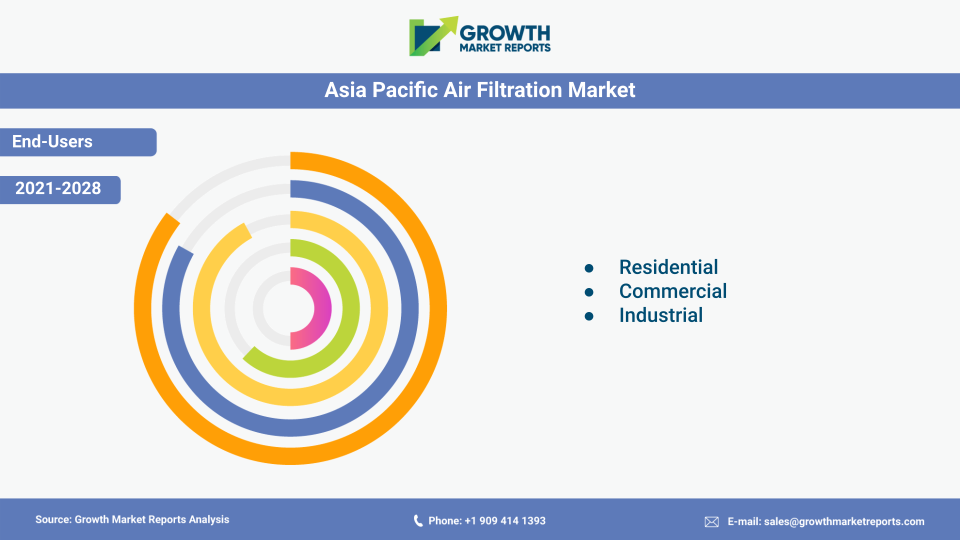
Yes, the report covers various air filtration market by end-users into residential, commercial, and industrial.

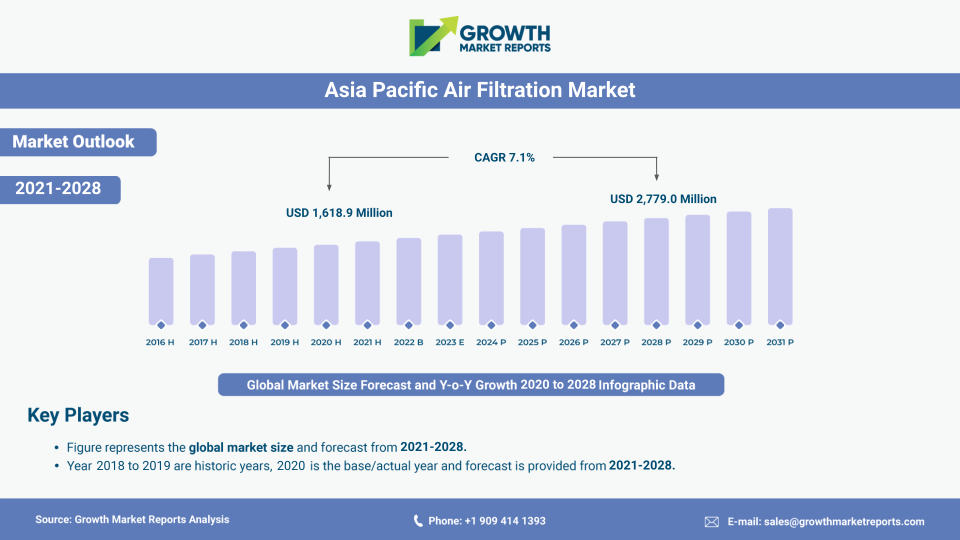
According to this Growth Market Reports, the market from air filtration market is likely to register a CAGR of 7.1% during period 2021-2028, with an anticipated valuation of USD 2,799.0 million by the end of the 2028.

In addition to market size (in USD Million) and Company Market Share (in % for base year 2020), other data such Macro-economic factors, COVID-19 Impact on the air filtration market is available in final report.

Factors such as competitive strength and market positioning are key areas considered while selecting top companies to be profiled.

The air filtration market is anticipated to grow significantly during forecast period due to rapid urbanization and industrialization, along with the rising disposable income

The demand for air filtration from sales of HEPA filters is driving the market growth. HEPA filter are suitable for industrial or lab applications as well as offices, shops, restaurants and other business environments where air quality can be always enhanced.

The market is expected to witness increase in terms of demand during 2019-2020 owing to the positive impact of COVID-19 pandemic on the air filtration market.

The base year considered for the Air Filtration market report is 2020. The complete analysis period is 2018 to 2028, wherein, 2018 & 2019 are the historic years, and the forecast is provided from 2021 to 2028.

Major Manufactures include 3M, MayAir Group, Camfil, Cummins Inc., DAIKIN INDUSTRIES, Ltd., Donaldson, Resideo Technologies Inc., PARKER HANNIFIN CORP, MANN+HUMMEL, and Wetzel Technologies.

Table Of Content

Chapter 1 Executive Summary
Chapter 2 Assumptions and Acronyms Used
Chapter 3 Research Methodology
Chapter 4 Air Filtration Market Overview
   4.1 Introduction
      4.1.1 Market Taxonomy
      4.1.2 Market Definition
      4.1.3 Macro-Economic Factors Impacting the Market Growth
   4.2 Air Filtration Market Dynamics
      4.2.1 Market Drivers
      4.2.2 Market Restraints
      4.2.3 Market Opportunity
   4.3 Air Filtration Market - Supply Chain Analysis
      4.3.1 List of Key Suppliers
      4.3.2 List of Key Distributors
      4.3.3 List of Key Consumers
   4.4 Key Forces Shaping the Air Filtration Market
      4.4.1 Bargaining Power of Suppliers
      4.4.2 Bargaining Power of Buyers
      4.4.3 Threat of Substitution
      4.4.4 Threat of New Entrants
      4.4.5 Competitive Rivalry
   4.5 Global Air Filtration Market Size & Forecast, 2023-2032
      4.5.1 Air Filtration Market Size and Y-o-Y Growth
      4.5.2 Air Filtration Market Absolute $ Opportunity

Chapter 5 Global Air Filtration Market Analysis and Forecast By Product Type
   5.1 Introduction
      5.1.1 Key Market Trends & Growth Opportunities By Product Type
      5.1.2 Basis Point Share (BPS) Analysis By Product Type
      5.1.3 Absolute $ Opportunity Assessment By Product Type
   5.2 Air Filtration Market Size Forecast By Product Type
      5.2.1 HEPA Filters
      5.2.2 Activated Carbon Filters
      5.2.3 Electrostatic Precipitators
      5.2.4 Ionic Filters
      5.2.5 UV Filters
      5.2.6 Others
   5.3 Market Attractiveness Analysis By Product Type

Chapter 6 Global Air Filtration Market Analysis and Forecast By Application
   6.1 Introduction
      6.1.1 Key Market Trends & Growth Opportunities By Application
      6.1.2 Basis Point Share (BPS) Analysis By Application
      6.1.3 Absolute $ Opportunity Assessment By Application
   6.2 Air Filtration Market Size Forecast By Application
      6.2.1 Residential
      6.2.2 Commercial
      6.2.3 Industrial
      6.2.4 Healthcare
      6.2.5 Automotive
      6.2.6 Others
   6.3 Market Attractiveness Analysis By Application

Chapter 7 Global Air Filtration Market Analysis and Forecast By Technology
   7.1 Introduction
      7.1.1 Key Market Trends & Growth Opportunities By Technology
      7.1.2 Basis Point Share (BPS) Analysis By Technology
      7.1.3 Absolute $ Opportunity Assessment By Technology
   7.2 Air Filtration Market Size Forecast By Technology
      7.2.1 Mechanical
      7.2.2 Electronic
      7.2.3 Hybrid
   7.3 Market Attractiveness Analysis By Technology

Chapter 8 Global Air Filtration Market Analysis and Forecast By Distribution Channel
   8.1 Introduction
      8.1.1 Key Market Trends & Growth Opportunities By Distribution Channel
      8.1.2 Basis Point Share (BPS) Analysis By Distribution Channel
      8.1.3 Absolute $ Opportunity Assessment By Distribution Channel
   8.2 Air Filtration Market Size Forecast By Distribution Channel
      8.2.1 Online
      8.2.2 Offline
   8.3 Market Attractiveness Analysis By Distribution Channel

Chapter 9 Global Air Filtration Market Analysis and Forecast By End-User
   9.1 Introduction
      9.1.1 Key Market Trends & Growth Opportunities By End-User
      9.1.2 Basis Point Share (BPS) Analysis By End-User
      9.1.3 Absolute $ Opportunity Assessment By End-User
   9.2 Air Filtration Market Size Forecast By End-User
      9.2.1 Households
      9.2.2 Offices
      9.2.3 Hospitals
      9.2.4 Manufacturing
      9.2.5 Transportation
      9.2.6 Others
   9.3 Market Attractiveness Analysis By End-User

Chapter 10 Global Air Filtration Market Analysis and Forecast by Region
   10.1 Introduction
      10.1.1 Key Market Trends & Growth Opportunities By Region
      10.1.2 Basis Point Share (BPS) Analysis By Region
      10.1.3 Absolute $ Opportunity Assessment By Region
   10.2 Air Filtration Market Size Forecast By Region
      10.2.1 North America
      10.2.2 Europe
      10.2.3 Asia Pacific
      10.2.4 Latin America
      10.2.5 Middle East & Africa (MEA)
   10.3 Market Attractiveness Analysis By Region

Chapter 11 Coronavirus Disease (COVID-19) Impact 
   11.1 Introduction 
   11.2 Current & Future Impact Analysis 
   11.3 Economic Impact Analysis 
   11.4 Government Policies 
   11.5 Investment Scenario

Chapter 12 North America Air Filtration Analysis and Forecast
   12.1 Introduction
   12.2 North America Air Filtration Market Size Forecast by Country
      12.2.1 U.S.
      12.2.2 Canada
   12.3 Basis Point Share (BPS) Analysis by Country
   12.4 Absolute $ Opportunity Assessment by Country
   12.5 Market Attractiveness Analysis by Country
   12.6 North America Air Filtration Market Size Forecast By Product Type
      12.6.1 HEPA Filters
      12.6.2 Activated Carbon Filters
      12.6.3 Electrostatic Precipitators
      12.6.4 Ionic Filters
      12.6.5 UV Filters
      12.6.6 Others
   12.7 Basis Point Share (BPS) Analysis By Product Type 
   12.8 Absolute $ Opportunity Assessment By Product Type 
   12.9 Market Attractiveness Analysis By Product Type
   12.10 North America Air Filtration Market Size Forecast By Application
      12.10.1 Residential
      12.10.2 Commercial
      12.10.3 Industrial
      12.10.4 Healthcare
      12.10.5 Automotive
      12.10.6 Others
   12.11 Basis Point Share (BPS) Analysis By Application 
   12.12 Absolute $ Opportunity Assessment By Application 
   12.13 Market Attractiveness Analysis By Application
   12.14 North America Air Filtration Market Size Forecast By Technology
      12.14.1 Mechanical
      12.14.2 Electronic
      12.14.3 Hybrid
   12.15 Basis Point Share (BPS) Analysis By Technology 
   12.16 Absolute $ Opportunity Assessment By Technology 
   12.17 Market Attractiveness Analysis By Technology
   12.18 North America Air Filtration Market Size Forecast By Distribution Channel
      12.18.1 Online
      12.18.2 Offline
   12.19 Basis Point Share (BPS) Analysis By Distribution Channel 
   12.20 Absolute $ Opportunity Assessment By Distribution Channel 
   12.21 Market Attractiveness Analysis By Distribution Channel
   12.22 North America Air Filtration Market Size Forecast By End-User
      12.22.1 Households
      12.22.2 Offices
      12.22.3 Hospitals
      12.22.4 Manufacturing
      12.22.5 Transportation
      12.22.6 Others
   12.23 Basis Point Share (BPS) Analysis By End-User 
   12.24 Absolute $ Opportunity Assessment By End-User 
   12.25 Market Attractiveness Analysis By End-User

Chapter 13 Europe Air Filtration Analysis and Forecast
   13.1 Introduction
   13.2 Europe Air Filtration Market Size Forecast by Country
      13.2.1 Germany
      13.2.2 France
      13.2.3 Italy
      13.2.4 U.K.
      13.2.5 Spain
      13.2.6 Russia
      13.2.7 Rest of Europe
   13.3 Basis Point Share (BPS) Analysis by Country
   13.4 Absolute $ Opportunity Assessment by Country
   13.5 Market Attractiveness Analysis by Country
   13.6 Europe Air Filtration Market Size Forecast By Product Type
      13.6.1 HEPA Filters
      13.6.2 Activated Carbon Filters
      13.6.3 Electrostatic Precipitators
      13.6.4 Ionic Filters
      13.6.5 UV Filters
      13.6.6 Others
   13.7 Basis Point Share (BPS) Analysis By Product Type 
   13.8 Absolute $ Opportunity Assessment By Product Type 
   13.9 Market Attractiveness Analysis By Product Type
   13.10 Europe Air Filtration Market Size Forecast By Application
      13.10.1 Residential
      13.10.2 Commercial
      13.10.3 Industrial
      13.10.4 Healthcare
      13.10.5 Automotive
      13.10.6 Others
   13.11 Basis Point Share (BPS) Analysis By Application 
   13.12 Absolute $ Opportunity Assessment By Application 
   13.13 Market Attractiveness Analysis By Application
   13.14 Europe Air Filtration Market Size Forecast By Technology
      13.14.1 Mechanical
      13.14.2 Electronic
      13.14.3 Hybrid
   13.15 Basis Point Share (BPS) Analysis By Technology 
   13.16 Absolute $ Opportunity Assessment By Technology 
   13.17 Market Attractiveness Analysis By Technology
   13.18 Europe Air Filtration Market Size Forecast By Distribution Channel
      13.18.1 Online
      13.18.2 Offline
   13.19 Basis Point Share (BPS) Analysis By Distribution Channel 
   13.20 Absolute $ Opportunity Assessment By Distribution Channel 
   13.21 Market Attractiveness Analysis By Distribution Channel
   13.22 Europe Air Filtration Market Size Forecast By End-User
      13.22.1 Households
      13.22.2 Offices
      13.22.3 Hospitals
      13.22.4 Manufacturing
      13.22.5 Transportation
      13.22.6 Others
   13.23 Basis Point Share (BPS) Analysis By End-User 
   13.24 Absolute $ Opportunity Assessment By End-User 
   13.25 Market Attractiveness Analysis By End-User

Chapter 14 Asia Pacific Air Filtration Analysis and Forecast
   14.1 Introduction
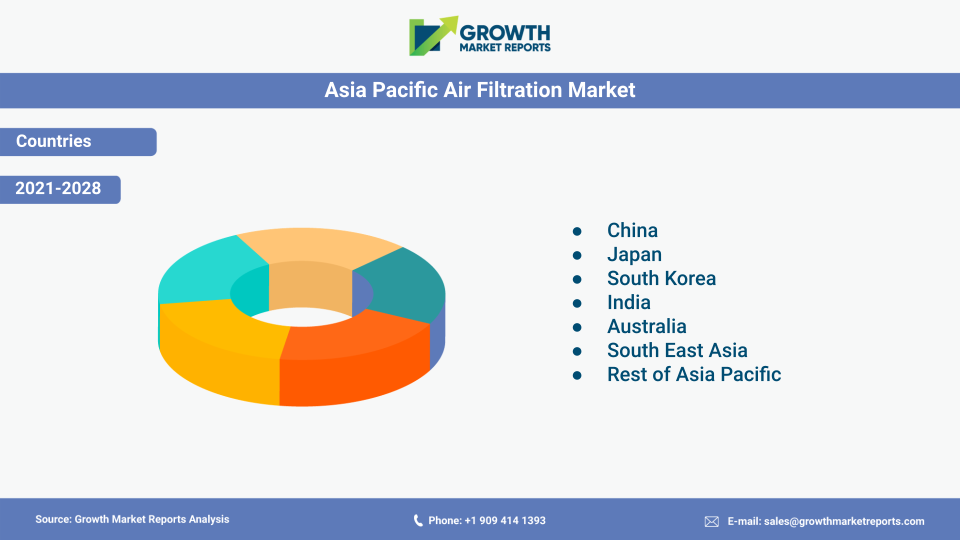
   14.2 Asia Pacific Air Filtration Market Size Forecast by Country
      14.2.1 China
      14.2.2 Japan
      14.2.3 South Korea
      14.2.4 India
      14.2.5 Australia
      14.2.6 South East Asia (SEA)
      14.2.7 Rest of Asia Pacific (APAC)
   14.3 Basis Point Share (BPS) Analysis by Country
   14.4 Absolute $ Opportunity Assessment by Country
   14.5 Market Attractiveness Analysis by Country
   14.6 Asia Pacific Air Filtration Market Size Forecast By Product Type
      14.6.1 HEPA Filters
      14.6.2 Activated Carbon Filters
      14.6.3 Electrostatic Precipitators
      14.6.4 Ionic Filters
      14.6.5 UV Filters
      14.6.6 Others
   14.7 Basis Point Share (BPS) Analysis By Product Type 
   14.8 Absolute $ Opportunity Assessment By Product Type 
   14.9 Market Attractiveness Analysis By Product Type
   14.10 Asia Pacific Air Filtration Market Size Forecast By Application
      14.10.1 Residential
      14.10.2 Commercial
      14.10.3 Industrial
      14.10.4 Healthcare
      14.10.5 Automotive
      14.10.6 Others
   14.11 Basis Point Share (BPS) Analysis By Application 
   14.12 Absolute $ Opportunity Assessment By Application 
   14.13 Market Attractiveness Analysis By Application
   14.14 Asia Pacific Air Filtration Market Size Forecast By Technology
      14.14.1 Mechanical
      14.14.2 Electronic
      14.14.3 Hybrid
   14.15 Basis Point Share (BPS) Analysis By Technology 
   14.16 Absolute $ Opportunity Assessment By Technology 
   14.17 Market Attractiveness Analysis By Technology
   14.18 Asia Pacific Air Filtration Market Size Forecast By Distribution Channel
      14.18.1 Online
      14.18.2 Offline
   14.19 Basis Point Share (BPS) Analysis By Distribution Channel 
   14.20 Absolute $ Opportunity Assessment By Distribution Channel 
   14.21 Market Attractiveness Analysis By Distribution Channel
   14.22 Asia Pacific Air Filtration Market Size Forecast By End-User
      14.22.1 Households
      14.22.2 Offices
      14.22.3 Hospitals
      14.22.4 Manufacturing
      14.22.5 Transportation
      14.22.6 Others
   14.23 Basis Point Share (BPS) Analysis By End-User 
   14.24 Absolute $ Opportunity Assessment By End-User 
   14.25 Market Attractiveness Analysis By End-User

Chapter 15 Latin America Air Filtration Analysis and Forecast
   15.1 Introduction
   15.2 Latin America Air Filtration Market Size Forecast by Country
      15.2.1 Brazil
      15.2.2 Mexico
      15.2.3 Rest of Latin America (LATAM)
   15.3 Basis Point Share (BPS) Analysis by Country
   15.4 Absolute $ Opportunity Assessment by Country
   15.5 Market Attractiveness Analysis by Country
   15.6 Latin America Air Filtration Market Size Forecast By Product Type
      15.6.1 HEPA Filters
      15.6.2 Activated Carbon Filters
      15.6.3 Electrostatic Precipitators
      15.6.4 Ionic Filters
      15.6.5 UV Filters
      15.6.6 Others
   15.7 Basis Point Share (BPS) Analysis By Product Type 
   15.8 Absolute $ Opportunity Assessment By Product Type 
   15.9 Market Attractiveness Analysis By Product Type
   15.10 Latin America Air Filtration Market Size Forecast By Application
      15.10.1 Residential
      15.10.2 Commercial
      15.10.3 Industrial
      15.10.4 Healthcare
      15.10.5 Automotive
      15.10.6 Others
   15.11 Basis Point Share (BPS) Analysis By Application 
   15.12 Absolute $ Opportunity Assessment By Application 
   15.13 Market Attractiveness Analysis By Application
   15.14 Latin America Air Filtration Market Size Forecast By Technology
      15.14.1 Mechanical
      15.14.2 Electronic
      15.14.3 Hybrid
   15.15 Basis Point Share (BPS) Analysis By Technology 
   15.16 Absolute $ Opportunity Assessment By Technology 
   15.17 Market Attractiveness Analysis By Technology
   15.18 Latin America Air Filtration Market Size Forecast By Distribution Channel
      15.18.1 Online
      15.18.2 Offline
   15.19 Basis Point Share (BPS) Analysis By Distribution Channel 
   15.20 Absolute $ Opportunity Assessment By Distribution Channel 
   15.21 Market Attractiveness Analysis By Distribution Channel
   15.22 Latin America Air Filtration Market Size Forecast By End-User
      15.22.1 Households
      15.22.2 Offices
      15.22.3 Hospitals
      15.22.4 Manufacturing
      15.22.5 Transportation
      15.22.6 Others
   15.23 Basis Point Share (BPS) Analysis By End-User 
   15.24 Absolute $ Opportunity Assessment By End-User 
   15.25 Market Attractiveness Analysis By End-User

Chapter 16 Middle East & Africa (MEA) Air Filtration Analysis and Forecast
   16.1 Introduction
   16.2 Middle East & Africa (MEA) Air Filtration Market Size Forecast by Country
      16.2.1 Saudi Arabia
      16.2.2 South Africa
      16.2.3 UAE
      16.2.4 Rest of Middle East & Africa (MEA)
   16.3 Basis Point Share (BPS) Analysis by Country
   16.4 Absolute $ Opportunity Assessment by Country
   16.5 Market Attractiveness Analysis by Country
   16.6 Middle East & Africa (MEA) Air Filtration Market Size Forecast By Product Type
      16.6.1 HEPA Filters
      16.6.2 Activated Carbon Filters
      16.6.3 Electrostatic Precipitators
      16.6.4 Ionic Filters
      16.6.5 UV Filters
      16.6.6 Others
   16.7 Basis Point Share (BPS) Analysis By Product Type 
   16.8 Absolute $ Opportunity Assessment By Product Type 
   16.9 Market Attractiveness Analysis By Product Type
   16.10 Middle East & Africa (MEA) Air Filtration Market Size Forecast By Application
      16.10.1 Residential
      16.10.2 Commercial
      16.10.3 Industrial
      16.10.4 Healthcare
      16.10.5 Automotive
      16.10.6 Others
   16.11 Basis Point Share (BPS) Analysis By Application 
   16.12 Absolute $ Opportunity Assessment By Application 
   16.13 Market Attractiveness Analysis By Application
   16.14 Middle East & Africa (MEA) Air Filtration Market Size Forecast By Technology
      16.14.1 Mechanical
      16.14.2 Electronic
      16.14.3 Hybrid
   16.15 Basis Point Share (BPS) Analysis By Technology 
   16.16 Absolute $ Opportunity Assessment By Technology 
   16.17 Market Attractiveness Analysis By Technology
   16.18 Middle East & Africa (MEA) Air Filtration Market Size Forecast By Distribution Channel
      16.18.1 Online
      16.18.2 Offline
   16.19 Basis Point Share (BPS) Analysis By Distribution Channel 
   16.20 Absolute $ Opportunity Assessment By Distribution Channel 
   16.21 Market Attractiveness Analysis By Distribution Channel
   16.22 Middle East & Africa (MEA) Air Filtration Market Size Forecast By End-User
      16.22.1 Households
      16.22.2 Offices
      16.22.3 Hospitals
      16.22.4 Manufacturing
      16.22.5 Transportation
      16.22.6 Others
   16.23 Basis Point Share (BPS) Analysis By End-User 
   16.24 Absolute $ Opportunity Assessment By End-User 
   16.25 Market Attractiveness Analysis By End-User

Chapter 17 Competition Landscape 
   17.1 Air Filtration Market: Competitive Dashboard
   17.2 Global Air Filtration Market: Market Share Analysis, 2023
   17.3 Company Profiles (Details – Overview, Financials, Developments, Strategy) 
      17.3.1 3M
Parker Hannifin Corporation
MANN+HUMMEL Group
Donaldson Company, Inc.
Camfil Group
Ahlstrom-Munksjö
Freudenberg Filtration Technologies
Cummins Filtration
Daikin Industries, Ltd.
Lydall, Inc.
Atlas Copco AB
Honeywell International Inc.
Clarcor Inc.
Filtration Group Corporation
General Electric Company
Sogefi Group
Absolent Group
AAF International (American Air Filter)
Nederman Holding AB
Koch Filter Corporation

Methodology

Our Clients

Siemens Healthcare
FedEx Logistics
General Electric
General Mills
Honda Motor Co. Ltd.
Nestle SA
sinopec
Dassault Aviation