Segments - by Component (Software, Services), by Application (Content Creation, Copywriting, Blogging, Social Media Management, Email Assistance, Others), by Deployment Mode (Cloud-Based, On-Premises), by Enterprise Size (Small and Medium Enterprises, Large Enterprises), by End-User (Education, Media & Entertainment, IT & Telecommunications, BFSI, Healthcare, Retail & E-commerce, Others)
According to our latest research, the AI Writing Assistant Software market size reached USD 2.8 billion in 2024 at a robust year-on-year growth rate, driven by surging adoption across various sectors. The market is expected to register a remarkable CAGR of 22.7% from 2025 to 2033, with a projected value of USD 22.2 billion by 2033. This growth trajectory is underpinned by increasing demand for automation in content creation, rapid advancements in natural language processing (NLP), and the rising need for cost-effective and scalable content solutions in both large enterprises and SMEs.
One of the primary growth factors fueling the expansion of the AI Writing Assistant Software market is the exponential increase in digital content consumption and production across industries. Organizations are under constant pressure to deliver high-quality, engaging, and SEO-optimized content at scale to maintain a competitive edge. AI-powered writing assistants are now essential tools for marketing, communications, and editorial teams, enabling them to streamline workflows, reduce turnaround times, and maintain consistency in messaging. The integration of advanced NLP algorithms and machine learning models has significantly enhanced the ability of these tools to generate human-like, contextually relevant, and grammatically accurate content, further boosting their adoption across diverse applications such as copywriting, blogging, and social media management.
Furthermore, the growing emphasis on personalization and customer engagement is propelling the uptake of AI Writing Assistant Software in industries such as retail, e-commerce, BFSI, and healthcare. These sectors are leveraging AI-driven solutions to automate email responses, generate personalized product descriptions, and craft targeted marketing messages, thereby improving customer experience and operational efficiency. The rise of remote work and the proliferation of digital channels have also contributed to the marketÂ’s growth, as businesses seek scalable solutions to support distributed teams and maintain brand consistency across all communication touchpoints. Additionally, the increasing availability of cloud-based deployment options has made these solutions more accessible to small and medium enterprises, further expanding the marketÂ’s addressable base.
Another significant driver is the continuous improvement in AI technologies, particularly in areas such as contextual understanding, sentiment analysis, and multilingual capabilities. Leading vendors are investing heavily in R&D to enhance the sophistication and versatility of their offerings, enabling users to generate content in multiple languages, adapt tone and style to different audiences, and ensure compliance with industry-specific regulations. The integration of AI writing assistants with popular productivity and collaboration platforms has also facilitated seamless adoption, allowing users to leverage these tools within their existing workflows. As a result, the AI Writing Assistant Software market is poised for sustained growth, with innovation and user-centric enhancements serving as key differentiators in an increasingly crowded landscape.
In addition to these factors, the role of Academic Writing Assistants is becoming increasingly significant in the AI Writing Assistant Software market. These specialized tools are designed to cater to the unique needs of students, researchers, and educators by providing features such as citation management, plagiarism detection, and academic style guidance. As educational institutions and students strive to maintain academic integrity and produce high-quality scholarly work, the demand for AI-driven academic writing solutions is on the rise. These tools not only enhance the writing process but also support users in adhering to strict academic standards and guidelines, making them indispensable in the realm of education.
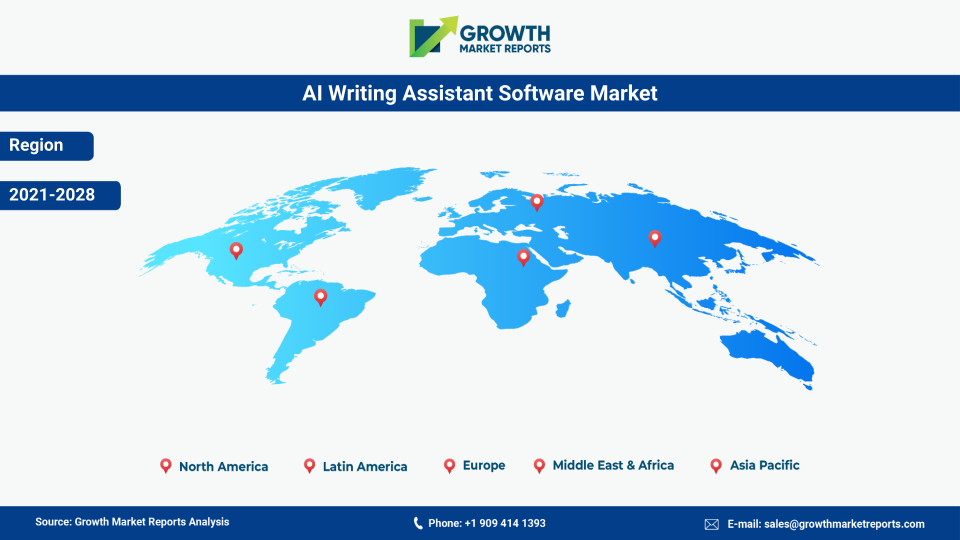
From a regional perspective, North America continues to dominate the AI Writing Assistant Software market, accounting for the largest revenue share in 2024, thanks to the presence of major technology vendors, high digital literacy, and early adoption of AI-driven solutions. However, the Asia Pacific region is witnessing the fastest growth, fueled by rapid digitalization, expanding internet penetration, and increasing investments in AI infrastructure by governments and enterprises. Europe also represents a significant market, driven by stringent content quality standards and a strong focus on data privacy and compliance. The Middle East & Africa and Latin America are emerging as promising markets, supported by rising awareness and adoption of AI technologies in business operations. Overall, the global outlook remains highly positive, with robust growth expected across all major regions through 2033.
The AI Writing Assistant Software market is broadly segmented by component into software and services. The software segment, comprising standalone applications, browser extensions, and integrations with productivity suites, accounts for the lionÂ’s share of market revenue. This dominance is attributed to the ease of deployment, scalability, and continuous feature enhancements offered by leading software vendors. The proliferation of SaaS-based models has further democratized access to advanced AI writing capabilities, allowing organizations of all sizes to leverage sophisticated content generation tools without significant upfront investments. As AI models become more refined and user interfaces more intuitive, the software segment is expected to maintain its leadership position, driven by ongoing innovation and expanding use cases.
On the other hand, the services segment, which includes consulting, training, support, and customization, is witnessing steady growth as organizations seek to maximize the value of their AI writing investments. Service providers play a critical role in helping businesses integrate AI writing assistants into existing workflows, optimize content strategies, and ensure compliance with industry-specific requirements. With the increasing complexity of AI models and the need for tailored solutions, demand for professional services is expected to rise, particularly among large enterprises and regulated industries. These services not only facilitate smoother adoption but also drive higher customer satisfaction and retention rates.
A notable trend within the component landscape is the emergence of hybrid solutions that combine robust software platforms with specialized services. Vendors are increasingly offering bundled packages that include both the core AI writing software and value-added services such as onboarding, training, and ongoing support. This integrated approach enables organizations to accelerate time-to-value, reduce implementation risks, and achieve better alignment with business objectives. As competition intensifies, differentiation through superior service delivery and customer experience is becoming a key success factor for market players.
Looking ahead, the component segment is expected to evolve in response to changing customer needs and technological advancements. The software segment will likely see continued innovation in areas such as real-time collaboration, advanced analytics, and multilingual support, while the services segment will expand to include more specialized offerings such as AI ethics consulting and content localization. Both segments are poised for robust growth, with software driving mass adoption and services enabling deeper, more strategic engagements.
| Attributes | Details |
| Report Title | AI Writing Assistant Software Market Research Report 2033 |
| By Component | Software, Services |
| By Application | Content Creation, Copywriting, Blogging, Social Media Management, Email Assistance, Others |
| By Deployment Mode | Cloud-Based, On-Premises |
| By Enterprise Size | Small and Medium Enterprises, Large Enterprises |
| By End-User | Education, Media & Entertainment, IT & Telecommunications, BFSI, Healthcare, Retail & E-commerce, Others |
| Regions Covered | North America, Europe, APAC, Latin America, MEA |
| Base Year | 2024 |
| Historic Data | 2018-2023 |
| Forecast Period | 2025-2033 |
| Number of Pages | 274 |
| Number of Tables & Figures | 333 |
| Customization Available | Yes, the report can be customized as per your need. |
The application segment of the AI Writing Assistant Software market encompasses a diverse range of use cases, including content creation, copywriting, blogging, social media management, email assistance, and others. Content creation remains the most prominent application, accounting for a substantial share of market revenue due to the insatiable demand for high-quality, SEO-optimized content across digital channels. AI writing assistants are increasingly being used to automate the generation of articles, reports, whitepapers, and other long-form content, enabling organizations to scale their content operations and maintain consistency in tone, style, and messaging. The ability to quickly produce engaging and relevant content has become a critical competitive advantage, particularly in industries such as media, publishing, and marketing.
Copywriting and blogging are also significant application areas, as businesses seek to streamline the creation of product descriptions, ad copy, and blog posts. AI-powered tools are capable of generating persuasive, contextually relevant, and conversion-oriented copy, reducing the reliance on human writers and accelerating campaign timelines. The integration of AI writing assistants with content management systems and marketing automation platforms has further enhanced their value proposition, enabling seamless content distribution and performance tracking. As organizations increasingly prioritize digital marketing and inbound lead generation, the demand for AI-driven copywriting and blogging solutions is expected to surge.
Social media management and email assistance are rapidly emerging as high-growth applications within the AI Writing Assistant Software market. With the proliferation of social platforms and the need for real-time engagement, businesses are leveraging AI tools to automate the creation, scheduling, and optimization of social media posts. These solutions can analyze audience sentiment, recommend trending topics, and suggest optimal posting times, thereby maximizing reach and engagement. Similarly, AI-powered email assistants are helping organizations automate responses, personalize outreach, and improve email deliverability, resulting in higher open and conversion rates. The ability to handle large volumes of communication efficiently is particularly valuable for customer support, sales, and marketing teams.
Other applications, such as technical documentation, legal drafting, and academic writing, are also gaining traction as AI models become more sophisticated and capable of understanding complex domain-specific requirements. The versatility of AI writing assistants, combined with continuous improvements in contextual understanding and language generation, is expanding their applicability across a wide range of industries and use cases. As organizations continue to explore new ways to leverage AI for content automation, the application segment is expected to witness sustained innovation and diversification.
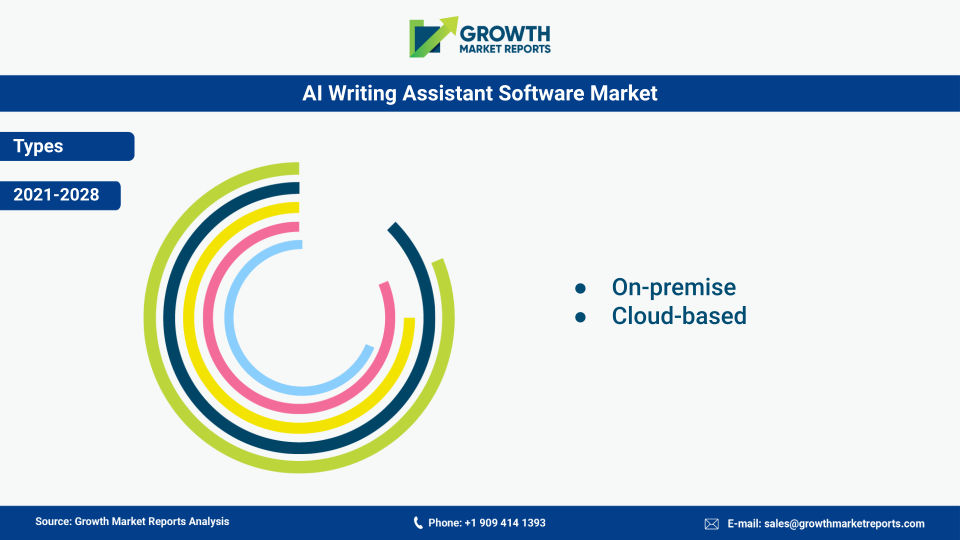
The AI Writing Assistant Software market is segmented by deployment mode into cloud-based and on-premises solutions. Cloud-based deployment has emerged as the preferred choice for most organizations, accounting for the majority of market revenue in 2024. The popularity of cloud-based solutions can be attributed to their scalability, flexibility, and ease of access, allowing users to leverage AI writing capabilities from any location and device. Cloud deployment also enables seamless integration with other SaaS applications, facilitates real-time collaboration, and ensures automatic updates and maintenance. As businesses increasingly adopt remote and hybrid work models, the demand for cloud-based AI writing assistants is expected to grow further.
On-premises deployment, while representing a smaller share of the market, remains important for organizations with stringent data security, privacy, and compliance requirements. Industries such as BFSI, healthcare, and government often prefer on-premises solutions to maintain full control over sensitive data and ensure adherence to regulatory standards. These deployments typically involve higher upfront costs and longer implementation timelines but offer greater customization and integration capabilities. As data privacy concerns continue to rise, some enterprises may opt for hybrid deployment models that combine the benefits of both cloud and on-premises solutions.
A key trend within the deployment segment is the growing focus on security and data governance. Cloud-based vendors are investing heavily in advanced encryption, access controls, and compliance certifications to address the concerns of enterprise customers. The ability to offer robust security features, data residency options, and transparent privacy policies is becoming a significant differentiator in the market. Additionally, the rise of edge computing and federated learning is enabling new deployment models that balance performance, privacy, and scalability.
Looking forward, the deployment mode segment is expected to evolve in line with technological advancements and changing customer preferences. While cloud-based solutions will continue to dominate due to their inherent advantages, on-premises and hybrid deployments will remain relevant for specific use cases and industries. Vendors that can offer flexible deployment options, seamless migration paths, and strong security assurances are likely to capture a larger share of the market.
The AI Writing Assistant Software market is segmented by enterprise size into small and medium enterprises (SMEs) and large enterprises. Large enterprises currently account for the largest share of market revenue, driven by their substantial content needs, complex workflows, and greater resources for technology adoption. These organizations are leveraging AI writing assistants to automate content creation at scale, ensure brand consistency across multiple channels, and enhance collaboration among distributed teams. The ability to integrate AI writing tools with enterprise-grade platforms such as CRM, ERP, and marketing automation systems is a key factor driving adoption among large enterprises.
Small and medium enterprises (SMEs), while representing a smaller share of the market, are emerging as a high-growth segment due to the increasing affordability and accessibility of AI writing solutions. Cloud-based deployment models, subscription pricing, and user-friendly interfaces have lowered the barriers to entry for SMEs, enabling them to compete more effectively with larger players. AI writing assistants are helping SMEs streamline marketing, improve customer engagement, and reduce operational costs by automating routine content tasks. As digital transformation accelerates across sectors, the adoption of AI-powered writing tools among SMEs is expected to rise significantly.
A notable trend within the enterprise size segment is the growing demand for tailored solutions that address the unique needs of different organization types. Large enterprises often require advanced customization, integration, and security features, while SMEs prioritize ease of use, affordability, and rapid deployment. Vendors are responding by offering tiered product offerings, flexible pricing plans, and specialized support services to cater to the diverse requirements of their customer base. The ability to deliver value across the entire spectrum of enterprise sizes is becoming a critical success factor in the market.
Looking ahead, both large enterprises and SMEs are expected to drive robust growth in the AI Writing Assistant Software market, albeit with different adoption drivers and use cases. Large enterprises will continue to invest in advanced AI capabilities to support complex content operations, while SMEs will focus on leveraging AI to enhance agility, competitiveness, and customer engagement. Vendors that can effectively address the distinct needs of both segments are well positioned to capture a larger share of the market.
The AI Writing Assistant Software market serves a wide range of end-users, including education, media & entertainment, IT & telecommunications, BFSI, healthcare, retail & e-commerce, and others. The media & entertainment sector holds the largest market share, driven by the relentless demand for high-quality content, rapid publishing cycles, and the need to engage diverse audiences across multiple platforms. AI writing assistants are enabling publishers, broadcasters, and content creators to automate news articles, scriptwriting, and social media posts, thereby enhancing productivity and content quality.
The education sector is another significant end-user, leveraging AI writing assistants to support students, educators, and administrators in tasks such as essay writing, feedback generation, and curriculum development. The ability of AI tools to provide real-time grammar checks, plagiarism detection, and personalized writing suggestions is transforming the way educational content is created and consumed. As digital learning continues to gain traction, the adoption of AI writing assistants in education is expected to accelerate.
IT & telecommunications, BFSI, and healthcare are also key end-user segments, each with unique content requirements and compliance considerations. In IT & telecommunications, AI writing assistants are used to automate technical documentation, product manuals, and customer support responses. The BFSI sector relies on AI tools to generate regulatory reports, customer communications, and marketing materials, while healthcare organizations use them for medical documentation, patient education, and research publications. The ability to ensure accuracy, consistency, and compliance is critical in these sectors, driving the demand for advanced AI writing solutions.
Retail & e-commerce is witnessing rapid adoption of AI writing assistants for product descriptions, customer reviews, and personalized marketing messages. The ability to generate large volumes of unique, SEO-optimized content is helping retailers improve online visibility, drive sales, and enhance customer experience. Other end-users, such as legal, government, and professional services, are also exploring the benefits of AI-powered writing tools for various documentation and communication needs. As the use cases for AI writing assistants continue to expand, the end-user segment is poised for sustained growth and diversification.
The AI Writing Assistant Software market presents significant opportunities for innovation and expansion, particularly as organizations across sectors seek to automate and optimize their content creation processes. One of the most promising opportunities lies in the development of domain-specific AI writing assistants tailored to the unique needs of industries such as legal, healthcare, and finance. By incorporating industry-specific terminology, compliance requirements, and contextual understanding, vendors can deliver highly specialized solutions that drive greater value for end-users. Additionally, the integration of AI writing assistants with emerging technologies such as generative AI, voice recognition, and augmented reality is opening up new possibilities for content creation, collaboration, and user engagement.
Another major opportunity is the expansion into emerging markets, where digital transformation is accelerating and demand for AI-powered solutions is on the rise. Vendors that can offer affordable, scalable, and localized AI writing assistants stand to capture significant market share in regions such as Asia Pacific, Latin America, and the Middle East & Africa. The growing focus on multilingual support, data privacy, and regulatory compliance is also creating opportunities for differentiation and value creation. As organizations increasingly prioritize agility, efficiency, and customer experience, the adoption of AI writing assistants is expected to become a strategic imperative across industries.
Despite the numerous opportunities, the AI Writing Assistant Software market faces several restraining factors, chief among them being concerns around data privacy, security, and ethical use of AI-generated content. Organizations are increasingly scrutinizing the data handling practices of AI vendors, particularly in light of evolving regulations such as GDPR and CCPA. Ensuring transparency, accountability, and compliance is critical to building trust and driving adoption. Additionally, the risk of bias, inaccuracies, and misuse of AI-generated content remains a concern, necessitating ongoing investment in model training, validation, and oversight. Vendors that can effectively address these challenges while delivering innovative and user-centric solutions are likely to emerge as market leaders.
North America remains the largest regional market for AI Writing Assistant Software, accounting for approximately 38% of global revenue in 2024, or about USD 1.06 billion. The regionÂ’s dominance is underpinned by the presence of leading technology vendors, high digital literacy, and early adoption of AI-driven solutions across industries such as media, education, and BFSI. The United States, in particular, is a major growth engine, with organizations increasingly integrating AI writing assistants into their content and communication workflows. Canada is also witnessing strong adoption, supported by government initiatives to promote AI innovation and digital transformation.
Europe represents the second-largest market, contributing roughly 27% of global revenue, or USD 756 million in 2024. The region is characterized by stringent content quality standards, a strong focus on data privacy and compliance, and a vibrant ecosystem of AI startups and research institutions. Countries such as the United Kingdom, Germany, and France are leading the charge, with organizations in sectors such as education, healthcare, and retail rapidly adopting AI writing assistants to enhance productivity and customer engagement. The region is expected to witness a steady CAGR of 21.5% through 2033, driven by ongoing investments in AI infrastructure and talent development.
The Asia Pacific region is emerging as the fastest-growing market, with a CAGR projected at 25.2% from 2025 to 2033. In 2024, the region accounted for 21% of global revenue, or approximately USD 588 million. Rapid digitalization, expanding internet penetration, and increasing investments in AI by governments and enterprises are fueling adoption across key markets such as China, India, Japan, and South Korea. The regionÂ’s large and diverse population, coupled with a growing appetite for digital content, presents significant opportunities for vendors offering localized and multilingual AI writing solutions. Latin America and the Middle East & Africa, while currently smaller markets, are poised for robust growth as awareness and adoption of AI writing assistants continue to rise.
The AI Writing Assistant Software market is characterized by intense competition, rapid innovation, and a dynamic landscape of established technology giants, emerging startups, and niche solution providers. Leading vendors are differentiating themselves through continuous investment in R&D, expansion of product portfolios, and strategic partnerships aimed at enhancing their technological capabilities and global reach. The competitive landscape is further shaped by the increasing convergence of AI writing assistants with broader AI-powered productivity suites, collaboration platforms, and digital marketing solutions, resulting in a highly integrated and feature-rich ecosystem.
Market leaders are focusing on enhancing the sophistication and versatility of their AI writing assistants by leveraging advanced NLP, machine learning, and generative AI models. Key areas of innovation include contextual understanding, sentiment analysis, tone adaptation, and multilingual support, enabling users to generate high-quality content tailored to diverse audiences and use cases. Vendors are also prioritizing user experience, with intuitive interfaces, real-time feedback, and seamless integrations with popular productivity tools such as Microsoft Office, Google Workspace, and Slack. The ability to deliver measurable business outcomes, such as improved content quality, faster turnaround times, and higher engagement rates, is a key differentiator in the market.
The market is also witnessing a wave of consolidation, with established players acquiring innovative startups to accelerate product development, expand their customer base, and strengthen their competitive position. Strategic partnerships and alliances are becoming increasingly common, as vendors seek to offer end-to-end solutions that address the full spectrum of content creation, management, and distribution needs. The ability to offer robust security, compliance, and customization features is particularly important for capturing enterprise customers, while affordability, ease of use, and rapid deployment are critical for success in the SME segment.
Some of the major companies operating in the AI Writing Assistant Software market include Grammarly Inc., Jasper AI, QuillBot, Writesonic, Copy.ai, Hemingway Editor, OpenAI, and Google LLC. Grammarly is renowned for its advanced grammar, spelling, and style checking capabilities, serving millions of users worldwide across education, business, and personal use cases. Jasper AI and Copy.ai are recognized for their generative AI-powered content creation tools, enabling users to automate copywriting, blogging, and social media management. QuillBot specializes in paraphrasing and summarization, catering to students, researchers, and professionals seeking to enhance their writing efficiency. OpenAI, through its GPT models, powers a wide range of AI writing assistants and continues to set the benchmark for language generation capabilities.
These companies are continuously expanding their product offerings, investing in AI research, and forging strategic alliances to maintain their competitive edge. For instance, Grammarly has introduced enterprise-grade features such as advanced analytics and team collaboration tools, while Jasper AI and Writesonic are leveraging generative AI to offer highly customizable and domain-specific writing solutions. Google LLC, with its AI-powered writing features integrated into Google Workspace, is driving mass adoption among business users. The competitive landscape is expected to remain dynamic, with ongoing innovation, strategic partnerships, and customer-centric enhancements shaping the future of the AI Writing Assistant Software market.
The AI Writing Assistant Software market has been segmented on the basis of
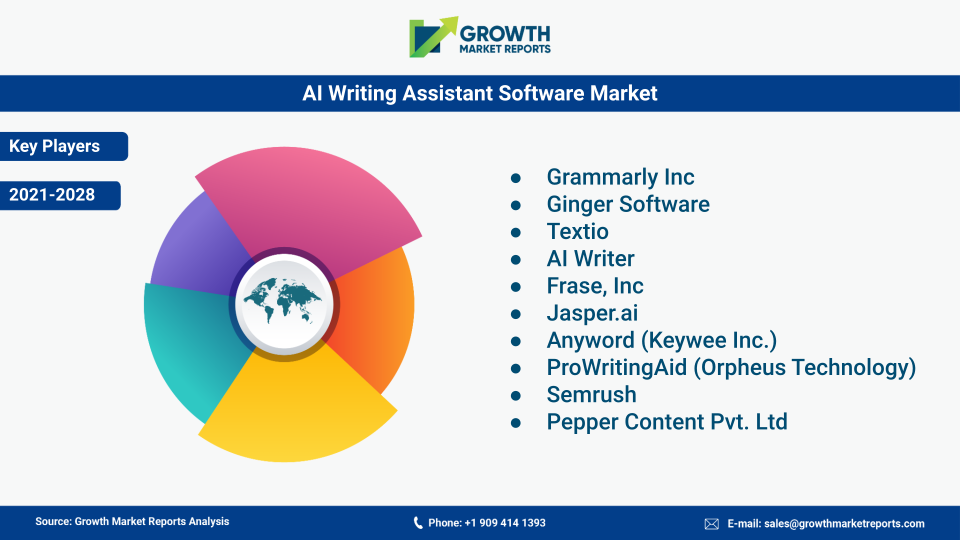
Major players include, Grammarly Inc, Ginger Software, Textio, AI Writer, Frase, Inc, Jasper.ai, Anyword (Keywee Inc.), ProWritingAid (Orpheus Technology), Semrush, Pepper Content Pvt. Ltd, and others.
Factors such as impact on labor, GDP, technological innovations, digitalization, government regulations, and investments are analyzed in the final report.
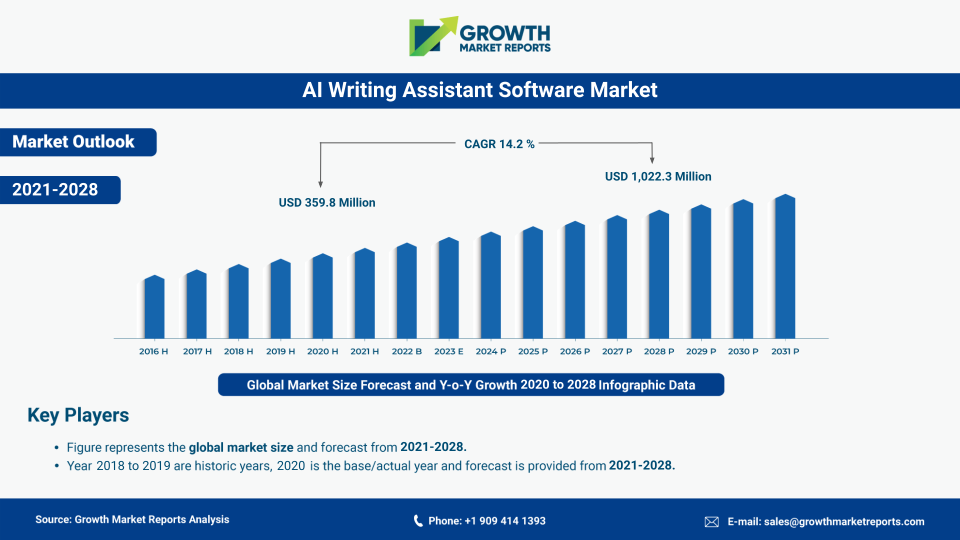
The base year considered for the global AI Writing Assistant Software market report is 2020. The complete analysis period is 2018 to 2028, wherein, 2018, and 2019 are the historic years, and the forecast is provided from 2021 to 2028.
Individuals, commercials, and others sectors are the major end-users of the AI Writing Assistant Software.
The market is expected to increase in 2019 and 2020 owing to the COVID 19 pandemic is positively impact on the global AI Writing Assistant Software market.
Factors such as competitive strength and market positioning are key areas considered while selecting top companies to be profiled.
Growing demand for AI technology in writing, rising digitalization across intelligence technology in writing, rising adoption of AI writing assistant in cyber security, growing investments to leverage the AI technology are the factors expected to drive the market growth during forecast period.
In addition to market size (in US$ Million), Company Market Share (in % for base year 2020), impact of key regulations and technological landscape.
According to this Growth Market Reports report, the global AI writing assistant software market was valued at USD 359.8 million in 2020 and is projected to reach USD 1,022.3 million by 2028, expanding at a CAGR of 14.2% during the forecast period.
Additional company profiles can be provided on request