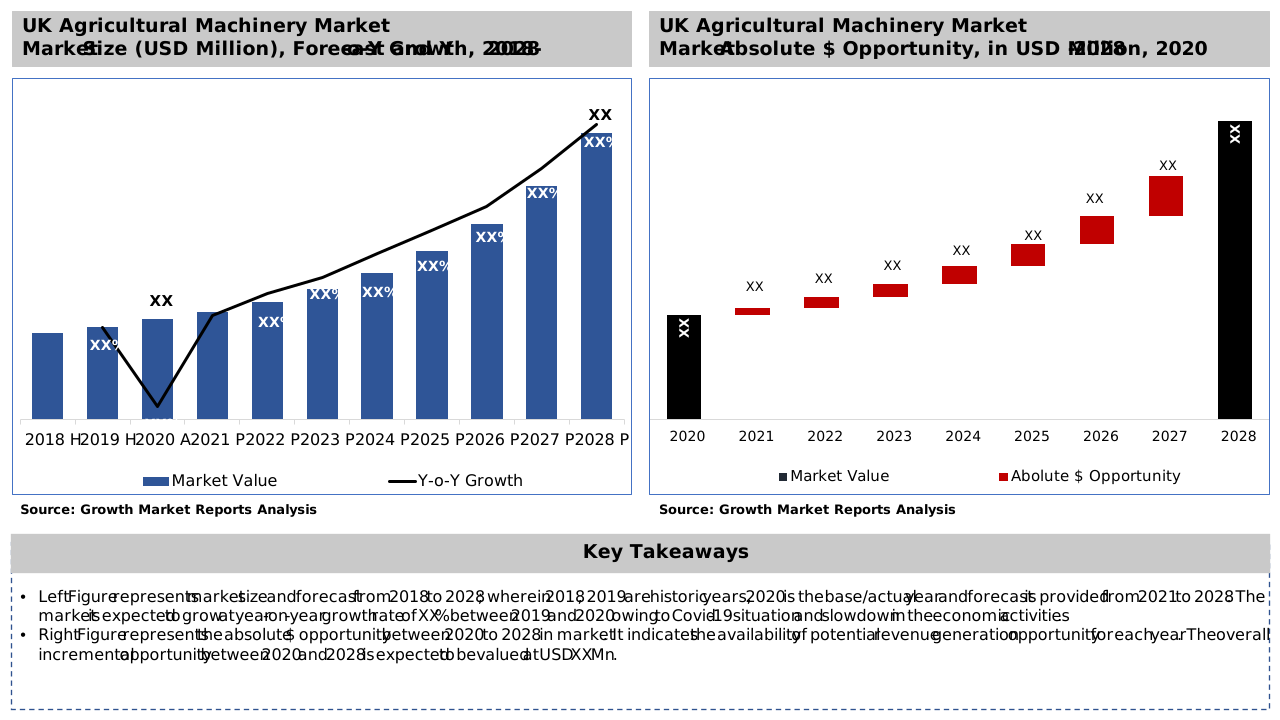
The UK agricultural machinery market size is expected to register a significant CAGR during the forecast period, 2021–2028. The growth of the market is attributed to increasing government support for farmers in the form of loan waivers, credit finance, and subsidized loans.
The agricultural machinery industry produces and maintains tractors, machineries, and equipment used in agriculture. The introduction of new subsidies to the farmers and loan schemes for adapting modern methods is significantly driving the growth of the market. The recent development in farm mechanization for irrigation and harvesting of crops are responsible for increasing agricultural yields and helping in keeping the labor costs low. Government efforts to bring in farmers to the industrial fold by assuring timely assistance with crop seeds, fertilizers, and right prices for the crops, has influenced the agricultural industry drastically.
Farm monitoring platforms have gained prominence with the evolution of IoT projects in farming and agriculture sector. The efficient use of data owing to the technological advancement for improving farming practice has drastically changed the traditional methods of farming. Additionally, the increasing adoption of farm control monitoring system for allowing farmers to have overall control of their equipment have helped farmers in multiple ways. The livestock monitoring and control of rain gauges and irrigation gates have helped in saving resources and excessive maintenance costs.
The COVID-19 pandemic had a significant impact on the growth of various industries including agricultural industry. The outbreak of COVID-19 had affected the supply chain of agriculture equipment and foiled the plans of various procurements for cultivation.
Market Trends, Drivers, Restraints, and Opportunities
- Increasing farm labor is anticipated to drive the market growth during the forecast period.
- Provision for low-interest rates on loans and investment grants are major factors expected to spur the market growth in the coming years.
- Increasing technological development in agricultural machinery is projected to boost the market expansion during the projected period.
- High cost of agricultural equipments in emerging economies is expected to hamper the growth of market during the forecast period.
- Government support for the development of farming activities such as provision of subsidies for acquiring fertilizers, seeds, and agriculture equipment are key factors that are anticipated to create lucrative opportunities for the market in the coming years.
Scope of the Report
The report on the UK agricultural machinery market includes an assessment of the market, trends, segments, and regional markets. Overview and dynamics have also been included in the report.
|
Attributes
|
Details
|
|
Report Title
|
The UK Agricultural Machinery Market - Industry Analysis, Growth, Share, Size, Trends, and Forecast
|
|
Base Year
|
2020
|
|
Historic Data
|
2018–2019
|
|
Forecast Period
|
2021–2028
|
|
Segmentation
|
Types (Tractors [Below 50 HP, 50 to 100 HP, 100 to 150 HP, and Above 150 HP], Equipment [Harrows, Cultivators & Tillers, Plows, and Others], Irrigation Machinery [Drip Irrigation, Sprinkler Irrigation, and Others], Harvesting Machinery [Forage Harvesters, Combine Harvesters, and Others], and Haying & Forage Machinery [Balers, Mowers & Conditioners, and Others])
|
|
Country
|
The UK
|
|
Report Coverage
|
Company Share, Market Analysis and Size, Competitive Landscape, Growth Factors, and Trends, and Revenue Forecast
|
|
Key Players Covered in the Report
|
Kuhn Group; AGCO Corporation; CLAAS KGaA mbH; Kubota Corporation; CNH Industrial NV; and Deere & Company
|
The UK Agricultural Machinery Market Segment Insight
Confectionery segment is anticipated to register at a significant CAGR
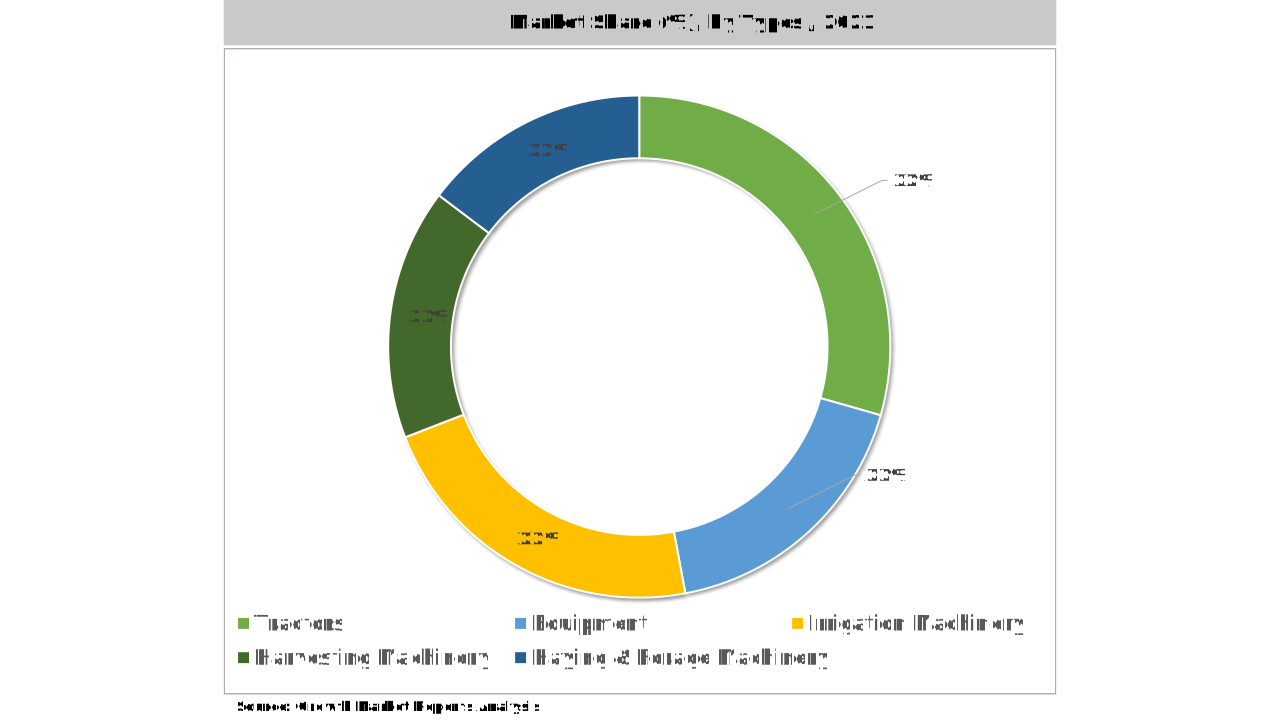
On the basis of types, the market is segmented into tractors, equipment, irrigation machinery, harvesting machinery, and haying & forage machinery. The tractors segment is further fragmented into below 50 HP, 50 to 100 HP, 100 to 150 HP, and above 150 HP. The equipment segment is divided into harrows, cultivators & tillers, plows, and others. The irrigation machinery segment is further segregated into drip irrigation, sprinkler irrigation, and others. The harvesting machinery segment is classified as forage harvesters, combine harvesters, and others. The haying & forage machinery segment is further divided into balers, mowers & conditioners, and others. The tractors segment is anticipated to register a significant CAGR during the forecast period owing to the increasing farm mechanization in the country. Moreover, the increasing keen on purchasing high-end tractor, efforts to improve crop yields, and improved farm efficiencies are the some of the major factors expected to fuel the growth of the market segment in the coming years. On the other hand, the equipment segment is projected to boost the growth of the market segment during the projected period due to rising demand for smart equipment that are capable of providing accurate metrics on soil quality and vital parameters for a good harvest. Furthermore, the increasing product launches, rising initiatives by equipment manufacturers, and growing demand for technological advancement are key factors that are expected to grow the market segment at a rapid pace in the projected timeline.
Segments
The UK agricultural machinery market is segmented on the basis of:
Types
- Tractors
- Below 50 HP
- 50 to 100 HP
- 100 to 150 HP
- Above 150 HP
- Equipment
- Harrows
- Cultivators & Tillers
- Plows
- Others
- Irrigation Machinery
- Drip Irrigation
- Sprinkler Irrigation
- Others
- Harvesting Machinery
- Forage Harvesters
- Combine Harvesters
- Others
- Haying & Forage Machinery
- Balers
- Mowers & Conditioners
- Others
Country
Key Players
- Kuhn Group
- AGCO Corporation
- CLAAS KGaA mbH
- Kubota Corporation
- CNH Industrial NV
- Deere & Company
Competitive Landscape
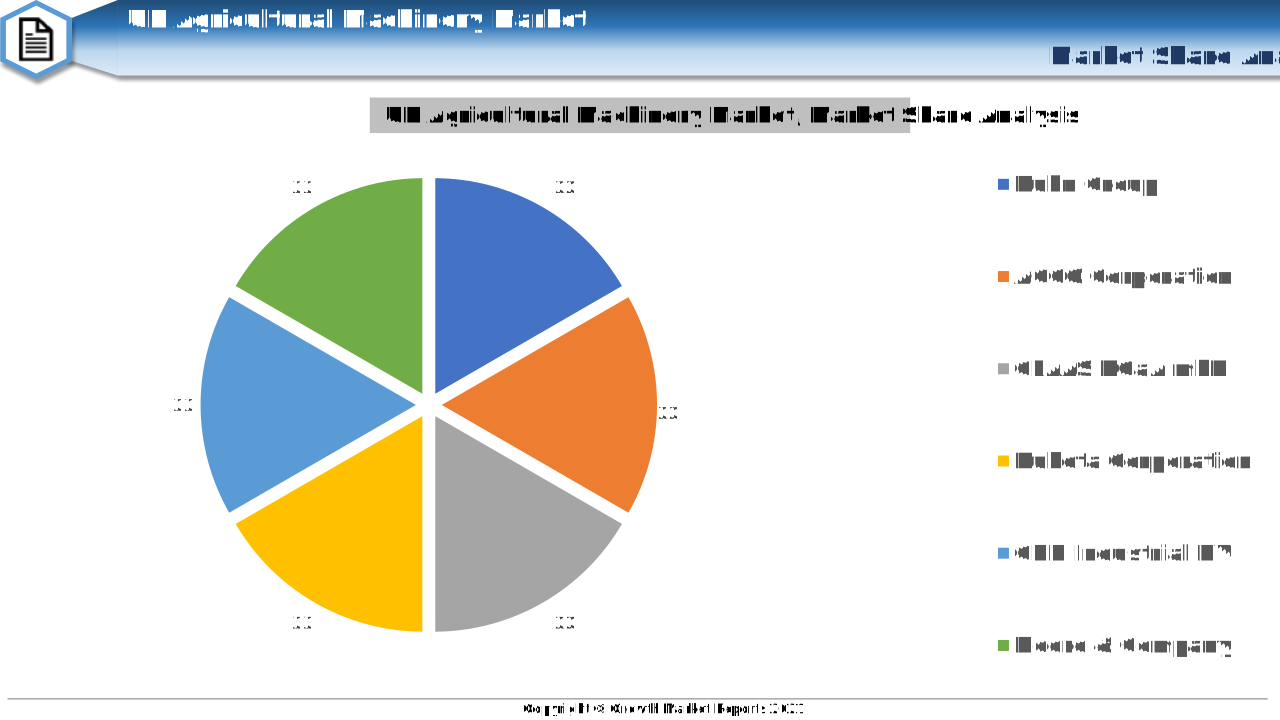
The key players competing in the UK agricultural machinery market are Kuhn Group; AGCO Corporation; CLAAS KGaA mbH; Kubota Corporation; CNH Industrial NV; and Deere & Company. Some of these players are engaging in heavy investments in research & development activities, and launching agricultural machinery to increase their market shares.
In November 2021, AGCO Corporation announced a three-year partnership with MANRRS to increase minority representation from underrepresented backgrounds and to promote the agriculture industry as an admirable career option.
In November 2021, Kubota Corporation planned to invest up to 1.25 billion to become the majority stakeholder in India’s fourth-largest tractor maker, Escorts. The investment further led to the creation of one of the largest Indo-Japan agriculture collaborations to attain global leadership in the farm equipment sector.











 Request For Customization
 Enquiry Before Buying
 Speak With Analyst