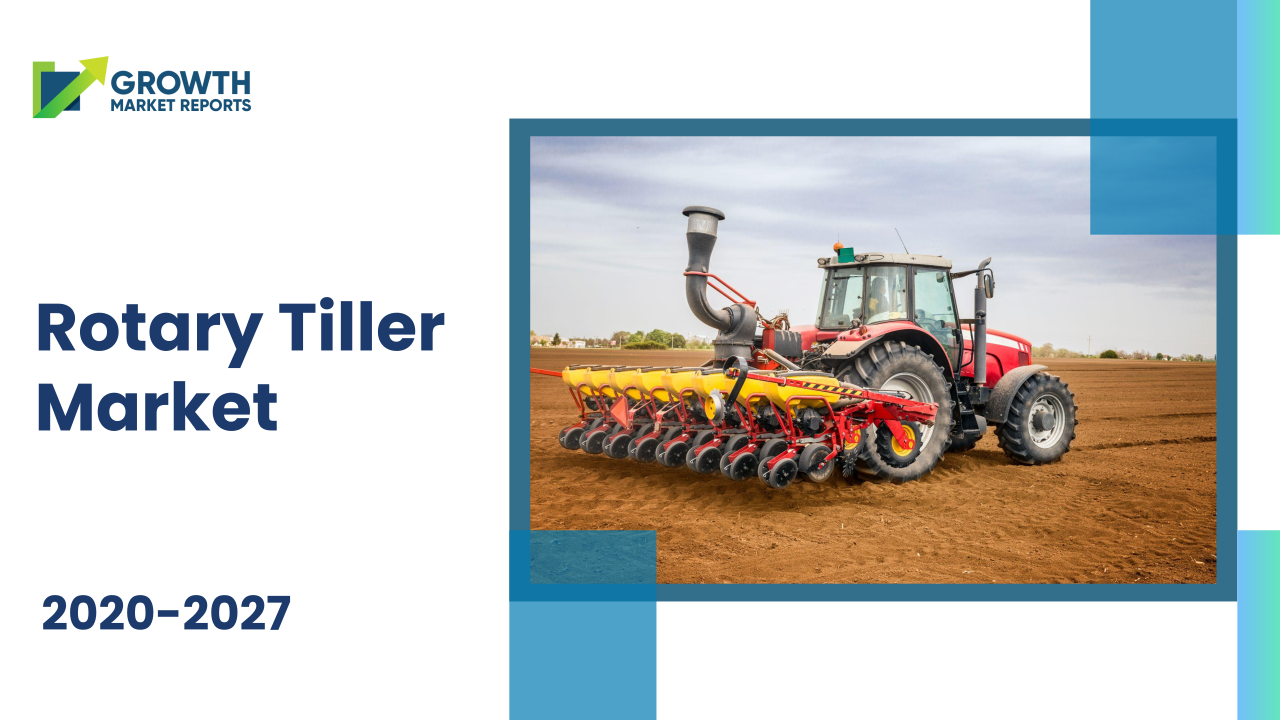
Agricultural Machinery Market Research Report 2033

Agricultural Machinery Market Research Report 2033

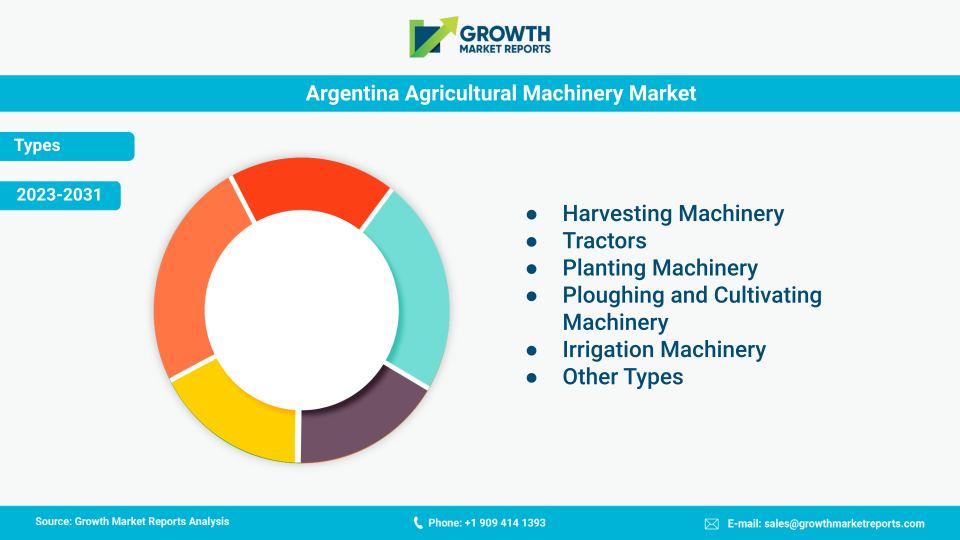
Segments - by Product Type (Tractors, Harvesters, Planting Equipment, Irrigation Equipment, Spraying Equipment, Others), by Application (Land Development & Seed Bed Preparation, Sowing & Planting, Weed Cultivation, Harvesting & Threshing, Others), by Power Output (Below 30 HP, 31–70 HP, 71–130 HP, Above 130 HP), by Sales Channel (OEMs, Aftermarket)

https://growthmarketreports.com/Raksha
Author : Raksha Sharma
https://growthmarketreports.com/Vaibhav
Fact-checked by : V. Chandola
https://growthmarketreports.com/Rucha
Editor : Rucha Phatak

Upcoming | Report ID :CM-1550 | 4.1 Rating | 88 Reviews | 292 Pages | Format : Docx PDF

Report Description


Agricultural Machinery Market Outlook

According to our latest research, the global agricultural machinery market size stood at USD 211.5 billion in 2024, with a robust CAGR of 6.2% projected from 2025 to 2033. By the end of the forecast period, the market is anticipated to reach USD 362.7 billion. This sustained growth is primarily fueled by intensifying demand for advanced mechanization, rising labor costs, and the ongoing need to improve agricultural productivity to feed a growing global population.

The agricultural machinery market is experiencing significant transformation, largely driven by the rapid adoption of precision agriculture and digital farming technologies. Farmers are now integrating GPS-guided tractors, autonomous harvesters, and IoT-enabled irrigation equipment to optimize resource utilization and boost crop yields. These advancements not only enhance operational efficiency but also address critical challenges such as labor shortages and the need for sustainable farming practices. Moreover, governments worldwide are rolling out supportive policies, subsidies, and incentives to promote the adoption of modern agricultural equipment, further accelerating market growth. The convergence of technology, policy support, and evolving farmer preferences is creating a fertile environment for innovation and expansion in the agricultural machinery sector.

Another major growth driver for the agricultural machinery market is the increased focus on food security and the need to maximize arable land productivity. Rapid urbanization and shrinking agricultural land in several regions have compelled farmers to invest in high-efficiency machinery capable of performing multiple tasks with precision. The shift from traditional, labor-intensive farming to mechanized operations enables timely soil preparation, precise planting, efficient crop protection, and faster harvesting, ultimately leading to higher output and profitability. Additionally, the emergence of sustainable agricultural practices and environment-friendly machinery, such as electric and hybrid tractors, is attracting investments from both established players and new entrants, further propelling the market forward.

The evolving demographic landscape, particularly in emerging economies, is also playing a pivotal role in shaping the agricultural machinery market. As rural populations migrate to urban centers in search of better opportunities, the agricultural workforce is dwindling, making mechanization indispensable for maintaining and increasing food production. This trend is especially pronounced in Asia Pacific and Latin America, where smallholder farmers are gradually embracing technology to overcome labor constraints and improve farm efficiency. Furthermore, the rising awareness about the benefits of modern machinery, coupled with easier access to financing and leasing options, is making advanced equipment more accessible to a broader base of farmers, thereby expanding the market’s reach.

From a regional perspective, Asia Pacific continues to dominate the agricultural machinery market, accounting for the largest share in 2024, followed by North America and Europe. The growth in Asia Pacific is primarily attributed to the large agricultural base, increasing mechanization rates in countries like China and India, and substantial government support for rural development. North America, with its technologically advanced farming practices and high adoption of autonomous equipment, remains at the forefront of innovation. Europe’s market, meanwhile, is being driven by stringent environmental regulations and the push for sustainable agriculture. Latin America and the Middle East & Africa are witnessing steady growth, fueled by rising investments in agricultural infrastructure and modernization initiatives. Overall, regional dynamics are playing a crucial role in shaping the competitive landscape and growth trajectory of the global agricultural machinery market.

Global Agricultural Machinery Industry Outlook

Product Type Analysis

The agricultural machinery market is segmented by product type into tractors, harvesters, planting equipment, irrigation equipment, spraying equipment, and others. Among these, tractors continue to dominate the market, accounting for the largest revenue share in 2024. Tractors are considered the backbone of mechanized farming, offering unmatched versatility for various operations such as plowing, tilling, and hauling. The increasing adoption of high-horsepower and technologically advanced tractors, equipped with GPS and telematics, is driving segment growth. Furthermore, government subsidies and favorable financing options are making tractors more accessible to small and medium-scale farmers, especially in emerging markets. The trend toward compact and utility tractors tailored for horticulture and specialty crops is also gaining momentum, reflecting the market’s adaptability to diverse agricultural needs.

Harvesters represent another significant segment, benefiting from the growing need for efficient and timely crop harvesting. The integration of advanced features such as automated steering, yield mapping, and real-time monitoring is revolutionizing the harvester landscape. As global demand for grains and oilseeds rises, farmers are increasingly investing in combine harvesters and specialized machines for rice, corn, and sugarcane. The adoption of self-propelled harvesters is particularly strong in developed regions, where labor shortages and large-scale farming operations necessitate high-capacity equipment. Meanwhile, in developing countries, the gradual shift from manual to mechanized harvesting is opening new growth avenues for manufacturers.

Planting equipment is witnessing accelerated growth due to the rising emphasis on precision agriculture. Modern planters and seed drills are designed to ensure uniform seed placement and optimal spacing, leading to improved germination rates and higher yields. The integration of variable rate technology and automated controls is enabling farmers to tailor planting operations to specific field conditions, thereby reducing seed wastage and maximizing productivity. This segment is also benefiting from the increasing cultivation of high-value crops and the expansion of contract farming, which necessitate efficient and reliable planting solutions.

Irrigation equipment, including drip and sprinkler systems, is gaining traction as water scarcity and climate variability challenge traditional farming practices. The adoption of smart irrigation technologies, powered by sensors and automation, is helping farmers conserve water and optimize crop growth. Governments and international organizations are actively promoting micro-irrigation systems through subsidies and awareness programs, particularly in water-stressed regions. Spraying equipment, essential for crop protection and nutrient application, is also evolving with the introduction of drone-based and self-propelled sprayers. These innovations are enhancing the precision, efficiency, and safety of spraying operations, thereby contributing to the overall growth of the agricultural machinery market.

The “others” category encompasses a wide range of equipment, including tillers, balers, and soil preparation tools, each playing a vital role in modern agriculture. The demand for specialized machinery tailored to niche crops and regional farming practices is steadily rising, reflecting the market’s diversity and adaptability. Manufacturers are increasingly focusing on developing multipurpose and modular equipment to cater to evolving farmer needs and maximize equipment utilization. The growing trend toward custom-built machinery and the integration of digital technologies are expected to further expand the scope and significance of this segment in the coming years.

Report Scope

Attributes Details
Report Title Agricultural Machinery Market Research Report 2033
By Product Type Tractors, Harvesters, Planting Equipment, Irrigation Equipment, Spraying Equipment, Others
By Application Land Development & Seed Bed Preparation, Sowing & Planting, Weed Cultivation, Harvesting & Threshing, Others
By Power Output Below 30 HP, 31–70 HP, 71–130 HP, Above 130 HP
By Sales Channel OEMs, Aftermarket
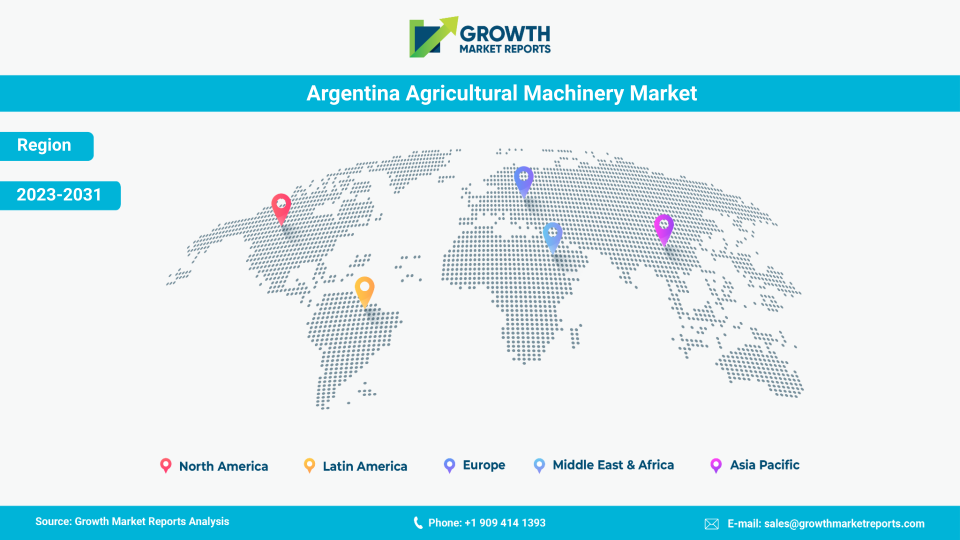
Regions Covered North America, Europe, APAC, Latin America, MEA
Base Year 2024
Historic Data 2018-2023
Forecast Period 2025-2033
Number of Pages 292
Number of Tables & Figures 277
Customization Available Yes, the report can be customized as per your need.

Application Analysis

The application segment of the agricultural machinery market is categorized into land development & seed bed preparation, sowing & planting, weed cultivation, harvesting & threshing, and others. Land development & seed bed preparation remains a foundational activity in agriculture, involving soil tillage, leveling, and conditioning to create optimal conditions for seed germination and crop growth. The adoption of advanced tillers, plows, and rotary cultivators is enabling farmers to perform these tasks more efficiently and with greater precision. The integration of GPS and soil sensors is further enhancing the accuracy of land preparation, reducing input costs and environmental impact. This segment is particularly critical in regions with diverse soil types and challenging terrain, where mechanization can significantly improve productivity and sustainability.

Sowing & planting applications are witnessing robust growth, driven by the increasing adoption of precision planters and seed drills. These machines ensure uniform seed distribution, accurate depth placement, and optimal spacing, all of which are crucial for maximizing yields and minimizing seed wastage. The use of automated and variable rate planters is gaining traction, especially in large-scale commercial farming operations. Additionally, the growing popularity of no-till and conservation agriculture practices is boosting the demand for specialized planting equipment capable of operating in diverse field conditions. The expansion of contract farming and the cultivation of high-value crops are also contributing to the segment's growth, as farmers seek efficient and reliable planting solutions.

Weed cultivation, an essential aspect of crop management, is increasingly being mechanized to reduce labor dependency and improve efficiency. The introduction of mechanical weeders, rotary hoes, and inter-row cultivators is enabling farmers to control weeds effectively without relying solely on chemical herbicides. The integration of machine vision and AI-powered weed detection systems is further revolutionizing this segment, allowing for targeted and sustainable weed management. As environmental concerns and regulatory pressures mount, the demand for non-chemical weed control solutions is expected to rise, driving innovation and growth in this application area.

Harvesting & threshing applications are at the forefront of agricultural mechanization, enabling farmers to complete these labor-intensive tasks quickly and with minimal crop losses. The adoption of combine harvesters, threshers, and specialized harvesting machines is transforming the way crops are harvested, particularly in regions facing acute labor shortages. The integration of yield monitoring, telematics, and automation is enhancing the efficiency and productivity of harvesting operations. This segment is also benefiting from the increasing cultivation of cash crops and the expansion of contract harvesting services, which necessitate high-capacity and reliable machinery.

The “others” category includes a range of applications such as crop protection, fertilizer application, and post-harvest processing, each contributing to the overall efficiency and sustainability of modern agriculture. The adoption of drone-based spraying, automated fertilizer spreaders, and mobile processing units is enabling farmers to optimize input use and reduce environmental impact. As the focus on sustainable and climate-resilient agriculture intensifies, the demand for specialized machinery catering to these applications is expected to grow, further diversifying the agricultural machinery market.

Power Output Analysis

The agricultural machinery market is segmented by power output into below 30 HP, 31–70 HP, 71–130 HP, and above 130 HP. The below 30 HP category primarily serves smallholder farmers and horticultural operations, offering compact and versatile machines suitable for limited acreage and specialized tasks. These low-horsepower machines are particularly popular in densely populated regions such as Asia Pacific, where landholdings are small and mechanization is gradually replacing manual labor. The increasing availability of affordable and fuel-efficient models, coupled with government subsidies and microfinance initiatives, is driving the adoption of low-power machinery among resource-constrained farmers.

The 31–70 HP segment caters to medium-sized farms and diversified cropping systems, offering a balance between power, versatility, and affordability. Machines in this category are widely used for primary tillage, planting, and crop protection operations, making them a staple in both developed and developing markets. The growing trend toward multi-cropping and the need for flexible equipment capable of handling a variety of tasks are fueling demand in this segment. Manufacturers are focusing on enhancing the durability, efficiency, and operator comfort of these machines to meet evolving farmer expectations and regulatory standards.

The 71–130 HP category is witnessing increased adoption in large-scale commercial farms and mechanized cooperatives, particularly in North America, Europe, and parts of Latin America. These high-horsepower machines are designed for heavy-duty operations such as deep plowing, large-scale planting, and high-capacity harvesting. The integration of advanced features such as automated steering, telematics, and precision farming technologies is enhancing the performance and productivity of these machines. As farm sizes increase and the push for higher yields intensifies, the demand for powerful and technologically advanced machinery in this segment is expected to grow.

The above 130 HP segment represents the pinnacle of agricultural mechanization, catering to the most demanding operations in large commercial farms and agro-industrial enterprises. These machines are equipped with cutting-edge technologies, including autonomous operation, real-time data analytics, and connectivity with farm management systems. The adoption of such high-power equipment is being driven by the need to cover vast tracts of land efficiently, minimize labor dependency, and maximize output. While the initial investment in these machines is substantial, the long-term benefits in terms of productivity, operational efficiency, and sustainability are compelling. This segment is also witnessing innovation in electric and hybrid powertrains, reflecting the industry’s commitment to reducing emissions and promoting sustainable agriculture.

Across all power output segments, there is a clear trend toward customization and modularity, enabling farmers to tailor machinery to their specific needs and operational contexts. Manufacturers are increasingly offering a range of attachments, implements, and digital solutions that enhance the versatility and value proposition of their machines. As the focus on precision agriculture and resource optimization intensifies, the demand for power-optimized and technologically advanced machinery is expected to drive the next phase of growth in the agricultural machinery market.

Sales Channel Analysis

The agricultural machinery market is segmented by sales channel into OEMs (Original Equipment Manufacturers) and aftermarket. OEMs continue to dominate the market, accounting for the majority of sales in 2024. OEMs offer a comprehensive range of new machinery equipped with the latest technologies, warranties, and after-sales support, making them the preferred choice for farmers seeking reliable and high-performance equipment. The growing trend toward direct sales, digital showrooms, and virtual product demonstrations is enhancing the OEM sales channel, enabling manufacturers to reach a wider customer base and provide personalized solutions. Additionally, OEMs are increasingly collaborating with financial institutions to offer attractive financing and leasing options, making high-value machinery more accessible to farmers.

The aftermarket segment plays a crucial role in the agricultural machinery market, encompassing spare parts, maintenance services, retrofitting, and upgrades. As the installed base of agricultural machinery expands, the demand for genuine parts, timely servicing, and performance enhancements is on the rise. The aftermarket channel is particularly important in regions with aging machinery fleets and limited access to new equipment. Manufacturers and third-party service providers are investing in robust distribution networks, digital platforms, and mobile service units to cater to the evolving needs of farmers. The growing focus on predictive maintenance, remote diagnostics, and telematics-based monitoring is further transforming the aftermarket landscape, enabling proactive and cost-effective equipment management.

The increasing complexity and technological sophistication of modern agricultural machinery are driving demand for specialized training, technical support, and value-added services across both OEM and aftermarket channels. Manufacturers are investing in dealer training programs, digital knowledge platforms, and customer engagement initiatives to enhance the overall ownership experience and build long-term loyalty. The rise of e-commerce and digital marketplaces is also reshaping the sales landscape, providing farmers with greater access to products, services, and information. As digitalization and connectivity become integral to agricultural operations, the sales channel ecosystem is expected to evolve, offering new opportunities for growth and differentiation.

Both OEM and aftermarket channels are witnessing increased competition and consolidation, as manufacturers seek to expand their market presence, enhance service capabilities, and capture a larger share of the value chain. Strategic partnerships, mergers, and acquisitions are becoming common, enabling companies to offer end-to-end solutions and strengthen their competitive positioning. The emphasis on customer-centricity, operational efficiency, and innovation is driving continuous improvement across the sales channel spectrum, ensuring that farmers have access to the best products and services to meet their evolving needs.

Opportunities & Threats

The agricultural machinery market presents a wealth of opportunities for growth and innovation, driven by the ongoing transformation of global agriculture. One of the most promising opportunities lies in the integration of digital technologies, such as IoT, AI, and big data analytics, into agricultural machinery. These technologies are enabling precision farming, real-time monitoring, and data-driven decision-making, helping farmers optimize inputs, reduce costs, and enhance sustainability. The development of autonomous tractors, drone-based spraying systems, and smart irrigation solutions is opening new frontiers for productivity and efficiency. Furthermore, the increasing focus on sustainable and climate-resilient agriculture is creating demand for environment-friendly machinery, such as electric and hybrid equipment, low-emission engines, and soil-conservation tools. Manufacturers that invest in research and development, digital innovation, and sustainability are well-positioned to capitalize on these emerging trends and capture new market segments.

Another significant opportunity in the agricultural machinery market is the expansion into emerging markets, where mechanization rates remain relatively low but are poised for rapid growth. Regions such as Asia Pacific, Latin America, and Africa offer vast untapped potential, driven by rising food demand, government support, and increasing awareness about the benefits of modern machinery. The development of affordable, compact, and versatile equipment tailored to the needs of smallholder farmers can unlock substantial growth in these markets. Additionally, the rise of contract farming, agricultural cooperatives, and shared equipment models is making advanced machinery more accessible to resource-constrained farmers. Companies that adopt flexible business models, innovative financing solutions, and localized product strategies can successfully penetrate these high-growth markets and establish a strong competitive foothold.

Despite the numerous opportunities, the agricultural machinery market faces several restraining factors that could impede growth. High initial investment costs and limited access to credit remain significant barriers, particularly for small and marginal farmers in developing regions. The complexity and maintenance requirements of advanced machinery can also pose challenges, especially in areas with inadequate technical support and infrastructure. Furthermore, fluctuating commodity prices, changing weather patterns, and evolving regulatory standards can impact farmer purchasing power and investment decisions. To overcome these challenges, stakeholders must collaborate to improve access to financing, enhance training and support services, and develop cost-effective and user-friendly solutions that address the unique needs of diverse farming communities.

Regional Outlook

Asia Pacific continues to lead the global agricultural machinery market, accounting for approximately USD 83.2 billion of the total market size in 2024. The region’s dominance is underpinned by its vast agricultural base, rapid mechanization in countries like China and India, and strong government support for rural development and infrastructure. The adoption of advanced machinery is accelerating as farmers seek to improve productivity, overcome labor shortages, and meet the rising demand for food. Government initiatives such as subsidies, training programs, and rural credit schemes are further boosting market growth. The Asia Pacific market is expected to maintain a healthy CAGR of 7.1% over the forecast period, driven by ongoing investments in agricultural modernization and technology adoption.

North America holds the second-largest share of the agricultural machinery market, with a market size of USD 56.5 billion in 2024. The region is characterized by large-scale commercial farming, high mechanization rates, and a strong focus on technological innovation. The adoption of autonomous tractors, precision planting equipment, and IoT-enabled irrigation systems is transforming the agricultural landscape, enabling farmers to achieve higher yields and operational efficiencies. The presence of leading manufacturers, robust distribution networks, and a supportive regulatory environment are key factors driving market growth in North America. The region is also witnessing increased demand for sustainable and environment-friendly machinery, reflecting the growing emphasis on climate-smart agriculture.

Europe accounts for a significant share of the global agricultural machinery market, with a market size of USD 38.4 billion in 2024. The region’s growth is driven by stringent environmental regulations, the push for sustainable farming practices, and the adoption of advanced machinery across diverse agricultural sectors. The European Union’s Common Agricultural Policy (CAP) and various national initiatives are supporting the adoption of precision agriculture, digital technologies, and low-emission equipment. Latin America and the Middle East & Africa, with market sizes of USD 17.6 billion and USD 15.8 billion respectively in 2024, are witnessing steady growth fueled by rising investments in agricultural infrastructure, modernization initiatives, and the expansion of commercial farming. These regions offer significant long-term potential as mechanization rates increase and access to modern machinery improves.

Agricultural Machinery Market Statistics

Competitor Outlook

The global agricultural machinery market is highly competitive, characterized by the presence of several established players, regional manufacturers, and emerging startups. The competitive landscape is shaped by continuous innovation, product differentiation, and a strong focus on customer-centricity. Leading companies are investing heavily in research and development to introduce advanced machinery equipped with digital technologies, automation, and sustainability features. Strategic partnerships, mergers, and acquisitions are common as companies seek to expand their product portfolios, strengthen distribution networks, and enhance service capabilities. The emphasis on after-sales support, training, and value-added services is becoming a key differentiator, as farmers increasingly seek comprehensive solutions that maximize equipment uptime and performance.

Manufacturers are also focusing on expanding their global footprint by establishing manufacturing facilities, distribution centers, and service hubs in high-growth regions. Localization of products, customization to suit regional farming practices, and collaboration with local partners are critical strategies for capturing market share in diverse geographies. The rise of digital platforms, e-commerce, and data-driven solutions is reshaping the way companies engage with customers, deliver services, and gather market intelligence. As the market evolves, agility, innovation, and a deep understanding of farmer needs will be essential for sustaining competitive advantage and driving long-term growth.

In addition to established players, the market is witnessing the emergence of innovative startups and technology-driven companies that are disrupting traditional business models. These new entrants are leveraging digital technologies, AI, and IoT to develop smart machinery, autonomous vehicles, and data analytics solutions that address specific pain points in agriculture. Collaborations between technology firms, machinery manufacturers, and agricultural service providers are accelerating the pace of innovation and creating new value propositions for farmers. The increasing focus on sustainability, circular economy, and climate resilience is also prompting companies to develop eco-friendly and energy-efficient machinery, further intensifying competition and driving market evolution.

Some of the major companies operating in the agricultural machinery market include John Deere, CNH Industrial, AGCO Corporation, Kubota Corporation, CLAAS Group, Mahindra & Mahindra, and Yanmar Co., Ltd. John Deere is renowned for its extensive range of tractors, harvesters, and precision agriculture solutions, maintaining a strong global presence through its robust dealer network and continuous innovation. CNH Industrial, with its brands Case IH and New Holland, offers a comprehensive portfolio of agricultural equipment and is actively investing in digital and autonomous technologies. AGCO Corporation, known for its brands Massey Ferguson, Fendt, and Valtra, is a leader in precision farming and sustainable machinery solutions. Kubota Corporation is a key player in compact and utility tractors, with a strong focus on Asia Pacific and emerging markets.

CLAAS Group specializes in combine harvesters, forage harvesters, and advanced harvesting technologies, with a strong presence in Europe and other key markets. Mahindra & Mahindra is a leading manufacturer of tractors and farm equipment, particularly in India and other emerging regions, and is expanding its global footprint through strategic acquisitions and partnerships. Yanmar Co., Ltd. is known for its innovative compact machinery and sustainable solutions, catering to diverse agricultural needs. These companies are continuously enhancing their product offerings, investing in digital transformation, and expanding their service capabilities to maintain their competitive edge and meet the evolving needs of farmers worldwide.

Key Players

  • Deere & Company (John Deere)
  • AGCO Corporation
  • CNH Industrial N.V.
  • Kubota Corporation
  • CLAAS KGaA mbH
  • Mahindra & Mahindra Ltd.
  • SAME Deutz-Fahr Group (SDF)
  • Yanmar Co., Ltd.
  • Kuhn Group
  • JCB (J.C. Bamford Excavators Limited)
  • Lovol Heavy Industry Co., Ltd.
  • Escorts Limited
  • Tractors and Farm Equipment Limited (TAFE)
  • Iseki & Co., Ltd.
  • Sonalika International Tractors Ltd.
  • Argo Tractors S.p.A.
  • Alamo Group Inc.
  • Bucher Industries AG
  • Daedong Industrial Co., Ltd. (Kioti)
  • Shandong Shifeng Group Co., Ltd.
Agricultural Machinery Market Overview

Segments

The Agricultural Machinery market has been segmented on the basis of

Product Type

  • Tractors
  • Harvesters
  • Planting Equipment
  • Irrigation Equipment
  • Spraying Equipment
  • Others

Application

  • Land Development & Seed Bed Preparation
  • Sowing & Planting
  • Weed Cultivation
  • Harvesting & Threshing
  • Others

Power Output

  • Below 30 HP
  • 31–70 HP
  • 71–130 HP
  • Above 130 HP

Sales Channel

  • OEMs
  • Aftermarket

Competitive Landscape

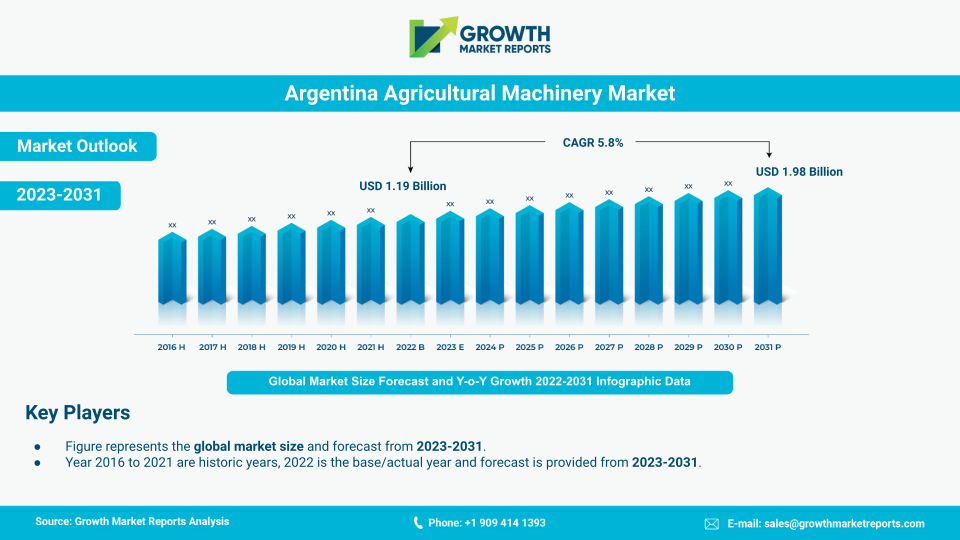
Key players competing in the Argentina agricultural machinery market include Industrias Romi SA, Kubota Corporation, YANMAR CO., LTD., Deere & Company, Agrale, AGCO Argentina S.A., Mahindra and Mahindra, Netafim Limited, Massey Ferguson, and Foton Lovol International Heavy Industries Company Ltd. Some of these players are using several market strategies such as acquisitions, merger, collaborations, partnerships, capacity expansion, and product launches to enhance their market shares and raise their production line of the business in the coming years.
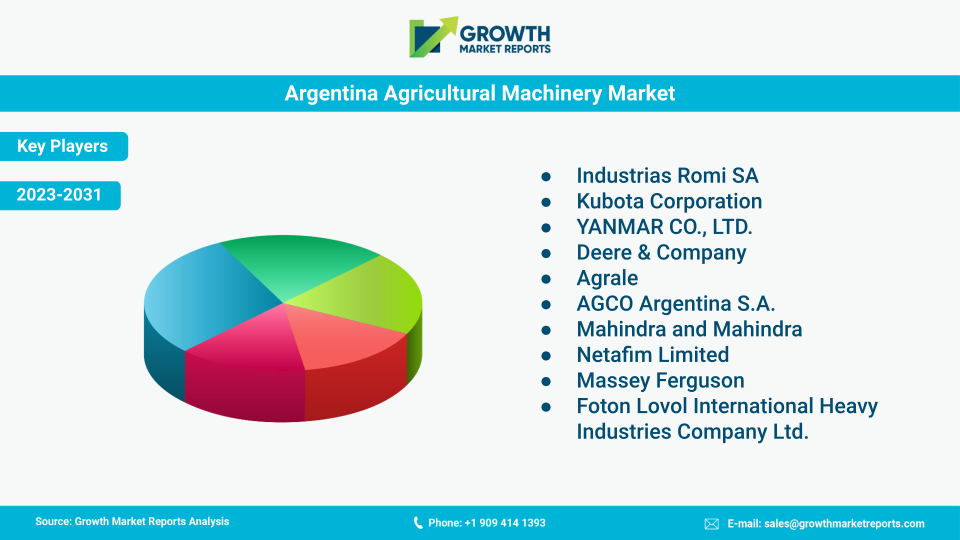

Argentina Agricultural Machinery Market Key Players

Frequently Asked Questions

Opportunities include digitalization, adoption of AI and IoT, expansion in emerging markets, and sustainable machinery. Challenges involve high initial costs, limited access to credit, technical complexity, and fluctuating commodity prices.

Sales channels include OEMs (Original Equipment Manufacturers) and aftermarket. OEMs dominate with new machinery sales, while the aftermarket covers spare parts, maintenance, and upgrades.

Major companies include John Deere, AGCO Corporation, CNH Industrial, Kubota Corporation, CLAAS Group, Mahindra & Mahindra, Yanmar Co., Ltd., and others.

The market is segmented by power output into below 30 HP, 31–70 HP, 71–130 HP, and above 130 HP, catering to different farm sizes and operational needs.

Key applications include land development & seed bed preparation, sowing & planting, weed cultivation, harvesting & threshing, crop protection, fertilizer application, and post-harvest processing.

Precision agriculture is transforming the industry by enabling the use of GPS-guided tractors, autonomous harvesters, IoT-enabled irrigation, and data-driven decision-making, which improve efficiency and crop yields.

The market is segmented by product type into tractors, harvesters, planting equipment, irrigation equipment, spraying equipment, and others. Tractors hold the largest revenue share.

Asia Pacific leads the market, followed by North America and Europe. Asia Pacific's dominance is due to its large agricultural base, rapid mechanization in countries like China and India, and strong government support.

Growth is driven by increased demand for advanced mechanization, rising labor costs, the need for higher agricultural productivity, adoption of precision agriculture technologies, and supportive government policies and subsidies.

The global agricultural machinery market was valued at USD 211.5 billion in 2024 and is expected to reach USD 362.7 billion by 2033, growing at a CAGR of 6.2% during the forecast period.

Table Of Content

Chapter 1 Executive Summary
Chapter 2 Assumptions and Acronyms Used
Chapter 3 Research Methodology
Chapter 4 Agricultural Machinery Market Overview
   4.1 Introduction
      4.1.1 Market Taxonomy
      4.1.2 Market Definition
      4.1.3 Macro-Economic Factors Impacting the Market Growth
   4.2 Agricultural Machinery Market Dynamics
      4.2.1 Market Drivers
      4.2.2 Market Restraints
      4.2.3 Market Opportunity
   4.3 Agricultural Machinery Market - Supply Chain Analysis
      4.3.1 List of Key Suppliers
      4.3.2 List of Key Distributors
      4.3.3 List of Key Consumers
   4.4 Key Forces Shaping the Agricultural Machinery Market
      4.4.1 Bargaining Power of Suppliers
      4.4.2 Bargaining Power of Buyers
      4.4.3 Threat of Substitution
      4.4.4 Threat of New Entrants
      4.4.5 Competitive Rivalry
   4.5 Global Agricultural Machinery Market Size & Forecast, 2023-2032
      4.5.1 Agricultural Machinery Market Size and Y-o-Y Growth
      4.5.2 Agricultural Machinery Market Absolute $ Opportunity

Chapter 5 Global Agricultural Machinery Market Analysis and Forecast By Product Type
   5.1 Introduction
      5.1.1 Key Market Trends & Growth Opportunities By Product Type
      5.1.2 Basis Point Share (BPS) Analysis By Product Type
      5.1.3 Absolute $ Opportunity Assessment By Product Type
   5.2 Agricultural Machinery Market Size Forecast By Product Type
      5.2.1 Tractors
      5.2.2 Harvesters
      5.2.3 Planting Equipment
      5.2.4 Irrigation Equipment
      5.2.5 Spraying Equipment
      5.2.6 Others
   5.3 Market Attractiveness Analysis By Product Type

Chapter 6 Global Agricultural Machinery Market Analysis and Forecast By Application
   6.1 Introduction
      6.1.1 Key Market Trends & Growth Opportunities By Application
      6.1.2 Basis Point Share (BPS) Analysis By Application
      6.1.3 Absolute $ Opportunity Assessment By Application
   6.2 Agricultural Machinery Market Size Forecast By Application
      6.2.1 Land Development & Seed Bed Preparation
      6.2.2 Sowing & Planting
      6.2.3 Weed Cultivation
      6.2.4 Harvesting & Threshing
      6.2.5 Others
   6.3 Market Attractiveness Analysis By Application

Chapter 7 Global Agricultural Machinery Market Analysis and Forecast By Power Output
   7.1 Introduction
      7.1.1 Key Market Trends & Growth Opportunities By Power Output
      7.1.2 Basis Point Share (BPS) Analysis By Power Output
      7.1.3 Absolute $ Opportunity Assessment By Power Output
   7.2 Agricultural Machinery Market Size Forecast By Power Output
      7.2.1 Below 30 HP
      7.2.2 31–70 HP
      7.2.3 71–130 HP
      7.2.4 Above 130 HP
   7.3 Market Attractiveness Analysis By Power Output

Chapter 8 Global Agricultural Machinery Market Analysis and Forecast By Sales Channel
   8.1 Introduction
      8.1.1 Key Market Trends & Growth Opportunities By Sales Channel
      8.1.2 Basis Point Share (BPS) Analysis By Sales Channel
      8.1.3 Absolute $ Opportunity Assessment By Sales Channel
   8.2 Agricultural Machinery Market Size Forecast By Sales Channel
      8.2.1 OEMs
      8.2.2 Aftermarket
   8.3 Market Attractiveness Analysis By Sales Channel

Chapter 9 Global Agricultural Machinery Market Analysis and Forecast by Region
   9.1 Introduction
      9.1.1 Key Market Trends & Growth Opportunities By Region
      9.1.2 Basis Point Share (BPS) Analysis By Region
      9.1.3 Absolute $ Opportunity Assessment By Region
   9.2 Agricultural Machinery Market Size Forecast By Region
      9.2.1 North America
      9.2.2 Europe
      9.2.3 Asia Pacific
      9.2.4 Latin America
      9.2.5 Middle East & Africa (MEA)
   9.3 Market Attractiveness Analysis By Region

Chapter 10 Coronavirus Disease (COVID-19) Impact 
   10.1 Introduction 
   10.2 Current & Future Impact Analysis 
   10.3 Economic Impact Analysis 
   10.4 Government Policies 
   10.5 Investment Scenario

Chapter 11 North America Agricultural Machinery Analysis and Forecast
   11.1 Introduction
   11.2 North America Agricultural Machinery Market Size Forecast by Country
      11.2.1 U.S.
      11.2.2 Canada
   11.3 Basis Point Share (BPS) Analysis by Country
   11.4 Absolute $ Opportunity Assessment by Country
   11.5 Market Attractiveness Analysis by Country
   11.6 North America Agricultural Machinery Market Size Forecast By Product Type
      11.6.1 Tractors
      11.6.2 Harvesters
      11.6.3 Planting Equipment
      11.6.4 Irrigation Equipment
      11.6.5 Spraying Equipment
      11.6.6 Others
   11.7 Basis Point Share (BPS) Analysis By Product Type 
   11.8 Absolute $ Opportunity Assessment By Product Type 
   11.9 Market Attractiveness Analysis By Product Type
   11.10 North America Agricultural Machinery Market Size Forecast By Application
      11.10.1 Land Development & Seed Bed Preparation
      11.10.2 Sowing & Planting
      11.10.3 Weed Cultivation
      11.10.4 Harvesting & Threshing
      11.10.5 Others
   11.11 Basis Point Share (BPS) Analysis By Application 
   11.12 Absolute $ Opportunity Assessment By Application 
   11.13 Market Attractiveness Analysis By Application
   11.14 North America Agricultural Machinery Market Size Forecast By Power Output
      11.14.1 Below 30 HP
      11.14.2 31–70 HP
      11.14.3 71–130 HP
      11.14.4 Above 130 HP
   11.15 Basis Point Share (BPS) Analysis By Power Output 
   11.16 Absolute $ Opportunity Assessment By Power Output 
   11.17 Market Attractiveness Analysis By Power Output
   11.18 North America Agricultural Machinery Market Size Forecast By Sales Channel
      11.18.1 OEMs
      11.18.2 Aftermarket
   11.19 Basis Point Share (BPS) Analysis By Sales Channel 
   11.20 Absolute $ Opportunity Assessment By Sales Channel 
   11.21 Market Attractiveness Analysis By Sales Channel

Chapter 12 Europe Agricultural Machinery Analysis and Forecast
   12.1 Introduction
   12.2 Europe Agricultural Machinery Market Size Forecast by Country
      12.2.1 Germany
      12.2.2 France
      12.2.3 Italy
      12.2.4 U.K.
      12.2.5 Spain
      12.2.6 Russia
      12.2.7 Rest of Europe
   12.3 Basis Point Share (BPS) Analysis by Country
   12.4 Absolute $ Opportunity Assessment by Country
   12.5 Market Attractiveness Analysis by Country
   12.6 Europe Agricultural Machinery Market Size Forecast By Product Type
      12.6.1 Tractors
      12.6.2 Harvesters
      12.6.3 Planting Equipment
      12.6.4 Irrigation Equipment
      12.6.5 Spraying Equipment
      12.6.6 Others
   12.7 Basis Point Share (BPS) Analysis By Product Type 
   12.8 Absolute $ Opportunity Assessment By Product Type 
   12.9 Market Attractiveness Analysis By Product Type
   12.10 Europe Agricultural Machinery Market Size Forecast By Application
      12.10.1 Land Development & Seed Bed Preparation
      12.10.2 Sowing & Planting
      12.10.3 Weed Cultivation
      12.10.4 Harvesting & Threshing
      12.10.5 Others
   12.11 Basis Point Share (BPS) Analysis By Application 
   12.12 Absolute $ Opportunity Assessment By Application 
   12.13 Market Attractiveness Analysis By Application
   12.14 Europe Agricultural Machinery Market Size Forecast By Power Output
      12.14.1 Below 30 HP
      12.14.2 31–70 HP
      12.14.3 71–130 HP
      12.14.4 Above 130 HP
   12.15 Basis Point Share (BPS) Analysis By Power Output 
   12.16 Absolute $ Opportunity Assessment By Power Output 
   12.17 Market Attractiveness Analysis By Power Output
   12.18 Europe Agricultural Machinery Market Size Forecast By Sales Channel
      12.18.1 OEMs
      12.18.2 Aftermarket
   12.19 Basis Point Share (BPS) Analysis By Sales Channel 
   12.20 Absolute $ Opportunity Assessment By Sales Channel 
   12.21 Market Attractiveness Analysis By Sales Channel

Chapter 13 Asia Pacific Agricultural Machinery Analysis and Forecast
   13.1 Introduction
   13.2 Asia Pacific Agricultural Machinery Market Size Forecast by Country
      13.2.1 China
      13.2.2 Japan
      13.2.3 South Korea
      13.2.4 India
      13.2.5 Australia
      13.2.6 South East Asia (SEA)
      13.2.7 Rest of Asia Pacific (APAC)
   13.3 Basis Point Share (BPS) Analysis by Country
   13.4 Absolute $ Opportunity Assessment by Country
   13.5 Market Attractiveness Analysis by Country
   13.6 Asia Pacific Agricultural Machinery Market Size Forecast By Product Type
      13.6.1 Tractors
      13.6.2 Harvesters
      13.6.3 Planting Equipment
      13.6.4 Irrigation Equipment
      13.6.5 Spraying Equipment
      13.6.6 Others
   13.7 Basis Point Share (BPS) Analysis By Product Type 
   13.8 Absolute $ Opportunity Assessment By Product Type 
   13.9 Market Attractiveness Analysis By Product Type
   13.10 Asia Pacific Agricultural Machinery Market Size Forecast By Application
      13.10.1 Land Development & Seed Bed Preparation
      13.10.2 Sowing & Planting
      13.10.3 Weed Cultivation
      13.10.4 Harvesting & Threshing
      13.10.5 Others
   13.11 Basis Point Share (BPS) Analysis By Application 
   13.12 Absolute $ Opportunity Assessment By Application 
   13.13 Market Attractiveness Analysis By Application
   13.14 Asia Pacific Agricultural Machinery Market Size Forecast By Power Output
      13.14.1 Below 30 HP
      13.14.2 31–70 HP
      13.14.3 71–130 HP
      13.14.4 Above 130 HP
   13.15 Basis Point Share (BPS) Analysis By Power Output 
   13.16 Absolute $ Opportunity Assessment By Power Output 
   13.17 Market Attractiveness Analysis By Power Output
   13.18 Asia Pacific Agricultural Machinery Market Size Forecast By Sales Channel
      13.18.1 OEMs
      13.18.2 Aftermarket
   13.19 Basis Point Share (BPS) Analysis By Sales Channel 
   13.20 Absolute $ Opportunity Assessment By Sales Channel 
   13.21 Market Attractiveness Analysis By Sales Channel

Chapter 14 Latin America Agricultural Machinery Analysis and Forecast
   14.1 Introduction
   14.2 Latin America Agricultural Machinery Market Size Forecast by Country
      14.2.1 Brazil
      14.2.2 Mexico
      14.2.3 Rest of Latin America (LATAM)
   14.3 Basis Point Share (BPS) Analysis by Country
   14.4 Absolute $ Opportunity Assessment by Country
   14.5 Market Attractiveness Analysis by Country
   14.6 Latin America Agricultural Machinery Market Size Forecast By Product Type
      14.6.1 Tractors
      14.6.2 Harvesters
      14.6.3 Planting Equipment
      14.6.4 Irrigation Equipment
      14.6.5 Spraying Equipment
      14.6.6 Others
   14.7 Basis Point Share (BPS) Analysis By Product Type 
   14.8 Absolute $ Opportunity Assessment By Product Type 
   14.9 Market Attractiveness Analysis By Product Type
   14.10 Latin America Agricultural Machinery Market Size Forecast By Application
      14.10.1 Land Development & Seed Bed Preparation
      14.10.2 Sowing & Planting
      14.10.3 Weed Cultivation
      14.10.4 Harvesting & Threshing
      14.10.5 Others
   14.11 Basis Point Share (BPS) Analysis By Application 
   14.12 Absolute $ Opportunity Assessment By Application 
   14.13 Market Attractiveness Analysis By Application
   14.14 Latin America Agricultural Machinery Market Size Forecast By Power Output
      14.14.1 Below 30 HP
      14.14.2 31–70 HP
      14.14.3 71–130 HP
      14.14.4 Above 130 HP
   14.15 Basis Point Share (BPS) Analysis By Power Output 
   14.16 Absolute $ Opportunity Assessment By Power Output 
   14.17 Market Attractiveness Analysis By Power Output
   14.18 Latin America Agricultural Machinery Market Size Forecast By Sales Channel
      14.18.1 OEMs
      14.18.2 Aftermarket
   14.19 Basis Point Share (BPS) Analysis By Sales Channel 
   14.20 Absolute $ Opportunity Assessment By Sales Channel 
   14.21 Market Attractiveness Analysis By Sales Channel

Chapter 15 Middle East & Africa (MEA) Agricultural Machinery Analysis and Forecast
   15.1 Introduction
   15.2 Middle East & Africa (MEA) Agricultural Machinery Market Size Forecast by Country
      15.2.1 Saudi Arabia
      15.2.2 South Africa
      15.2.3 UAE
      15.2.4 Rest of Middle East & Africa (MEA)
   15.3 Basis Point Share (BPS) Analysis by Country
   15.4 Absolute $ Opportunity Assessment by Country
   15.5 Market Attractiveness Analysis by Country
   15.6 Middle East & Africa (MEA) Agricultural Machinery Market Size Forecast By Product Type
      15.6.1 Tractors
      15.6.2 Harvesters
      15.6.3 Planting Equipment
      15.6.4 Irrigation Equipment
      15.6.5 Spraying Equipment
      15.6.6 Others
   15.7 Basis Point Share (BPS) Analysis By Product Type 
   15.8 Absolute $ Opportunity Assessment By Product Type 
   15.9 Market Attractiveness Analysis By Product Type
   15.10 Middle East & Africa (MEA) Agricultural Machinery Market Size Forecast By Application
      15.10.1 Land Development & Seed Bed Preparation
      15.10.2 Sowing & Planting
      15.10.3 Weed Cultivation
      15.10.4 Harvesting & Threshing
      15.10.5 Others
   15.11 Basis Point Share (BPS) Analysis By Application 
   15.12 Absolute $ Opportunity Assessment By Application 
   15.13 Market Attractiveness Analysis By Application
   15.14 Middle East & Africa (MEA) Agricultural Machinery Market Size Forecast By Power Output
      15.14.1 Below 30 HP
      15.14.2 31–70 HP
      15.14.3 71–130 HP
      15.14.4 Above 130 HP
   15.15 Basis Point Share (BPS) Analysis By Power Output 
   15.16 Absolute $ Opportunity Assessment By Power Output 
   15.17 Market Attractiveness Analysis By Power Output
   15.18 Middle East & Africa (MEA) Agricultural Machinery Market Size Forecast By Sales Channel
      15.18.1 OEMs
      15.18.2 Aftermarket
   15.19 Basis Point Share (BPS) Analysis By Sales Channel 
   15.20 Absolute $ Opportunity Assessment By Sales Channel 
   15.21 Market Attractiveness Analysis By Sales Channel

Chapter 16 Competition Landscape 
   16.1 Agricultural Machinery Market: Competitive Dashboard
   16.2 Global Agricultural Machinery Market: Market Share Analysis, 2023
   16.3 Company Profiles (Details – Overview, Financials, Developments, Strategy) 
      16.3.1 Deere & Company (John Deere)
AGCO Corporation
CNH Industrial N.V.
Kubota Corporation
CLAAS KGaA mbH
Mahindra & Mahindra Ltd.
SAME Deutz-Fahr Group (SDF)
Yanmar Co., Ltd.
Kuhn Group
JCB (J.C. Bamford Excavators Limited)
Lovol Heavy Industry Co., Ltd.
Escorts Limited
Tractors and Farm Equipment Limited (TAFE)
Iseki & Co., Ltd.
Sonalika International Tractors Ltd.
Argo Tractors S.p.A.
Alamo Group Inc.
Bucher Industries AG
Daedong Industrial Co., Ltd. (Kioti)
Shandong Shifeng Group Co., Ltd.

Methodology

Our Clients

sinopec
FedEx Logistics
Siemens Healthcare
Honda Motor Co. Ltd.
Nestle SA
Microsoft
General Mills
General Electric