Segments - by Type (Input Supply, Production, Processing, Marketing, Retail), by Application (Crops, Livestock, Fisheries, Forestry, Agrochemicals, Equipment), by Enterprise Size (Small and Medium Enterprises, Large Enterprises), by Distribution Channel (Direct, Indirect)
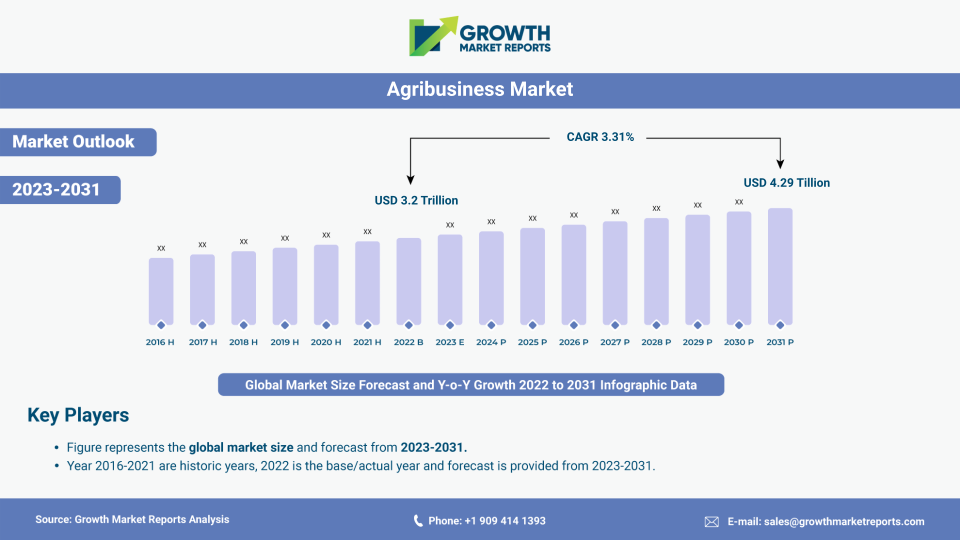
According to our latest research, the global agribusiness market size reached USD 3.41 trillion in 2024, reflecting a robust ecosystem that spans from input supply to retail. The market is experiencing a steady expansion, registering a compound annual growth rate (CAGR) of 6.2% from 2025 to 2033. By the end of 2033, the global agribusiness market is forecasted to achieve a value of USD 5.86 trillion. This growth is primarily driven by the increasing adoption of advanced agricultural technologies, rising global food demand, and expanding investments in value-added processing and supply chains. As per our most recent analysis, the agribusiness sector is set to play a pivotal role in addressing food security and sustainability challenges worldwide.
One of the fundamental growth factors propelling the agribusiness market is the escalating global population, which is projected to reach nearly 9.7 billion by 2050. This demographic trend is intensifying the demand for food, feed, and fiber, compelling stakeholders across the agribusiness value chain to innovate and scale up operations. Advancements in biotechnology, precision agriculture, and digital platforms are enabling farmers and agribusinesses to boost yields, optimize resource utilization, and minimize losses. Furthermore, the integration of artificial intelligence, IoT, and big data analytics into farm management is revolutionizing decision-making processes, supporting the shift toward sustainable and resilient agricultural systems. These technological innovations are not only enhancing productivity but also contributing to the reduction of environmental footprints, which is a critical consideration in the face of climate change.
Another key driver of the agribusiness market is the increasing emphasis on value addition and supply chain integration. As consumer preferences evolve toward processed, packaged, and ready-to-eat food products, agribusinesses are investing heavily in processing facilities, cold storage infrastructure, and logistics. This trend is particularly prominent in emerging economies, where rising disposable incomes and urbanization are fueling demand for convenient and high-quality food products. Additionally, governments and private sector players are collaborating to strengthen rural-urban linkages, improve market access for smallholder farmers, and promote export-oriented agribusiness ventures. These efforts are fostering the development of robust agrifood ecosystems capable of supporting both domestic consumption and international trade.
Sustainability and environmental stewardship have emerged as central themes in the agribusiness market’s growth narrative. Increasing awareness of the impacts of conventional agriculture on soil health, water resources, and biodiversity is prompting a shift toward regenerative practices, organic farming, and climate-smart agriculture. Policymakers are introducing stringent regulations and incentive schemes to encourage sustainable production, reduce greenhouse gas emissions, and ensure responsible land use. Agribusinesses are responding by adopting eco-friendly inputs, investing in renewable energy, and implementing traceability systems to meet the expectations of environmentally conscious consumers and global supply chains. These sustainability initiatives are not only mitigating risks but also unlocking new market opportunities, particularly in premium and niche segments.
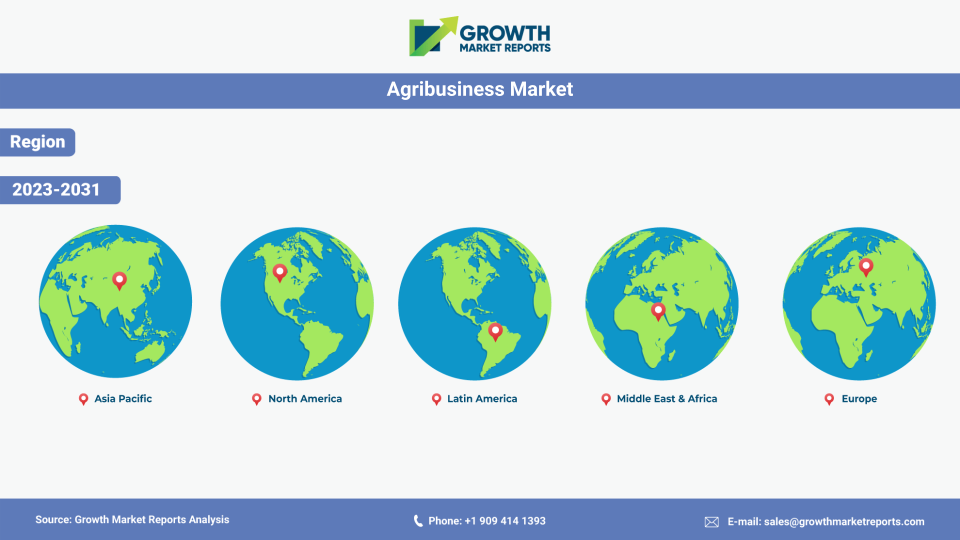
From a regional perspective, the Asia Pacific region dominates the global agribusiness market, accounting for the largest share due to its vast agricultural base, diverse agro-climatic conditions, and rapidly growing population. North America and Europe follow closely, driven by advanced technologies, strong policy support, and high levels of investment in research and development. Latin America, with its abundant land and water resources, is emerging as a key player in global food exports, while the Middle East & Africa region is witnessing significant investments in agribusiness infrastructure and food security initiatives. Each region presents unique opportunities and challenges, influenced by local production systems, policy frameworks, and consumer dynamics.
The agribusiness market can be segmented by type into Input Supply, Production, Processing, Marketing, and Retail. The input supply segment encompasses the provision of seeds, fertilizers, agrochemicals, and machinery, forming the foundation of the agricultural value chain. This segment is witnessing notable growth due to the increasing adoption of high-yielding seed varieties, precision fertilizers, and advanced machinery. Companies are investing in research and development to create inputs that cater to the specific needs of diverse agro-ecological zones, thereby improving productivity and sustainability. The input supply market is also benefiting from digital platforms that facilitate access to quality inputs, credit, and advisory services, especially for smallholder farmers in developing regions.
Production, which includes crop cultivation, livestock rearing, fisheries, and forestry, remains the largest and most critical segment of the agribusiness market. Technological advancements such as precision farming, automated irrigation, and genetic improvement are transforming traditional production methods. The adoption of climate-resilient crop varieties, sustainable livestock management practices, and aquaculture innovations is enabling producers to enhance yields, reduce risks, and adapt to changing environmental conditions. Governments and development organizations are supporting these efforts through extension services, subsidies, and capacity-building programs, further strengthening the production segment’s contribution to overall market growth.
Processing is emerging as a key growth driver within the agribusiness value chain, as consumer demand shifts toward processed, packaged, and value-added food products. The processing segment covers a wide range of activities, including milling, canning, freezing, and packaging of agricultural commodities. Investments in modern processing facilities, quality assurance systems, and food safety standards are enabling agribusinesses to tap into new markets and meet the evolving needs of urban consumers. The rise of food processing clusters and agro-industrial parks, particularly in Asia Pacific and Latin America, is creating new opportunities for small and medium enterprises to participate in high-value supply chains.
Marketing and retail segments are also experiencing significant transformation, driven by the proliferation of digital marketplaces, e-commerce platforms, and direct-to-consumer models. Agribusinesses are leveraging technology to connect producers with buyers, streamline logistics, and enhance transparency across the supply chain. The emergence of traceability solutions, blockchain technology, and data-driven marketing strategies is enabling retailers to offer differentiated products, build consumer trust, and capture premium value. The retail segment, in particular, is benefiting from the growing popularity of organic, locally sourced, and specialty food products, which are commanding higher prices and attracting discerning consumers.
| Attributes | Details |
| Report Title | Agribusiness Market Research Report 2033 |
| By Type | Input Supply, Production, Processing, Marketing, Retail |
| By Application | Crops, Livestock, Fisheries, Forestry, Agrochemicals, Equipment |
| By Enterprise Size | Small and Medium Enterprises, Large Enterprises |
| By Distribution Channel | Direct, Indirect |
| Regions Covered | North America, Europe, APAC, Latin America, MEA |
| Base Year | 2024 |
| Historic Data | 2018-2023 |
| Forecast Period | 2025-2033 |
| Number of Pages | 282 |
| Number of Tables & Figures | 397 |
| Customization Available | Yes, the report can be customized as per your need. |
The application segment of the agribusiness market encompasses Crops, Livestock, Fisheries, Forestry, Agrochemicals, and Equipment. Crop production remains the largest application, driven by the global demand for staple foods such as rice, wheat, maize, and oilseeds. Innovations in seed technology, irrigation methods, and pest management are enabling farmers to increase yields and manage risks associated with climate variability. The adoption of precision agriculture tools, such as drones and satellite imagery, is providing real-time insights into crop health, soil conditions, and weather patterns, facilitating informed decision-making and resource optimization.
Livestock is another vital application area within the agribusiness market, contributing significantly to global food security and rural livelihoods. The sector is undergoing rapid modernization, with the integration of genetic improvement, feed optimization, and animal health management practices. The rising demand for meat, dairy, and poultry products, especially in emerging economies, is driving investments in livestock infrastructure, veterinary services, and value-added processing. Sustainable livestock management practices, such as rotational grazing and integrated crop-livestock systems, are gaining traction as stakeholders seek to balance productivity with environmental stewardship.
Fisheries and aquaculture represent a dynamic and fast-growing application segment, fueled by the increasing consumption of fish and seafood products worldwide. Technological advancements in breeding, feed formulation, and disease management are enhancing the efficiency and sustainability of aquaculture operations. Governments and private sector players are investing in the development of modern fish farms, cold chain logistics, and export-oriented processing facilities to meet the rising demand for high-quality seafood. Sustainable fisheries management practices, including stock assessment, habitat restoration, and community-based management, are critical for ensuring the long-term viability of this sector.
The agrochemicals and equipment segments play a crucial supporting role in the agribusiness market, providing essential inputs and tools for efficient production. The agrochemicals market is characterized by ongoing innovation in bio-based and environmentally friendly products, as well as increasing regulatory scrutiny of chemical usage. Equipment manufacturers are focusing on developing smart, connected machinery that enhances productivity, reduces labor requirements, and minimizes environmental impacts. The adoption of autonomous tractors, harvesters, and irrigation systems is transforming traditional farming practices and enabling precision agriculture at scale.
The agribusiness market is segmented by enterprise size into Small and Medium Enterprises (SMEs) and Large Enterprises. SMEs constitute the backbone of the agribusiness sector in many developing countries, providing employment, income, and market access for millions of smallholder farmers and rural entrepreneurs. These enterprises are increasingly leveraging digital technologies, innovative business models, and collaborative platforms to overcome challenges related to access to finance, inputs, and markets. Governments and development partners are supporting SMEs through targeted policies, capacity-building programs, and inclusive value chain initiatives, recognizing their critical role in poverty reduction and rural development.
Large enterprises, including multinational agribusiness corporations, integrated food companies, and agro-industrial conglomerates, dominate the global agribusiness market in terms of scale, investment, and market reach. These organizations are driving innovation, efficiency, and sustainability across the value chain through significant investments in research and development, technology adoption, and supply chain integration. Large enterprises are also leading the way in implementing traceability systems, quality assurance protocols, and sustainability certifications, enabling them to meet the stringent requirements of international markets and global consumers.
The interaction between SMEs and large enterprises is fostering the development of inclusive and resilient agrifood systems. Contract farming arrangements, outgrower schemes, and public-private partnerships are enabling smallholders to access improved inputs, technical assistance, and reliable markets. Large enterprises benefit from a stable supply of raw materials and enhanced brand reputation, while SMEs gain opportunities for growth, innovation, and value addition. This symbiotic relationship is essential for building competitive and sustainable agribusiness ecosystems that can respond to evolving market demands and global challenges.
The enterprise size dynamic also influences investment patterns, technology adoption rates, and access to finance within the agribusiness market. While large enterprises have the resources to invest in cutting-edge technologies and infrastructure, SMEs often face constraints related to capital, skills, and market information. Addressing these disparities through targeted interventions, inclusive financing mechanisms, and capacity-building initiatives is critical for unlocking the full potential of the agribusiness sector and ensuring broad-based economic development.
The agribusiness market is segmented by distribution channel into Direct and Indirect channels. The direct channel involves the sale of agricultural products and inputs directly from producers to consumers, retailers, or processors, bypassing intermediaries. This channel is gaining popularity due to the growing demand for traceability, transparency, and locally sourced products. Direct distribution models, such as farmers’ markets, community-supported agriculture, and farm-to-table initiatives, are enabling producers to capture higher margins, build brand loyalty, and respond quickly to changing consumer preferences.
Indirect distribution channels involve the use of intermediaries such as wholesalers, distributors, and agents to facilitate the movement of agricultural products from producers to end-users. This channel remains dominant in many regions, particularly for bulk commodities and export-oriented supply chains. Indirect distribution offers advantages in terms of scale, reach, and logistics efficiency, enabling agribusinesses to access distant markets, manage inventory, and mitigate risks associated with demand fluctuations. However, it also introduces challenges related to price transparency, quality control, and value distribution along the supply chain.
The rise of digital platforms and e-commerce is transforming both direct and indirect distribution channels in the agribusiness market. Online marketplaces, mobile applications, and digital payment systems are facilitating seamless transactions, improving market access, and reducing transaction costs for producers and buyers alike. These innovations are particularly beneficial for SMEs and smallholder farmers, who often face barriers to traditional market entry. Digital distribution channels are also enabling the aggregation of supply, real-time market information, and efficient logistics coordination, enhancing the overall competitiveness of the agribusiness sector.
Distribution channel strategies are increasingly being tailored to meet the specific needs of different market segments, products, and regions. Agribusinesses are adopting omnichannel approaches that combine direct and indirect sales, leveraging partnerships, franchise models, and integrated supply chains to maximize reach and value capture. The choice of distribution channel is influenced by factors such as product perishability, market size, regulatory requirements, and consumer preferences, underscoring the importance of flexibility and innovation in channel management.
The agribusiness market is brimming with opportunities driven by technological innovation, evolving consumer preferences, and global sustainability imperatives. The adoption of precision agriculture, digital platforms, and biotechnology is opening new avenues for productivity enhancement, risk management, and value addition. Emerging trends such as urban agriculture, vertical farming, and alternative proteins are creating niche markets and attracting significant investment from venture capitalists, agri-tech startups, and multinational corporations. Policymakers are also recognizing the strategic importance of agribusiness for food security, rural development, and economic diversification, resulting in supportive policies, infrastructure investments, and research funding. These factors are creating a conducive environment for agribusinesses to innovate, expand, and compete in the global marketplace.
Sustainability and climate resilience present significant opportunities for agribusinesses to differentiate themselves and capture premium value in domestic and international markets. The growing demand for organic, fair-trade, and sustainably produced food products is driving investments in certification, traceability, and eco-friendly production methods. Agribusinesses that prioritize environmental stewardship, social responsibility, and ethical sourcing are well-positioned to build strong brands, access new markets, and forge strategic partnerships with retailers, food processors, and institutional buyers. Additionally, the transition toward circular economy models, renewable energy, and resource-efficient practices is enabling agribusinesses to reduce costs, mitigate risks, and enhance long-term competitiveness.
Despite these opportunities, the agribusiness market faces several threats and restrainers that could impede growth and profitability. Climate change, resource scarcity, and environmental degradation pose significant risks to agricultural productivity, supply chain stability, and food security. Regulatory uncertainties, trade barriers, and market volatility can disrupt business operations and investment flows, particularly in export-oriented sectors. Additionally, issues such as land tenure insecurity, limited access to finance, and inadequate infrastructure continue to challenge smallholder farmers and SMEs, constraining their ability to scale up and compete effectively. Addressing these challenges requires coordinated action by governments, industry stakeholders, and development partners to build resilient, inclusive, and sustainable agrifood systems.
The Asia Pacific region leads the global agribusiness market, accounting for approximately 44% of the total market value, or about USD 1.5 trillion in 2024. This dominance is attributed to the region’s vast agricultural base, diverse crop and livestock systems, and rapidly growing population. Countries such as China, India, and Indonesia are major producers and consumers of agricultural products, driving demand for inputs, processing, and value-added services. The region is also witnessing significant investments in agritech innovation, rural infrastructure, and export-oriented agribusiness clusters, positioning it as a key growth engine for the global market. The Asia Pacific agribusiness market is expected to maintain a strong CAGR of 6.7% through 2033, supported by ongoing urbanization, rising incomes, and government initiatives to modernize the sector.
North America and Europe collectively account for a significant share of the global agribusiness market, with North America valued at USD 780 billion and Europe at USD 660 billion in 2024. These regions are characterized by advanced production systems, high levels of mechanization, and strong policy support for sustainable agriculture. The adoption of precision farming, biotechnology, and digital platforms is driving efficiency gains, environmental sustainability, and market competitiveness. North America, led by the United States and Canada, is a major exporter of grains, oilseeds, and meat products, while Europe is a leader in specialty crops, organic farming, and food processing innovation. Both regions are expected to experience moderate but steady growth, with increasing emphasis on sustainability, traceability, and consumer-driven product differentiation.
Latin America and the Middle East & Africa regions are emerging as dynamic players in the global agribusiness market, with market sizes of USD 350 billion and USD 120 billion respectively in 2024. Latin America benefits from abundant land, favorable climate, and strong export orientation, particularly in soybeans, coffee, beef, and tropical fruits. The region is attracting significant foreign investment in agribusiness infrastructure, logistics, and value-added processing. The Middle East & Africa region is focused on food security, import substitution, and the development of resilient agrifood systems, supported by government-led initiatives, public-private partnerships, and international cooperation. Both regions present substantial growth opportunities, albeit with challenges related to infrastructure, policy stability, and environmental sustainability.
The global agribusiness market is characterized by intense competition, diverse business models, and a dynamic landscape of established players, emerging challengers, and innovative startups. Major multinational corporations dominate key segments such as input supply, processing, and food retail, leveraging their scale, investment capacity, and global networks to drive innovation and market expansion. These companies are continuously investing in research and development, strategic acquisitions, and digital transformation to maintain their competitive edge and respond to evolving consumer preferences. The competitive landscape is further shaped by the entry of technology companies, venture capitalists, and agri-tech startups, which are introducing disruptive innovations, new business models, and data-driven solutions across the value chain.
Collaboration and strategic partnerships are becoming increasingly important in the agribusiness market, as companies seek to leverage complementary strengths, access new markets, and share risks. Joint ventures, contract farming arrangements, and public-private partnerships are enabling agribusinesses to pool resources, enhance supply chain integration, and accelerate the adoption of sustainable practices. The rise of digital platforms and e-commerce is also fostering new forms of competition and cooperation, as traditional players adapt to the demands of a connected, data-driven marketplace. Companies that can effectively integrate technology, sustainability, and customer-centricity into their business models are likely to emerge as leaders in the evolving agribusiness landscape.
Sustainability, traceability, and social responsibility are increasingly important differentiators in the agribusiness market, influencing consumer choices, regulatory requirements, and investor expectations. Leading companies are investing in environmental stewardship, ethical sourcing, and community engagement to build trust, enhance brand reputation, and access premium markets. The adoption of sustainability certifications, digital traceability systems, and circular economy principles is enabling agribusinesses to meet the expectations of discerning consumers and global supply chains. Companies that fail to adapt to these trends risk losing market share, facing regulatory penalties, and damaging their reputations in an increasingly transparent and competitive marketplace.
Key players in the global agribusiness market include Archer Daniels Midland Company (ADM), Cargill, Inc., Bayer AG, Syngenta AG, Bunge Limited, Deere & Company, Nutrien Ltd., and Olam International. These companies are at the forefront of innovation, investment, and market expansion, with diversified portfolios spanning input supply, production, processing, and distribution. ADM and Cargill are global leaders in grain trading, oilseed processing, and food ingredients, leveraging their extensive logistics networks and market intelligence capabilities. Bayer and Syngenta are major players in crop protection and seed technology, driving advancements in biotechnology, digital agriculture, and sustainable farming practices. Deere & Company and Nutrien are leaders in agricultural machinery and input supply, providing cutting-edge solutions for productivity enhancement and resource optimization. Olam International is a leading agribusiness company with a strong presence in specialty crops, value-added processing, and sustainable sourcing.
These major companies are continuously expanding their global footprints, investing in new markets, and forging strategic partnerships to capture emerging opportunities and mitigate risks. Their ongoing commitment to innovation, sustainability, and customer engagement is setting industry benchmarks and shaping the future of the agribusiness market. As competition intensifies and market dynamics evolve, the ability to adapt, innovate, and collaborate will be critical for success in the global agribusiness landscape.
The Agribusiness market has been segmented on the basis of
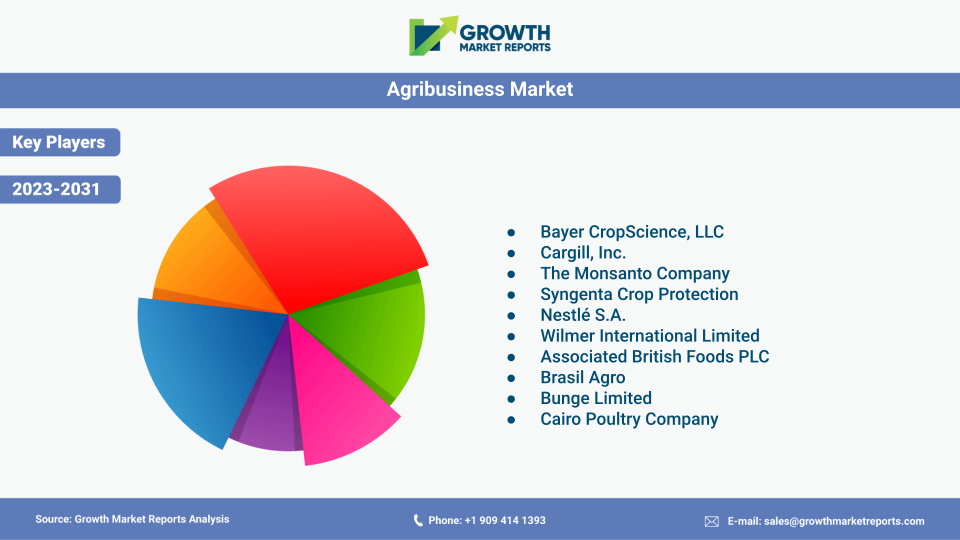
Key players such as Bayer CropScience, LLC; Cargill, Inc.; The Monsanto Company; Syngenta Crop Protection; Nestlé S.A.; Wilmer International Limited; Associated British Foods PLC; Brasil Agro; Bunge Limited; Cairo Poultry Company; CHS, Inc.; LT Foods, Ltd.; Nutrien; Deere & Company; BASF SE; CNH Industrial N. V.;
The Archer-Daniels-Midland Company; and others use business strategies such as mergers, acquisitions, collaborations, partnerships, and product launches to strengthen their hold on the market.
In May 2022, Syngenta Crop Protection, a provider of agricultural science and technology, and M2i, a technology provider of a pheromone-based crop protection solutions, collaborated to launch EXPLOYO Vit, a pheromone-based solution to help wine growers in France to control and manage detrimental pests that damage grape vines.
In January 2022, Nestlé S.A. announced a USD 1.25 billion program to enhance its chocolate business by improving livelihoods of cocoa-farming families in Côte d’Ivoire and Ghana, as well as advancing sustainable practices and gender equality.
The market uses both direct channels (farmers’ markets, farm-to-table, direct sales) and indirect channels (wholesalers, distributors, agents), with digital platforms and e-commerce transforming both.
Applications include Crops, Livestock, Fisheries, Forestry, Agrochemicals, and Equipment, with crop production being the largest segment.
Opportunities include technological innovation, evolving consumer preferences, and sustainability initiatives. Challenges include climate change, resource scarcity, regulatory uncertainties, and limited access to finance for SMEs.
Leading companies include Archer Daniels Midland Company (ADM), Cargill, Bayer AG, Syngenta AG, Bunge Limited, Deere & Company, Nutrien Ltd., and Olam International.
There is a growing emphasis on regenerative practices, organic farming, climate-smart agriculture, eco-friendly inputs, renewable energy, and traceability systems to reduce environmental impact and meet consumer expectations.
Technologies such as biotechnology, precision agriculture, artificial intelligence, IoT, and big data analytics are revolutionizing farm management, boosting yields, optimizing resources, and supporting sustainability.
The market is segmented by type into Input Supply, Production, Processing, Marketing, and Retail.
The Asia Pacific region leads the market, accounting for about 44% of the total value, followed by North America and Europe. Latin America and the Middle East & Africa are also emerging as significant players.
Key growth drivers include the rising global population, increasing food demand, adoption of advanced agricultural technologies, and expanding investments in value-added processing and supply chains.
As of 2024, the global agribusiness market size reached USD 3.41 trillion, with projections to grow to USD 5.86 trillion by 2033.