Segments - by Packaging Type (2.5D, 3D IC, Fan-Out Wafer Level Packaging, System-in-Package, Flip Chip, Others), by Application (Consumer Electronics, Automotive, Healthcare, Industrial, IT & Telecommunication, Aerospace & Defense, Others), by End-User (IDMs, Foundries, OSATs), by Device Type (Memory, Logic, Imaging & Optoelectronics, MEMS/Sensors, LED, Others)
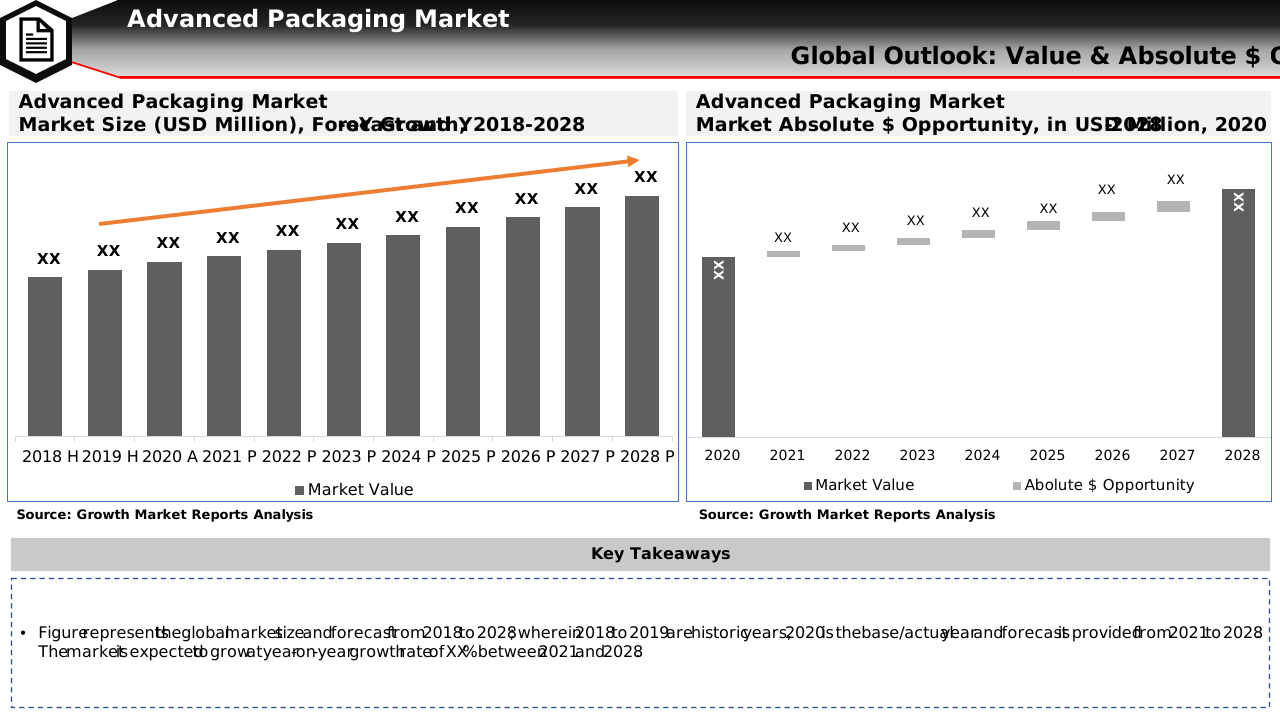
As per our latest research, the global Advanced Packaging Market size reached USD 41.2 billion in 2024, driven by robust advancements in semiconductor manufacturing and increased demand for high-performance computing and miniaturized electronic devices. The market is expected to expand at a CAGR of 9.8% from 2025 to 2033, reaching a forecasted value of USD 96.5 billion by 2033. This remarkable growth trajectory is primarily fueled by the proliferation of consumer electronics, the surge in artificial intelligence and IoT applications, and the ongoing evolution of 5G and automotive electronics, which collectively necessitate innovative, high-density packaging solutions.
One of the primary growth factors for the Advanced Packaging Market is the exponential increase in the adoption of smart devices and the relentless demand for enhanced performance in smaller form factors. As consumer electronics such as smartphones, wearables, and tablets become more sophisticated, manufacturers are compelled to adopt advanced packaging techniques like 2.5D, 3D IC, and Fan-Out Wafer Level Packaging. These technologies allow for greater integration, improved electrical performance, and reduced power consumption. The integration of multiple functionalities within a single package, such as in System-in-Package (SiP) solutions, is also gaining traction as it supports the miniaturization and complexity required for next-generation devices. Furthermore, the push towards automation and digitalization in industrial and automotive sectors is amplifying the need for robust and reliable packaging solutions that can withstand harsh environments while delivering superior performance.
Another significant driver is the rapid evolution of the global semiconductor industry, which is at the core of the Advanced Packaging Market. The increasing investments in semiconductor fabrication plants (fabs) and the shift towards advanced nodes are resulting in a greater emphasis on packaging innovation. As MooreÂ’s Law slows, companies are turning to advanced packaging to continue performance improvements without relying solely on traditional scaling. The rise of artificial intelligence, machine learning, and edge computing further accelerates the demand for advanced packaging, as these applications require high bandwidth, low latency, and efficient power management. Moreover, governments and private players across Asia Pacific and North America are investing heavily in semiconductor research and development, further propelling the market forward.
Sustainability and cost-efficiency are also playing pivotal roles in shaping the Advanced Packaging Market. As environmental regulations tighten and end-users become more eco-conscious, there is a growing emphasis on packaging solutions that minimize material usage and energy consumption during manufacturing. Advanced packaging techniques not only improve device performance but also contribute to reduced waste and lower production costs, making them attractive for mass-market applications. Additionally, the ongoing trend of outsourcing semiconductor assembly and test services (OSATs) is enabling smaller players to access advanced packaging technologies, democratizing innovation across the industry.
The introduction of 2.5D Packaging has revolutionized the semiconductor industry by offering a middle ground between traditional 2D and advanced 3D packaging technologies. Unlike 3D ICs, which involve stacking multiple chips vertically, 2.5D Packaging places chips side by side on an interposer, which acts as a bridge for communication between them. This approach allows for increased bandwidth and improved thermal management, making it an attractive option for applications that require high performance and efficiency. As the demand for complex, high-speed computing continues to rise, 2.5D Packaging is gaining traction for its ability to enhance system performance without the higher costs and technical challenges associated with full 3D integration.
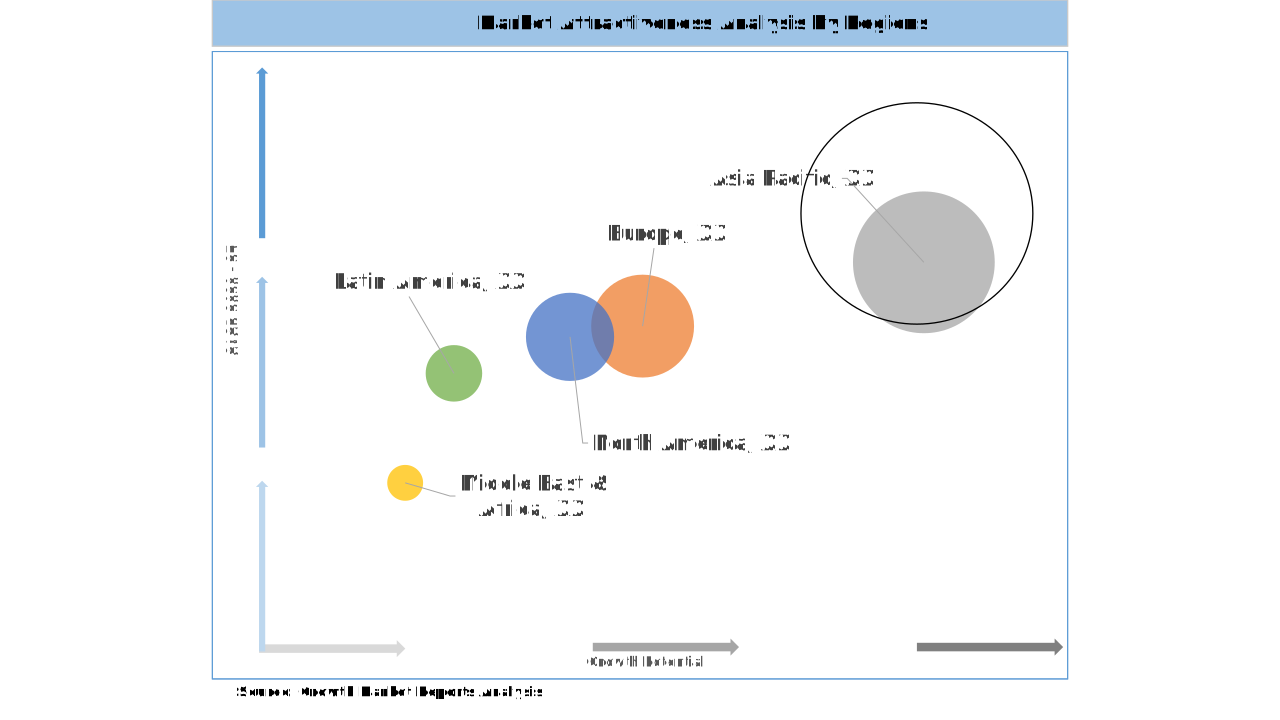
Regionally, Asia Pacific continues to dominate the Advanced Packaging Market, accounting for more than 60% of the global market share in 2024. This dominance is attributed to the presence of leading semiconductor foundries, integrated device manufacturers (IDMs), and a robust electronics manufacturing ecosystem in countries like China, Taiwan, South Korea, and Japan. North America and Europe are also witnessing substantial growth, driven by increased investments in R&D and the presence of major technology companies. The Middle East & Africa and Latin America, though relatively smaller, are expected to register above-average growth rates during the forecast period due to rising digitalization and infrastructure development.
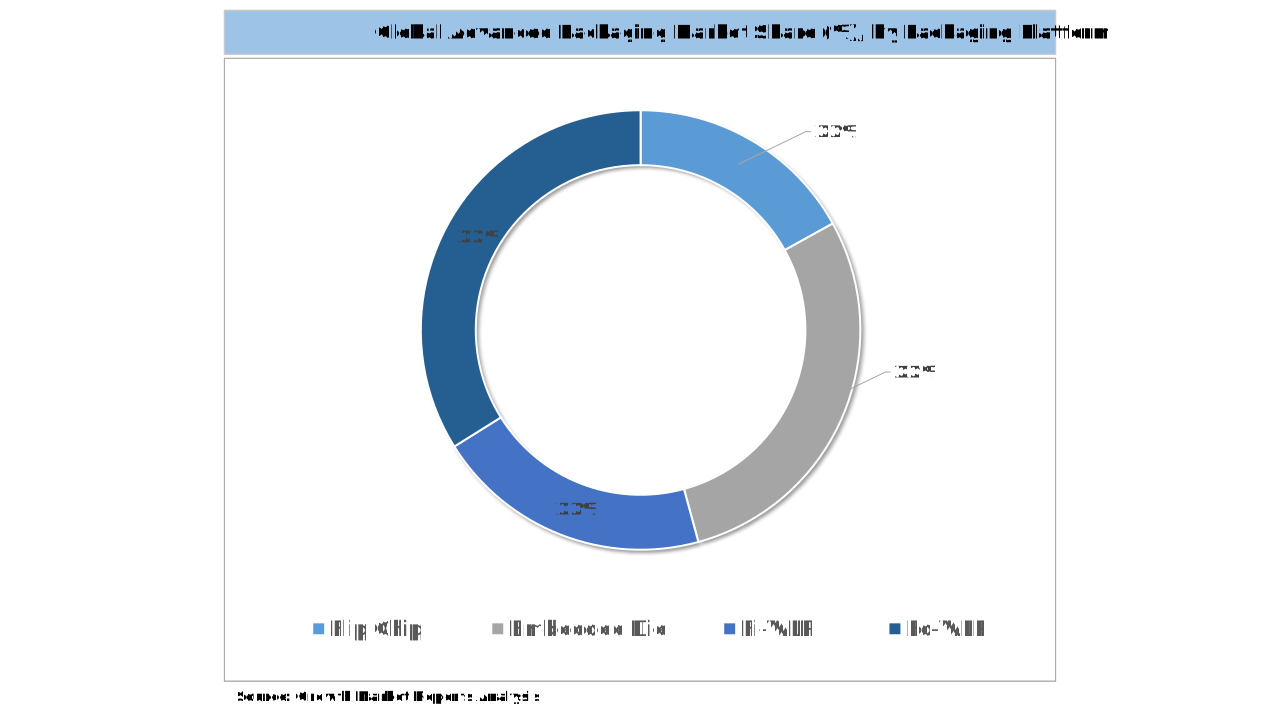
The Advanced Packaging Market is segmented by packaging type into 2.5D, 3D IC, Fan-Out Wafer Level Packaging (FOWLP), System-in-Package (SiP), Flip Chip, and others. Among these, Flip Chip technology continues to hold a significant market share due to its widespread adoption in high-performance computing, networking, and consumer electronics. Flip Chip packaging offers advantages such as higher I/O density, improved electrical performance, and better heat dissipation, making it ideal for applications requiring robust performance. However, the complexity and cost associated with Flip Chip packaging have led manufacturers to explore alternatives, particularly for cost-sensitive applications.
Fan-Out Wafer Level Packaging (FOWLP) is emerging as one of the fastest-growing segments within the Advanced Packaging Market. FOWLP enables the integration of multiple dies and passive components within a single package, offering superior electrical performance and reduced package thickness. This makes it highly suitable for smartphones, wearables, and other compact devices where space and performance are critical. The increasing demand for thinner, lighter, and more powerful devices is driving the adoption of FOWLP, especially in the consumer electronics and automotive sectors. Additionally, advancements in FOWLP processes are enabling higher yield and lower production costs, making it an attractive option for manufacturers.
System-in-Package (SiP) solutions are gaining prominence due to their ability to integrate heterogeneous components, such as processors, memory, sensors, and RF modules, into a single package. This approach facilitates the development of multifunctional devices with enhanced performance, reduced footprint, and lower power consumption. SiP is particularly favored in applications like IoT, automotive electronics, and healthcare devices, where integration and miniaturization are paramount. The growing complexity of electronic systems and the need for rapid time-to-market are further boosting the adoption of SiP in the Advanced Packaging Market.
3D IC and 2.5D packaging technologies are at the forefront of enabling next-generation computing and data-intensive applications. These technologies allow for vertical stacking of dies, significantly increasing device density and performance while minimizing interconnect lengths and power consumption. 3D ICs are particularly important for high-performance computing, artificial intelligence, and data centers, where bandwidth and energy efficiency are critical. However, the high cost and technical challenges associated with 3D integration, such as thermal management and yield issues, pose significant hurdles. Nonetheless, ongoing research and development efforts are expected to address these challenges, paving the way for broader adoption in the coming years.
| Attributes | Details |
| Report Title | Advanced Packaging Market Research Report 2033 |
| By Packaging Type | 2.5D, 3D IC, Fan-Out Wafer Level Packaging, System-in-Package, Flip Chip, Others |
| By Application | Consumer Electronics, Automotive, Healthcare, Industrial, IT & Telecommunication, Aerospace & Defense, Others |
| By End-User | IDMs, Foundries, OSATs |
| By Device Type | Memory, Logic, Imaging & Optoelectronics, MEMS/Sensors, LED, Others |
| Regions Covered | North America, Europe, APAC, Latin America, MEA |
| Base Year | 2024 |
| Historic Data | 2018-2023 |
| Forecast Period | 2025-2033 |
| Number of Pages | 267 |
| Number of Tables & Figures | 270 |
| Customization Available | Yes, the report can be customized as per your need. |
The Advanced Packaging Market serves a diverse range of applications, including consumer electronics, automotive, healthcare, industrial, IT & telecommunication, aerospace & defense, and others. Consumer electronics remains the largest application segment, accounting for a substantial portion of the market revenue. The continuous innovation in smartphones, tablets, wearables, and smart home devices necessitates advanced packaging solutions that deliver higher performance, energy efficiency, and miniaturization. The rapid adoption of 5G and IoT technologies is further accelerating the demand for advanced packaging in this segment, as manufacturers strive to integrate more functionality into increasingly compact devices.
The automotive sector is witnessing robust growth in the adoption of advanced packaging, driven by the proliferation of electric vehicles (EVs), autonomous driving systems, and advanced driver-assistance systems (ADAS). These applications demand high-reliability packaging solutions that can withstand extreme temperatures, vibrations, and other harsh environmental conditions. System-in-Package and 3D IC technologies are particularly well-suited for automotive applications, as they enable the integration of multiple sensors, processors, and communication modules within a compact footprint. The increasing electronic content in vehicles, coupled with stringent safety and performance requirements, is expected to drive significant growth in this segment over the forecast period.
In the healthcare sector, advanced packaging technologies are enabling the development of miniaturized medical devices, such as implantable sensors, diagnostic equipment, and portable monitoring devices. The integration of sensors, memory, and communication modules into a single package is facilitating real-time monitoring and data transmission, improving patient outcomes and enabling remote healthcare solutions. The growing adoption of wearable health devices and the increasing focus on personalized medicine are expected to fuel the demand for advanced packaging in the healthcare segment.
Industrial applications are also benefiting from advanced packaging, particularly in automation, robotics, and industrial IoT (IIoT) systems. These applications require packaging solutions that offer high reliability, durability, and performance in challenging operating environments. Advanced packaging technologies such as Flip Chip and SiP are enabling the development of ruggedized electronics that can withstand extreme temperatures, humidity, and mechanical stress. The ongoing digital transformation and the adoption of smart manufacturing practices are expected to drive further growth in this segment.
The IT & telecommunication sector is another key application area for the Advanced Packaging Market, driven by the rollout of 5G networks, data centers, and cloud computing infrastructure. Advanced packaging solutions are essential for supporting the high bandwidth, low latency, and energy efficiency requirements of modern communication systems. The integration of high-speed processors, memory, and RF modules into compact packages is enabling the development of next-generation networking equipment and communication devices.
The Advanced Packaging Market is categorized by end-user into Integrated Device Manufacturers (IDMs), Foundries, and Outsourced Semiconductor Assembly and Test (OSATs) providers. IDMs, which design and manufacture their own semiconductor devices, have traditionally been early adopters of advanced packaging technologies. These companies invest heavily in R&D to develop proprietary packaging solutions that deliver superior performance and differentiation in the market. The growing complexity of semiconductor devices and the need for rapid innovation are driving IDMs to further embrace advanced packaging techniques, particularly in high-performance and mission-critical applications.
Foundries play a pivotal role in the Advanced Packaging Market by providing advanced manufacturing capabilities to fabless semiconductor companies and IDMs. The increasing demand for customization, flexibility, and scalability in packaging solutions is prompting foundries to expand their advanced packaging portfolios. Leading foundries are investing in state-of-the-art facilities and collaborating with ecosystem partners to offer a wide range of packaging options, including 2.5D, 3D IC, and FOWLP. The shift towards heterogeneous integration and the need for co-packaged optics and other advanced features are further enhancing the role of foundries in the market.
OSATs are emerging as key contributors to the growth of the Advanced Packaging Market, particularly for small and medium-sized semiconductor companies that lack in-house packaging capabilities. OSATs provide a cost-effective and scalable solution for assembling and testing semiconductor devices using advanced packaging technologies. The trend towards outsourcing is driven by the need to reduce capital expenditures, accelerate time-to-market, and access specialized expertise. OSATs are continuously expanding their capabilities to keep pace with evolving customer requirements and technological advancements, making them indispensable partners in the semiconductor value chain.
The collaborative ecosystem among IDMs, foundries, and OSATs is fostering innovation and driving the adoption of advanced packaging across a wide range of applications. Strategic partnerships, joint ventures, and technology licensing agreements are becoming increasingly common as companies seek to leverage complementary strengths and accelerate the development of next-generation packaging solutions. This collaborative approach is expected to play a crucial role in addressing the technical and economic challenges associated with advanced packaging, ensuring sustained growth and competitiveness in the market.
The Advanced Packaging Market is also segmented by device type, including Memory, Logic, Imaging & Optoelectronics, MEMS/Sensors, LED, and others. Memory devices, such as DRAM and NAND flash, represent a significant portion of the market due to the increasing demand for high-capacity storage in consumer electronics, data centers, and mobile devices. Advanced packaging technologies are enabling higher memory densities, faster data transfer rates, and improved energy efficiency, which are critical for supporting the growing data-intensive applications in artificial intelligence, machine learning, and cloud computing.
Logic devices, including microprocessors and application-specific integrated circuits (ASICs), are another major segment within the Advanced Packaging Market. The need for high-performance computing, low power consumption, and miniaturization is driving the adoption of advanced packaging techniques such as 2.5D and 3D IC integration. These technologies enable the stacking of logic dies and the integration of memory and other components, resulting in higher performance and functionality. The proliferation of AI, 5G, and edge computing applications is expected to further boost the demand for advanced packaging in the logic device segment.
Imaging & Optoelectronics devices, such as image sensors and optical transceivers, are increasingly relying on advanced packaging to achieve higher resolution, faster data transmission, and improved signal integrity. The integration of multiple sensors and optical components within a compact package is essential for applications in smartphones, autonomous vehicles, medical imaging, and industrial automation. Advanced packaging solutions are enabling the development of high-performance imaging systems that deliver superior image quality and reliability in demanding environments.
MEMS (Micro-Electro-Mechanical Systems) and sensors constitute another important segment of the Advanced Packaging Market. The growing adoption of MEMS sensors in automotive, consumer electronics, healthcare, and industrial applications is driving the need for packaging solutions that offer high precision, reliability, and protection against environmental factors. Advanced packaging techniques such as wafer-level packaging and system-in-package are enabling the miniaturization and integration of MEMS sensors, facilitating their deployment in a wide range of applications.
LED devices are also benefiting from advancements in packaging technologies, particularly in the areas of lighting, display, and automotive applications. Advanced packaging solutions are enhancing the performance, efficiency, and durability of LEDs, enabling their use in energy-efficient lighting systems, high-resolution displays, and automotive lighting. The ongoing transition towards smart lighting and display technologies is expected to drive further growth in the LED device segment.
The Advanced Packaging Market offers numerous opportunities for growth, particularly in the context of emerging technologies and evolving end-user requirements. The rise of artificial intelligence, machine learning, and edge computing is creating unprecedented demand for high-performance, energy-efficient semiconductor devices. Advanced packaging solutions that enable heterogeneous integration, high bandwidth, and low latency are well-positioned to capitalize on these trends. Additionally, the ongoing digital transformation across industries such as automotive, healthcare, and industrial automation is driving the need for innovative packaging solutions that deliver superior reliability and performance in challenging environments. The increasing focus on sustainability and environmental responsibility is also opening up new avenues for the development of eco-friendly packaging materials and processes.
Another significant opportunity lies in the expansion of the Advanced Packaging Market into emerging regions such as Latin America, the Middle East, and Africa. These regions are witnessing rapid digitalization, infrastructure development, and increasing adoption of smart devices, creating a fertile ground for the growth of advanced packaging solutions. The proliferation of 5G networks, the rise of smart cities, and the increasing demand for connected devices are expected to drive substantial investments in semiconductor manufacturing and packaging capabilities in these regions. Furthermore, the trend towards outsourcing semiconductor assembly and test services is enabling smaller companies to access advanced packaging technologies, democratizing innovation and fostering market expansion.
Despite the promising growth prospects, the Advanced Packaging Market faces several threats and restraining factors. One of the primary challenges is the high cost and technical complexity associated with advanced packaging technologies, particularly 3D IC and heterogeneous integration. The need for specialized equipment, materials, and expertise can pose significant barriers to entry for smaller players and new entrants. Additionally, yield issues, thermal management challenges, and supply chain disruptions can impact the scalability and profitability of advanced packaging solutions. The ongoing geopolitical tensions and trade restrictions in the semiconductor industry also pose risks to the stability and growth of the market, underscoring the need for strategic risk management and supply chain resilience.
Asia Pacific remains the undisputed leader in the Advanced Packaging Market, accounting for a substantial share of the global revenue, estimated at USD 24.7 billion in 2024. The regionÂ’s dominance is underpinned by the presence of leading semiconductor foundries, IDMs, and OSATs in countries such as China, Taiwan, South Korea, and Japan. These countries have established themselves as global hubs for semiconductor manufacturing, driven by robust infrastructure, skilled labor, and supportive government policies. The rapid growth of consumer electronics, automotive, and industrial applications in Asia Pacific is further fueling the demand for advanced packaging solutions. The region is expected to maintain its leadership position over the forecast period, with a projected CAGR of 10.2%, reaching USD 58.8 billion by 2033.
North America is another significant market for advanced packaging, with a market size of approximately USD 8.6 billion in 2024. The region benefits from a strong ecosystem of technology companies, research institutions, and semiconductor manufacturers. The increasing investments in R&D, the presence of major fabless semiconductor companies, and the growing demand for high-performance computing and data center applications are driving the adoption of advanced packaging in North America. The region is also at the forefront of innovation in artificial intelligence, machine learning, and 5G technologies, which are expected to drive further growth in the advanced packaging market.
Europe, with a market size of USD 4.9 billion in 2024, is witnessing steady growth in the Advanced Packaging Market, driven by the increasing adoption of advanced electronics in automotive, industrial, and healthcare applications. The region is home to several leading automotive manufacturers and industrial automation companies, which are investing in advanced packaging solutions to enhance the performance and reliability of their products. The Middle East & Africa and Latin America, though currently smaller in market size (estimated at USD 1.7 billion and USD 1.3 billion respectively in 2024), are expected to register above-average growth rates during the forecast period. This growth is fueled by rising digitalization, infrastructure development, and increasing adoption of smart devices in these regions.
The Advanced Packaging Market is characterized by intense competition and a dynamic landscape, with numerous global and regional players vying for market share. The market is dominated by a handful of major companies that possess extensive R&D capabilities, advanced manufacturing infrastructure, and a broad portfolio of packaging solutions. These companies are continuously investing in innovation to develop next-generation packaging technologies that deliver superior performance, reliability, and cost-efficiency. Strategic partnerships, mergers and acquisitions, and technology licensing agreements are common strategies employed by market leaders to strengthen their competitive position and expand their global footprint.
In addition to established players, the market is witnessing the emergence of new entrants and niche players that are leveraging cutting-edge technologies and specialized expertise to carve out a niche in the market. These companies are focusing on developing innovative packaging solutions for specific applications, such as automotive electronics, medical devices, and high-performance computing. The increasing trend towards outsourcing semiconductor assembly and test services is also creating opportunities for OSAT providers to expand their capabilities and capture a larger share of the market. The collaborative ecosystem among IDMs, foundries, and OSATs is fostering innovation and driving the adoption of advanced packaging across a wide range of applications.
The competitive landscape is further shaped by the ongoing shift towards heterogeneous integration, 3D packaging, and system-in-package solutions. Companies are investing heavily in research and development to overcome technical challenges such as thermal management, yield optimization, and interconnect reliability. The ability to offer customized, scalable, and cost-effective packaging solutions is becoming a key differentiator in the market. Additionally, the increasing focus on sustainability and environmental responsibility is prompting companies to develop eco-friendly packaging materials and processes, further enhancing their competitive advantage.
Some of the major companies operating in the Advanced Packaging Market include ASE Technology Holding Co., Ltd., Amkor Technology, Inc., JCET Group, Siliconware Precision Industries Co., Ltd. (SPIL), TSMC (Taiwan Semiconductor Manufacturing Company), Samsung Electronics Co., Ltd., Intel Corporation, Powertech Technology Inc. (PTI), and STATS ChipPAC Pte. Ltd. These companies are at the forefront of innovation, offering a comprehensive range of advanced packaging solutions for a wide range of applications. For instance, TSMC and Samsung are leading the development of 2.5D and 3D IC packaging technologies, while ASE and Amkor are renowned for their expertise in system-in-package and fan-out wafer level packaging. JCET Group and SPIL are prominent players in the OSAT segment, providing advanced assembly and test services to semiconductor companies worldwide.
These leading companies are continuously expanding their capabilities through strategic investments in R&D, capacity expansion, and technology partnerships. For example, TSMC has announced significant investments in advanced packaging facilities to support the growing demand for high-performance computing and AI applications. Similarly, Amkor Technology is expanding its footprint in Asia Pacific and North America to better serve its global customer base. The competitive landscape is expected to remain dynamic, with ongoing innovation, strategic collaborations, and the entry of new players shaping the future of the Advanced Packaging Market.
The Advanced Packaging market has been segmented on the basis of
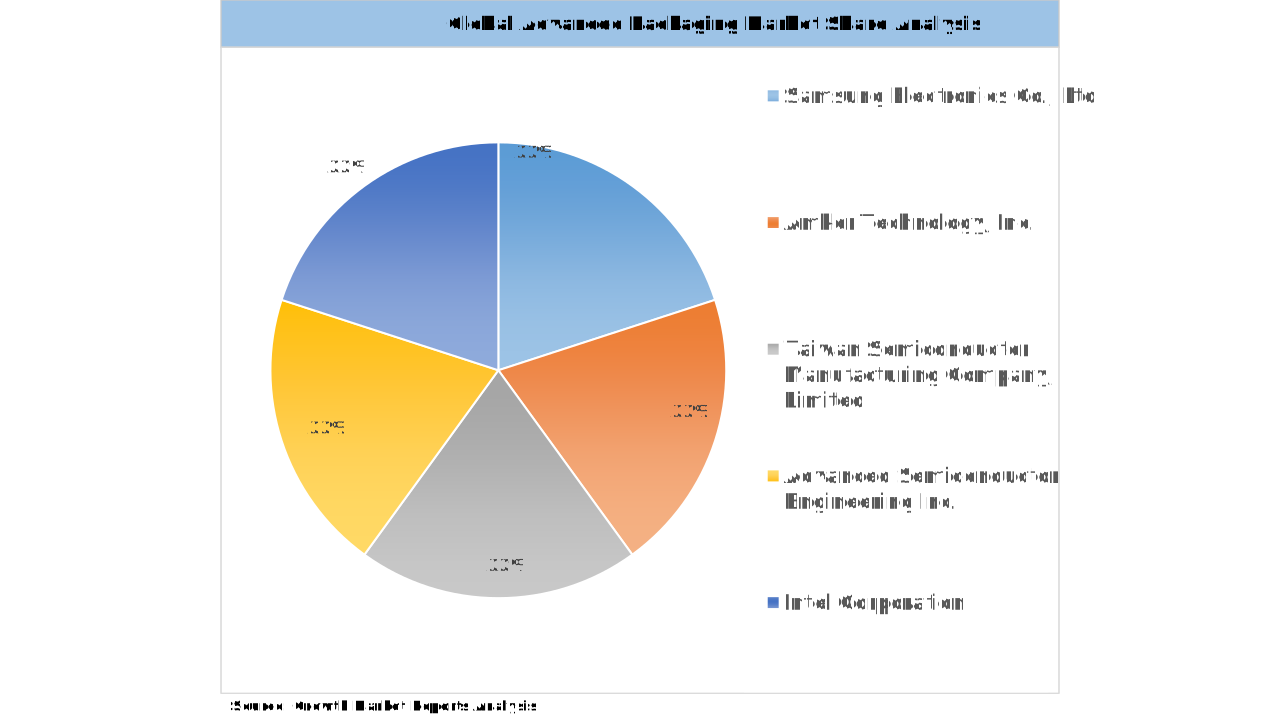
Key players competing in the Advanced Packaging market include Samsung Electronics Co., Ltd, Amkor Technology, Inc., Taiwan Semiconductor Manufacturing Company, Limited, Advanced Semiconductor Engineering Inc., and Intel Corporation.
Some of these players are using several market strategies such as mergers, acquisitions, partnerships, collaborations, capacity expansion, and product launches to increase their market shares.
Key trends include the shift towards heterogeneous integration, 3D packaging, system-in-package solutions, sustainability and eco-friendly materials, increased outsourcing to OSATs, and strategic partnerships among IDMs, foundries, and OSATs.
Major players include ASE Technology Holding, Amkor Technology, TSMC, Intel, Samsung Electronics, JCET Group, Powertech Technology, SPIL, UTAC Holdings, and others.
Memory, logic, imaging & optoelectronics, MEMS/sensors, and LED devices all benefit from advanced packaging, with applications in high-capacity storage, high-performance computing, imaging systems, and energy-efficient lighting.
Major challenges include high costs and technical complexity, especially for 3D IC and heterogeneous integration, yield and thermal management issues, supply chain disruptions, and geopolitical tensions affecting the semiconductor industry.
End-users include Integrated Device Manufacturers (IDMs), Foundries, and Outsourced Semiconductor Assembly and Test (OSAT) providers. OSATs are increasingly important for smaller and fabless semiconductor companies.
Consumer electronics is the largest application segment, followed by automotive, healthcare, industrial, IT & telecommunication, and aerospace & defense. The rise of 5G, IoT, electric vehicles, and wearable health devices are key demand drivers.
The main packaging types include 2.5D, 3D IC, Fan-Out Wafer Level Packaging (FOWLP), System-in-Package (SiP), Flip Chip, and others. Flip Chip and FOWLP are particularly prominent due to their performance and integration benefits.
Asia Pacific dominates the market with over 60% share in 2024, led by countries like China, Taiwan, South Korea, and Japan. North America and Europe also show substantial growth, while Latin America and the Middle East & Africa are expected to register above-average growth rates.
Key growth drivers include advancements in semiconductor manufacturing, increasing demand for high-performance and miniaturized electronic devices, proliferation of consumer electronics, growth in AI and IoT applications, and the evolution of 5G and automotive electronics.
The global Advanced Packaging Market reached USD 41.2 billion in 2024 and is expected to grow at a CAGR of 9.8% from 2025 to 2033, reaching an estimated USD 96.5 billion by 2033.