Acoustic Microscope Market Research Report 2033

Acoustic Microscope Market Research Report 2033

Segments - by Product Type (Scanning Acoustic Microscope, Confocal Acoustic Microscope, C-Mode Scanning Acoustic Microscope, Others), by Frequency Range (Low Frequency, High Frequency, Ultra-High Frequency), by Application (Non-Destructive Testing, Failure Analysis, Quality Control, Biomedical Imaging, Material Science, Semiconductor Inspection, Others), by End-User (Electronics, Automotive, Aerospace, Medical, Research & Academia, Others)

https://growthmarketreports.com/Raksha
Author : Raksha Sharma
https://growthmarketreports.com/Vaibhav
Fact-checked by : V. Chandola
https://growthmarketreports.com/Shruti
Editor : Shruti Bhat

Upcoming | Report ID :EP-5283 | 4.9 Rating | 34 Reviews | 258 Pages | Format : Docx PDF

Report Description


Acoustic Microscope Market Outlook

According to our latest research, the global Acoustic Microscope market size in 2024 stands at USD 355 million, with a robust compound annual growth rate (CAGR) of 7.8% projected through the forecast period. By 2033, the market is anticipated to reach approximately USD 710 million, driven by substantial technological advancements and expanding applications across diverse industries. This growth is primarily fueled by the increasing demand for high-resolution, non-destructive testing (NDT) solutions in electronics, automotive, and semiconductor sectors, alongside emerging opportunities in biomedical imaging and material science.

The Acoustic Microscope market is experiencing significant growth due to the escalating need for advanced inspection and quality assurance tools within high-precision manufacturing industries. As electronics and semiconductor components become increasingly miniaturized and complex, traditional inspection methods often fall short in detecting sub-surface defects and delamination. Acoustic microscopes, leveraging high-frequency ultrasound waves, offer unparalleled resolution and depth profiling capabilities, enabling manufacturers to identify internal flaws without damaging the sample. This technological edge is critical in ensuring product reliability and compliance with stringent industry standards, thus driving widespread adoption across the electronics and semiconductor sectors.

Another major growth driver is the expanding application of acoustic microscopy in the biomedical and material science fields. In biomedical imaging, acoustic microscopes facilitate the non-invasive examination of biological tissues, providing detailed insights into cellular structures and disease pathology. This capability is particularly valuable for early diagnosis and research in oncology, cardiology, and neurology, where precise imaging can significantly impact patient outcomes. Similarly, in material science, acoustic microscopy enables researchers to investigate the microstructure and mechanical properties of advanced materials, supporting innovations in nanotechnology, composites, and polymers. The integration of acoustic microscopy into research and development workflows is accelerating scientific discovery and fostering cross-disciplinary collaboration.

Additionally, the market is benefitting from the rising emphasis on quality control and failure analysis in industries such as automotive and aerospace. As regulatory requirements and consumer expectations for safety and durability intensify, manufacturers are increasingly investing in sophisticated inspection technologies to mitigate risks and reduce recalls. Acoustic microscopes are uniquely suited for detecting voids, cracks, and delaminations in complex assemblies, providing actionable data for process optimization and root cause analysis. The growing adoption of Industry 4.0 principles, which prioritize automation and data-driven decision-making, is further amplifying the demand for advanced acoustic microscopy solutions, as companies seek to enhance operational efficiency and maintain a competitive edge.

From a regional perspective, Asia Pacific dominates the Acoustic Microscope market owing to its strong manufacturing base, particularly in electronics, semiconductors, and automotive industries. Countries such as China, Japan, South Korea, and Taiwan are leading adopters of advanced inspection technologies, supported by significant investments in R&D and government initiatives promoting industrial innovation. North America and Europe also represent substantial market shares, driven by robust aerospace, medical, and research sectors. Meanwhile, emerging markets in Latin America and the Middle East & Africa are witnessing gradual uptake, propelled by increasing industrialization and infrastructure development. The global landscape is characterized by dynamic regional trends, with each market exhibiting unique growth drivers and challenges.

Global Acoustic Microscope Industry Outlook

Product Type Analysis

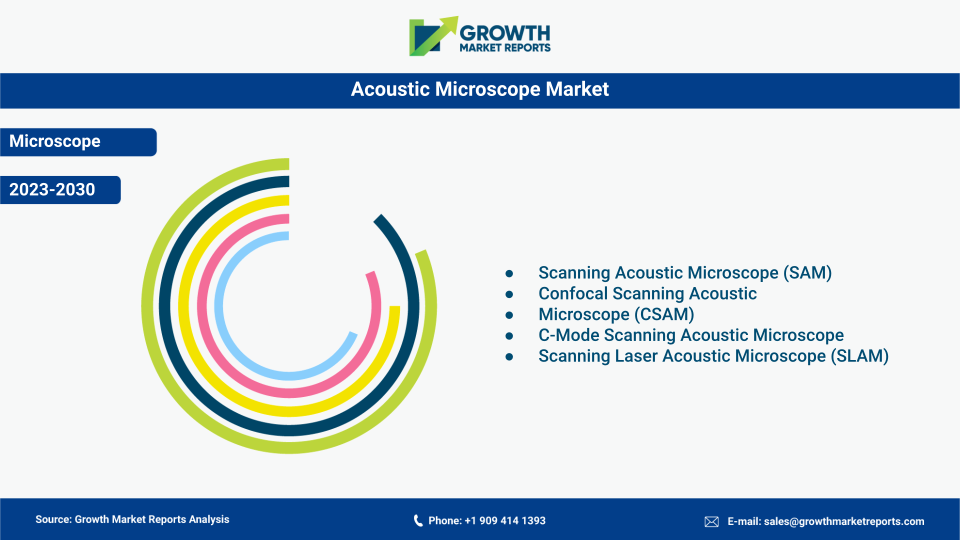
The Product Type segment of the Acoustic Microscope market is categorized into Scanning Acoustic Microscope (SAM), Confocal Acoustic Microscope (CAM), C-Mode Scanning Acoustic Microscope (C-SAM), and other specialized variants. Among these, Scanning Acoustic Microscopes hold the largest share, attributed to their versatility and broad application across industries. These systems utilize focused ultrasound waves to generate high-resolution images of internal structures, making them indispensable for non-destructive testing, failure analysis, and quality control. The ability of SAMs to detect subsurface defects in multilayered assemblies has cemented their status as the workhorse of the industry, particularly in electronics and semiconductor manufacturing.

Confocal Acoustic Microscopes represent a rapidly growing sub-segment, driven by their superior depth resolution and contrast capabilities. Unlike conventional SAMs, CAMs employ a confocal setup that enhances the discrimination of features at specific depths, enabling more precise characterization of complex materials. This technology is especially valuable in biomedical imaging and advanced material research, where distinguishing subtle structural differences is critical. As research institutions and medical device manufacturers increasingly prioritize high-precision imaging, the demand for confocal systems is expected to surge, contributing significantly to overall market growth.

The C-Mode Scanning Acoustic Microscope (C-SAM) is another pivotal product type, renowned for its ability to produce cross-sectional images at specific depths. C-SAMs are extensively used for inspecting semiconductor packages, printed circuit boards (PCBs), and composite materials, where internal delaminations and voids can compromise performance and reliability. The semiconductor industry, in particular, relies on C-SAM technology for process control and failure analysis, as it enables rapid, non-invasive inspection of large volumes. The increasing complexity of semiconductor devices and the trend toward miniaturization are expected to drive sustained demand for C-SAM systems.

Other specialized acoustic microscope variants, including high-frequency and ultra-high-frequency systems, cater to niche applications requiring exceptional spatial resolution and sensitivity. These instruments are often deployed in cutting-edge research, nanotechnology, and forensic analysis, where conventional imaging tools are inadequate. As technological advancements continue to push the boundaries of acoustic microscopy, the market is witnessing the introduction of hybrid systems that combine multiple imaging modalities, offering enhanced flexibility and analytical capabilities. The ongoing evolution of product offerings is poised to expand the addressable market and unlock new opportunities for manufacturers and end-users alike.

Report Scope

Attributes Details
Report Title Acoustic Microscope Market Research Report 2033
By Product Type Scanning Acoustic Microscope, Confocal Acoustic Microscope, C-Mode Scanning Acoustic Microscope, Others
By Frequency Range Low Frequency, High Frequency, Ultra-High Frequency
By Application Non-Destructive Testing, Failure Analysis, Quality Control, Biomedical Imaging, Material Science, Semiconductor Inspection, Others
By End-User Electronics, Automotive, Aerospace, Medical, Research & Academia, Others
Regions Covered North America, Europe, APAC, Latin America, MEA
Base Year 2024
Historic Data 2018-2023
Forecast Period 2025-2033
Number of Pages 258
Number of Tables & Figures 279
Customization Available Yes, the report can be customized as per your need.

Frequency Range Analysis

The Frequency Range segment is a critical determinant of the performance and application scope of acoustic microscopes. It is broadly classified into Low Frequency, High Frequency, and Ultra-High Frequency systems. Low Frequency acoustic microscopes, typically operating below 100 MHz, are favored for their ability to penetrate thicker and denser materials. These systems are widely used in industrial settings for inspecting large components, such as automotive parts, aerospace composites, and heavy machinery. The trade-off, however, is lower spatial resolution, which limits their suitability for applications requiring fine detail.

High Frequency acoustic microscopes, generally operating in the 100 MHz to 1 GHz range, strike a balance between penetration depth and image resolution. These systems are the mainstay of the electronics and semiconductor industries, where inspecting thin layers and identifying sub-micron defects is essential. High-frequency acoustic microscopes are also employed in biomedical imaging, enabling the visualization of cellular structures and tissue interfaces. Their versatility and performance have made them the preferred choice for a wide array of quality control, failure analysis, and research applications, driving significant market demand.

The Ultra-High Frequency segment, encompassing frequencies above 1 GHz, represents the cutting edge of acoustic microscopy technology. Ultra-high-frequency systems deliver exceptional spatial resolution, enabling the detection of minute defects and characterization of nanoscale features. These instruments are indispensable for advanced research in nanotechnology, material science, and semiconductor inspection, where traditional imaging methods are insufficient. The adoption of ultra-high-frequency acoustic microscopes is accelerating in response to the relentless miniaturization of electronic components and the pursuit of higher performance materials. However, their limited penetration depth restricts their use to thin samples and surface analysis.

As technology evolves, manufacturers are developing hybrid systems capable of operating across multiple frequency ranges, offering users greater flexibility and analytical power. These innovations are expanding the application envelope of acoustic microscopy, allowing end-users to tailor inspection protocols to specific material and defect characteristics. The frequency range segment is thus a key battleground for differentiation and value creation in the acoustic microscope market, with ongoing R&D efforts focused on enhancing both resolution and penetration capabilities.

Application Analysis

The Application segment of the Acoustic Microscope market encompasses a diverse array of use cases, reflecting the versatility of the technology. Non-Destructive Testing (NDT) remains the largest application, accounting for a significant share of market revenue. Acoustic microscopes are uniquely suited for NDT, as they enable the detection of internal defects, delaminations, and voids without compromising the integrity of the sample. This capability is invaluable in industries where safety, reliability, and compliance are paramount, such as aerospace, automotive, and electronics manufacturing. The ongoing shift toward predictive maintenance and zero-defect manufacturing is further amplifying the demand for advanced NDT solutions.

Failure Analysis is another critical application, particularly in the semiconductor and electronics sectors. As devices become more complex and miniaturized, identifying the root cause of failures requires sophisticated inspection tools capable of visualizing sub-surface anomalies. Acoustic microscopes provide detailed insights into internal structures, enabling engineers to pinpoint defects and optimize manufacturing processes. The rising incidence of product recalls and warranty claims is prompting manufacturers to invest in failure analysis capabilities, positioning acoustic microscopy as an essential tool for risk mitigation and continuous improvement.

Quality Control represents a growing application area, driven by the increasing emphasis on product consistency and regulatory compliance. Acoustic microscopes are deployed at various stages of the production process to ensure that components meet stringent quality standards. Their ability to provide real-time, non-invasive inspection data supports process optimization, reduces scrap rates, and enhances customer satisfaction. The integration of acoustic microscopy into automated production lines is also gaining traction, enabling high-throughput inspection and supporting the broader Industry 4.0 agenda.

In the Biomedical Imaging and Material Science domains, acoustic microscopes are facilitating groundbreaking research and innovation. In biomedical applications, the technology enables the visualization of tissue microarchitecture, aiding in disease diagnosis and therapeutic monitoring. In material science, acoustic microscopy supports the characterization of novel materials, composites, and nanostructures, accelerating the development of next-generation products. Additional applications, such as Semiconductor Inspection and forensic analysis, further underscore the versatility and value proposition of acoustic microscopy across diverse end-use scenarios.

End-User Analysis

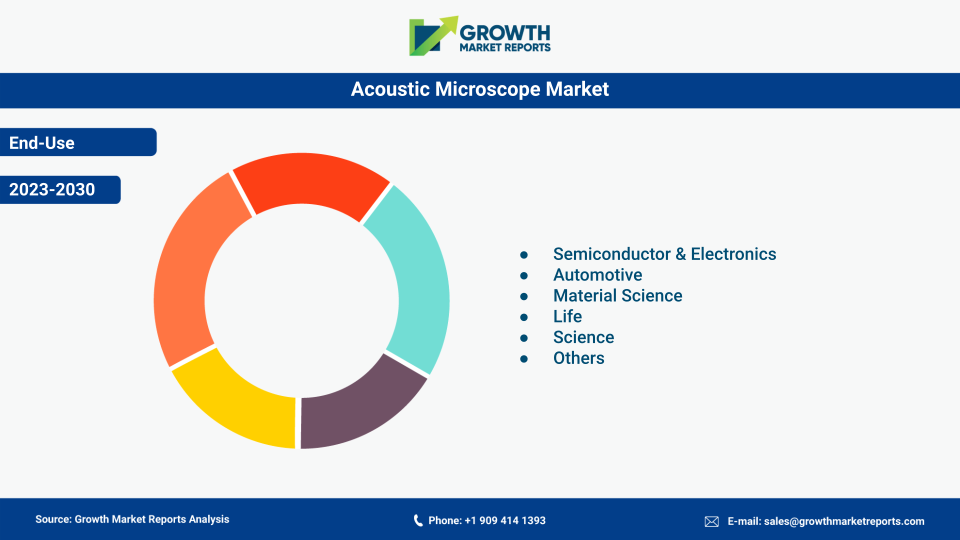
The End-User segment of the Acoustic Microscope market is characterized by a diverse customer base spanning multiple industries. The Electronics sector is the largest end-user, driven by the relentless pursuit of miniaturization, higher performance, and reliability in consumer electronics, semiconductors, and printed circuit boards. Acoustic microscopes are integral to process control, failure analysis, and quality assurance in electronics manufacturing, enabling the detection of sub-surface defects that could compromise device functionality. The proliferation of smart devices, IoT, and 5G technologies is further elevating the importance of advanced inspection tools in this sector.

The Automotive and Aerospace industries represent significant growth opportunities for acoustic microscopy, as manufacturers strive to meet stringent safety, quality, and regulatory requirements. In automotive manufacturing, acoustic microscopes are used to inspect critical components such as sensors, batteries, and composite structures, supporting the transition to electric vehicles and autonomous driving systems. In aerospace, the technology is employed for the inspection of turbine blades, composite panels, and other high-value assemblies, where failure could have catastrophic consequences. The increasing complexity of modern vehicles and aircraft is driving demand for non-destructive, high-resolution inspection capabilities.

The Medical sector is an emerging end-user, leveraging acoustic microscopy for both research and clinical applications. Medical device manufacturers utilize the technology to inspect implants, catheters, and other critical components, ensuring compliance with regulatory standards and minimizing the risk of product recalls. In clinical settings, acoustic microscopes support tissue imaging and pathology research, enabling earlier diagnosis and personalized treatment strategies. The growing focus on healthcare innovation and precision medicine is expected to drive sustained adoption of acoustic microscopy in this sector.

Research & Academia is another important end-user segment, as universities, research institutes, and government laboratories increasingly incorporate acoustic microscopy into their scientific workflows. The technology supports a wide range of disciplines, from materials science and nanotechnology to biology and forensic science. Funding initiatives aimed at advancing scientific research and fostering innovation are catalyzing the deployment of acoustic microscopes in academic settings. Other end-users, including energy, defense, and industrial manufacturing, are also recognizing the value of acoustic microscopy for specialized inspection and analysis tasks, further broadening the market’s reach.

Opportunities & Threats

The Acoustic Microscope market presents a multitude of opportunities for growth and innovation, particularly as industries embrace digital transformation and advanced manufacturing techniques. The integration of artificial intelligence and machine learning algorithms with acoustic microscopy is poised to revolutionize defect detection, image analysis, and data interpretation. These advancements will enable real-time, automated inspection processes, reducing human error and enhancing productivity. Additionally, the development of portable and cost-effective acoustic microscope systems is opening new avenues for adoption in field-based applications, such as infrastructure inspection and environmental monitoring. The expansion of application domains, coupled with ongoing technological innovation, positions the market for sustained long-term growth.

Another significant opportunity lies in the growing demand for sustainable and eco-friendly manufacturing practices. Acoustic microscopy, as a non-destructive and non-invasive inspection method, aligns with the principles of green manufacturing by minimizing waste, reducing rework, and extending product lifecycles. Industries are increasingly prioritizing sustainability in their operations, creating a favorable environment for the adoption of advanced inspection technologies. Furthermore, emerging economies are investing in industrial modernization and infrastructure development, creating new markets for acoustic microscopy solutions. Strategic partnerships, mergers, and acquisitions are also expected to shape the competitive landscape, enabling companies to expand their product portfolios and global footprint.

Despite these opportunities, the market faces several challenges that could hinder growth. One of the primary restraining factors is the high initial cost of acoustic microscope systems, which can be prohibitive for small and medium-sized enterprises (SMEs) and research institutions with limited budgets. Additionally, the complexity of operating and maintaining advanced acoustic microscopy equipment requires specialized training and expertise, posing a barrier to widespread adoption. Intense competition from alternative inspection technologies, such as X-ray and optical microscopy, also presents a threat, particularly in price-sensitive markets. Addressing these challenges will be crucial for market players seeking to capitalize on the growing demand for high-resolution, non-destructive inspection solutions.

Regional Outlook

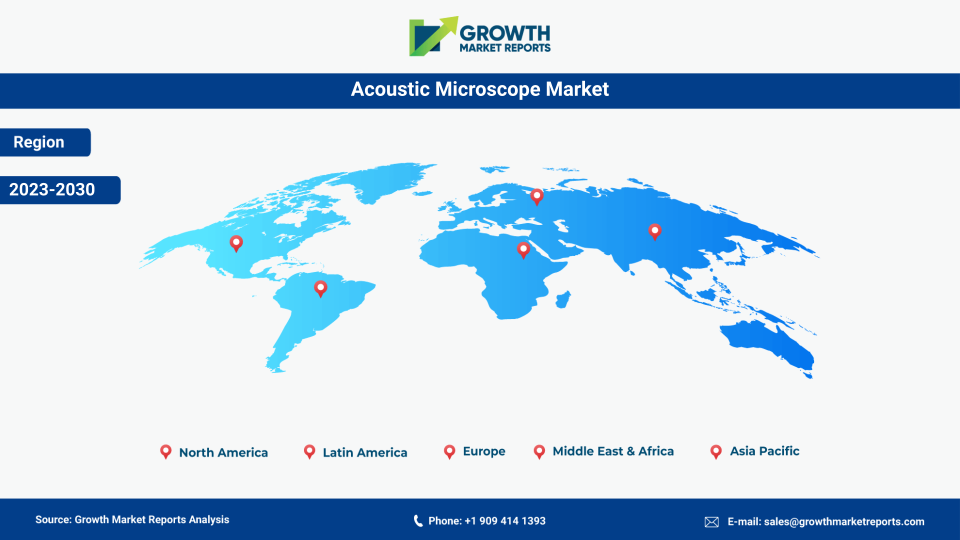
The Asia Pacific region leads the global Acoustic Microscope market, accounting for approximately USD 145 million in 2024 and projected to maintain a CAGR of 8.5% through 2033. This dominance is attributed to the region’s robust electronics, semiconductor, and automotive manufacturing sectors, particularly in countries such as China, Japan, South Korea, and Taiwan. Government initiatives aimed at promoting industrial innovation, coupled with significant investments in R&D, are further accelerating the adoption of advanced inspection technologies. The rapid pace of industrialization and the growing focus on quality assurance are expected to drive sustained market growth in Asia Pacific, making it a focal point for both established players and new entrants.

North America is another major market, with a market size of approximately USD 95 million in 2024. The region’s strength lies in its well-established aerospace, medical, and research sectors, where the demand for high-resolution, non-destructive testing solutions is particularly pronounced. The presence of leading technology providers, coupled with a strong emphasis on innovation and regulatory compliance, is fostering the adoption of acoustic microscopy across diverse industries. The integration of acoustic microscopy with digital manufacturing and automation platforms is further enhancing its value proposition, driving market expansion in the United States and Canada.

Europe follows closely, with a market size of around USD 80 million in 2024, supported by a strong aerospace, automotive, and academic research ecosystem. Countries such as Germany, France, and the United Kingdom are at the forefront of adopting advanced inspection technologies, driven by stringent quality standards and a culture of innovation. The European Union’s focus on industrial digitization and sustainability is also creating new opportunities for acoustic microscopy, particularly in the context of green manufacturing and circular economy initiatives. Meanwhile, Latin America and the Middle East & Africa regions are witnessing gradual uptake, with combined market sizes totaling less than USD 35 million in 2024. These regions are expected to experience steady growth as industrialization progresses and awareness of advanced inspection technologies increases.

Acoustic Microscope Market Statistics

Competitor Outlook

The Acoustic Microscope market is characterized by a dynamic and competitive landscape, with a mix of established global players and emerging innovators vying for market share. Leading companies are investing heavily in research and development to enhance the performance, versatility, and user-friendliness of their acoustic microscopy solutions. Product differentiation is a key focus area, with manufacturers introducing hybrid systems, advanced imaging software, and integrated automation features to meet the evolving needs of end-users. Strategic partnerships, mergers, and acquisitions are also shaping the competitive dynamics, enabling companies to expand their product portfolios, access new markets, and strengthen their technological capabilities.

The market is witnessing a trend toward the development of portable and user-friendly acoustic microscope systems, aimed at expanding the addressable market and facilitating adoption in resource-constrained environments. Companies are also prioritizing customer support, training, and after-sales services to enhance user experience and build long-term relationships. The integration of artificial intelligence and machine learning algorithms into acoustic microscopy platforms is emerging as a key differentiator, enabling real-time defect detection, automated image analysis, and predictive maintenance capabilities. As competition intensifies, companies are increasingly focusing on value-added services and solutions to capture market share and drive customer loyalty.

Major players in the Acoustic Microscope market include Hitachi High-Technologies Corporation, Olympus Corporation, Sonoscan Inc. (now part of Nordson Corporation), Leica Microsystems, and Nikon Corporation. These companies have established strong brand recognition and extensive distribution networks, enabling them to serve a global customer base. Hitachi High-Technologies, for example, is renowned for its high-performance scanning acoustic microscopes, which are widely used in semiconductor and electronics manufacturing. Olympus Corporation offers a comprehensive portfolio of acoustic microscopy solutions, catering to both industrial and biomedical applications. Sonoscan, now under Nordson, is a pioneer in C-mode scanning acoustic microscopy, with a strong presence in the semiconductor inspection market.

Leica Microsystems and Nikon Corporation are also prominent players, leveraging their expertise in optical and imaging technologies to develop advanced acoustic microscopy platforms. These companies are actively collaborating with research institutions and industry partners to drive innovation and expand the application scope of acoustic microscopy. In addition to these established players, a number of regional and niche manufacturers are emerging, offering specialized solutions tailored to specific industry needs. The competitive landscape is thus characterized by continuous innovation, strategic collaborations, and a relentless focus on meeting the evolving demands of end-users across the globe.

Key Players

  • Olympus Corporation
  • Hitachi High-Technologies Corporation
  • Sonoscan, Inc.
  • PVA TePla AG
  • Nikon Corporation
  • Bruker Corporation
  • Leica Microsystems
  • JEOL Ltd.
  • AMETEK, Inc.
  • Nordson Corporation
  • Covestro AG
  • KSI Technologies GmbH
  • OKOS Solutions, LLC
  • Tessonics Inc.
  • Bosello High Technology srl
  • QSI Quanta System Inc.
  • Sage Analytical Lab
  • Creative Electron, Inc.
  • Acoustech Systems Ltd.
  • Insight K.K.
Acoustic Microscope Market Overview

Segments

The Acoustic Microscope market has been segmented on the basis of

Product Type

  • Scanning Acoustic Microscope
  • Confocal Acoustic Microscope
  • C-Mode Scanning Acoustic Microscope
  • Others

Frequency Range

  • Low Frequency
  • High Frequency
  • Ultra-High Frequency

Application

  • Non-Destructive Testing
  • Failure Analysis
  • Quality Control
  • Biomedical Imaging
  • Material Science
  • Semiconductor Inspection
  • Others

End-User

  • Electronics
  • Automotive
  • Aerospace
  • Medical
  • Research & Academia
  • Others

Competitive Landscape

  • Manufacturers operating in the Global Acoustic Microscope Market Nordson Corporation, Fortive (Sonix), Hitachi, Ltd. (Hitachi Power Solutions Co., Ltd), PVA TePla AG (PVA TePla Analytical Systems GmbH), IP-holding GmbH, Tessonics Inc, ACOULAB.CO., LTD., Insight Co., Ltd, Ostec, kibero. Market Players are pursuing key strategies such as acquisitions, collaborations, and geographic expansion where a potential opportunity arises for the Global Acoustic Microscope Market.
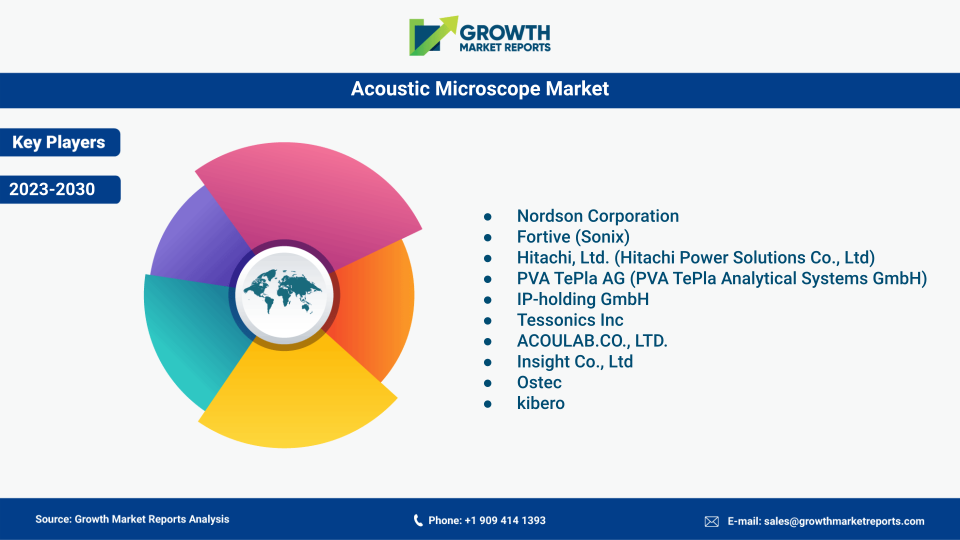

Acoustic Microscope Market Key Players

Frequently Asked Questions

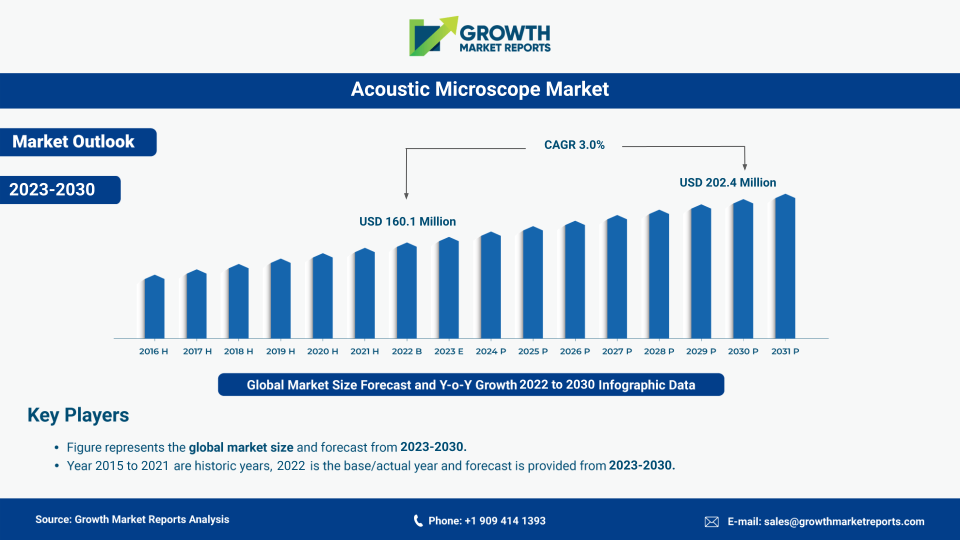
The base year considered for the Global Acoustic Microscope Market report is 2021. The complete analysis period is 2015 to 2030 and the forecast is provided from 2022 to 2030.

In addition to market size (in US$ Million), Company Market Share (in % for the base year 2022), macroeconomic factors, and supply chain analysis.

The outbreak of coronavirus disease in 2019 (COVID-19) had a moderate impact on the global acoustic microscope market. Demand for acoustic microscope has increased, due to the widespread use of acoustic microscopes in semiconductors & electronics, automotive, and material science during the pandemic.

Major manufacturers include Nordson Corporation, Fortive (Sonix), Hitachi, Ltd. (Hitachi Power Solutions Co., Ltd), PVA TePla AG (PVA TePla Analytical Systems GmbH), and IP-holding GmbH.

Factors such as the rising GDP of emerging economies, governmental regulations, and R&D activities are analyzed in the final report.

The Global Acoustic Microscope Market is likely to register a CAGR of 3.0 % during the forecast period, with a projected valuation of USD 202.4 million by the end of 2030.

The increasing number of end-use industries, growing demand for medical imaging, and rising focus on quality control are the factors expected to drive the market growth during the forecast period.

Factors such as competitive strength and market positioning are key areas considered while selecting top companies to be profiled.

Additional company profiles can be provided on request For a discussion related to the above findings, click Speak to Analyst

Table Of Content

Chapter 1 Executive Summary
Chapter 2 Assumptions and Acronyms Used
Chapter 3 Research Methodology
Chapter 4 Acoustic Microscope Market Overview
   4.1 Introduction
      4.1.1 Market Taxonomy
      4.1.2 Market Definition
      4.1.3 Macro-Economic Factors Impacting the Market Growth
   4.2 Acoustic Microscope Market Dynamics
      4.2.1 Market Drivers
      4.2.2 Market Restraints
      4.2.3 Market Opportunity
   4.3 Acoustic Microscope Market - Supply Chain Analysis
      4.3.1 List of Key Suppliers
      4.3.2 List of Key Distributors
      4.3.3 List of Key Consumers
   4.4 Key Forces Shaping the Acoustic Microscope Market
      4.4.1 Bargaining Power of Suppliers
      4.4.2 Bargaining Power of Buyers
      4.4.3 Threat of Substitution
      4.4.4 Threat of New Entrants
      4.4.5 Competitive Rivalry
   4.5 Global Acoustic Microscope Market Size & Forecast, 2023-2032
      4.5.1 Acoustic Microscope Market Size and Y-o-Y Growth
      4.5.2 Acoustic Microscope Market Absolute $ Opportunity

Chapter 5 Global Acoustic Microscope Market Analysis and Forecast By Product Type
   5.1 Introduction
      5.1.1 Key Market Trends & Growth Opportunities By Product Type
      5.1.2 Basis Point Share (BPS) Analysis By Product Type
      5.1.3 Absolute $ Opportunity Assessment By Product Type
   5.2 Acoustic Microscope Market Size Forecast By Product Type
      5.2.1 Scanning Acoustic Microscope
      5.2.2 Confocal Acoustic Microscope
      5.2.3 C-Mode Scanning Acoustic Microscope
      5.2.4 Others
   5.3 Market Attractiveness Analysis By Product Type

Chapter 6 Global Acoustic Microscope Market Analysis and Forecast By Frequency Range
   6.1 Introduction
      6.1.1 Key Market Trends & Growth Opportunities By Frequency Range
      6.1.2 Basis Point Share (BPS) Analysis By Frequency Range
      6.1.3 Absolute $ Opportunity Assessment By Frequency Range
   6.2 Acoustic Microscope Market Size Forecast By Frequency Range
      6.2.1 Low Frequency
      6.2.2 High Frequency
      6.2.3 Ultra-High Frequency
   6.3 Market Attractiveness Analysis By Frequency Range

Chapter 7 Global Acoustic Microscope Market Analysis and Forecast By Application
   7.1 Introduction
      7.1.1 Key Market Trends & Growth Opportunities By Application
      7.1.2 Basis Point Share (BPS) Analysis By Application
      7.1.3 Absolute $ Opportunity Assessment By Application
   7.2 Acoustic Microscope Market Size Forecast By Application
      7.2.1 Non-Destructive Testing
      7.2.2 Failure Analysis
      7.2.3 Quality Control
      7.2.4 Biomedical Imaging
      7.2.5 Material Science
      7.2.6 Semiconductor Inspection
      7.2.7 Others
   7.3 Market Attractiveness Analysis By Application

Chapter 8 Global Acoustic Microscope Market Analysis and Forecast By End-User
   8.1 Introduction
      8.1.1 Key Market Trends & Growth Opportunities By End-User
      8.1.2 Basis Point Share (BPS) Analysis By End-User
      8.1.3 Absolute $ Opportunity Assessment By End-User
   8.2 Acoustic Microscope Market Size Forecast By End-User
      8.2.1 Electronics
      8.2.2 Automotive
      8.2.3 Aerospace
      8.2.4 Medical
      8.2.5 Research & Academia
      8.2.6 Others
   8.3 Market Attractiveness Analysis By End-User

Chapter 9 Global Acoustic Microscope Market Analysis and Forecast by Region
   9.1 Introduction
      9.1.1 Key Market Trends & Growth Opportunities By Region
      9.1.2 Basis Point Share (BPS) Analysis By Region
      9.1.3 Absolute $ Opportunity Assessment By Region
   9.2 Acoustic Microscope Market Size Forecast By Region
      9.2.1 North America
      9.2.2 Europe
      9.2.3 Asia Pacific
      9.2.4 Latin America
      9.2.5 Middle East & Africa (MEA)
   9.3 Market Attractiveness Analysis By Region

Chapter 10 Coronavirus Disease (COVID-19) Impact 
   10.1 Introduction 
   10.2 Current & Future Impact Analysis 
   10.3 Economic Impact Analysis 
   10.4 Government Policies 
   10.5 Investment Scenario

Chapter 11 North America Acoustic Microscope Analysis and Forecast
   11.1 Introduction
   11.2 North America Acoustic Microscope Market Size Forecast by Country
      11.2.1 U.S.
      11.2.2 Canada
   11.3 Basis Point Share (BPS) Analysis by Country
   11.4 Absolute $ Opportunity Assessment by Country
   11.5 Market Attractiveness Analysis by Country
   11.6 North America Acoustic Microscope Market Size Forecast By Product Type
      11.6.1 Scanning Acoustic Microscope
      11.6.2 Confocal Acoustic Microscope
      11.6.3 C-Mode Scanning Acoustic Microscope
      11.6.4 Others
   11.7 Basis Point Share (BPS) Analysis By Product Type 
   11.8 Absolute $ Opportunity Assessment By Product Type 
   11.9 Market Attractiveness Analysis By Product Type
   11.10 North America Acoustic Microscope Market Size Forecast By Frequency Range
      11.10.1 Low Frequency
      11.10.2 High Frequency
      11.10.3 Ultra-High Frequency
   11.11 Basis Point Share (BPS) Analysis By Frequency Range 
   11.12 Absolute $ Opportunity Assessment By Frequency Range 
   11.13 Market Attractiveness Analysis By Frequency Range
   11.14 North America Acoustic Microscope Market Size Forecast By Application
      11.14.1 Non-Destructive Testing
      11.14.2 Failure Analysis
      11.14.3 Quality Control
      11.14.4 Biomedical Imaging
      11.14.5 Material Science
      11.14.6 Semiconductor Inspection
      11.14.7 Others
   11.15 Basis Point Share (BPS) Analysis By Application 
   11.16 Absolute $ Opportunity Assessment By Application 
   11.17 Market Attractiveness Analysis By Application
   11.18 North America Acoustic Microscope Market Size Forecast By End-User
      11.18.1 Electronics
      11.18.2 Automotive
      11.18.3 Aerospace
      11.18.4 Medical
      11.18.5 Research & Academia
      11.18.6 Others
   11.19 Basis Point Share (BPS) Analysis By End-User 
   11.20 Absolute $ Opportunity Assessment By End-User 
   11.21 Market Attractiveness Analysis By End-User

Chapter 12 Europe Acoustic Microscope Analysis and Forecast
   12.1 Introduction
   12.2 Europe Acoustic Microscope Market Size Forecast by Country
      12.2.1 Germany
      12.2.2 France
      12.2.3 Italy
      12.2.4 U.K.
      12.2.5 Spain
      12.2.6 Russia
      12.2.7 Rest of Europe
   12.3 Basis Point Share (BPS) Analysis by Country
   12.4 Absolute $ Opportunity Assessment by Country
   12.5 Market Attractiveness Analysis by Country
   12.6 Europe Acoustic Microscope Market Size Forecast By Product Type
      12.6.1 Scanning Acoustic Microscope
      12.6.2 Confocal Acoustic Microscope
      12.6.3 C-Mode Scanning Acoustic Microscope
      12.6.4 Others
   12.7 Basis Point Share (BPS) Analysis By Product Type 
   12.8 Absolute $ Opportunity Assessment By Product Type 
   12.9 Market Attractiveness Analysis By Product Type
   12.10 Europe Acoustic Microscope Market Size Forecast By Frequency Range
      12.10.1 Low Frequency
      12.10.2 High Frequency
      12.10.3 Ultra-High Frequency
   12.11 Basis Point Share (BPS) Analysis By Frequency Range 
   12.12 Absolute $ Opportunity Assessment By Frequency Range 
   12.13 Market Attractiveness Analysis By Frequency Range
   12.14 Europe Acoustic Microscope Market Size Forecast By Application
      12.14.1 Non-Destructive Testing
      12.14.2 Failure Analysis
      12.14.3 Quality Control
      12.14.4 Biomedical Imaging
      12.14.5 Material Science
      12.14.6 Semiconductor Inspection
      12.14.7 Others
   12.15 Basis Point Share (BPS) Analysis By Application 
   12.16 Absolute $ Opportunity Assessment By Application 
   12.17 Market Attractiveness Analysis By Application
   12.18 Europe Acoustic Microscope Market Size Forecast By End-User
      12.18.1 Electronics
      12.18.2 Automotive
      12.18.3 Aerospace
      12.18.4 Medical
      12.18.5 Research & Academia
      12.18.6 Others
   12.19 Basis Point Share (BPS) Analysis By End-User 
   12.20 Absolute $ Opportunity Assessment By End-User 
   12.21 Market Attractiveness Analysis By End-User

Chapter 13 Asia Pacific Acoustic Microscope Analysis and Forecast
   13.1 Introduction
   13.2 Asia Pacific Acoustic Microscope Market Size Forecast by Country
      13.2.1 China
      13.2.2 Japan
      13.2.3 South Korea
      13.2.4 India
      13.2.5 Australia
      13.2.6 South East Asia (SEA)
      13.2.7 Rest of Asia Pacific (APAC)
   13.3 Basis Point Share (BPS) Analysis by Country
   13.4 Absolute $ Opportunity Assessment by Country
   13.5 Market Attractiveness Analysis by Country
   13.6 Asia Pacific Acoustic Microscope Market Size Forecast By Product Type
      13.6.1 Scanning Acoustic Microscope
      13.6.2 Confocal Acoustic Microscope
      13.6.3 C-Mode Scanning Acoustic Microscope
      13.6.4 Others
   13.7 Basis Point Share (BPS) Analysis By Product Type 
   13.8 Absolute $ Opportunity Assessment By Product Type 
   13.9 Market Attractiveness Analysis By Product Type
   13.10 Asia Pacific Acoustic Microscope Market Size Forecast By Frequency Range
      13.10.1 Low Frequency
      13.10.2 High Frequency
      13.10.3 Ultra-High Frequency
   13.11 Basis Point Share (BPS) Analysis By Frequency Range 
   13.12 Absolute $ Opportunity Assessment By Frequency Range 
   13.13 Market Attractiveness Analysis By Frequency Range
   13.14 Asia Pacific Acoustic Microscope Market Size Forecast By Application
      13.14.1 Non-Destructive Testing
      13.14.2 Failure Analysis
      13.14.3 Quality Control
      13.14.4 Biomedical Imaging
      13.14.5 Material Science
      13.14.6 Semiconductor Inspection
      13.14.7 Others
   13.15 Basis Point Share (BPS) Analysis By Application 
   13.16 Absolute $ Opportunity Assessment By Application 
   13.17 Market Attractiveness Analysis By Application
   13.18 Asia Pacific Acoustic Microscope Market Size Forecast By End-User
      13.18.1 Electronics
      13.18.2 Automotive
      13.18.3 Aerospace
      13.18.4 Medical
      13.18.5 Research & Academia
      13.18.6 Others
   13.19 Basis Point Share (BPS) Analysis By End-User 
   13.20 Absolute $ Opportunity Assessment By End-User 
   13.21 Market Attractiveness Analysis By End-User

Chapter 14 Latin America Acoustic Microscope Analysis and Forecast
   14.1 Introduction
   14.2 Latin America Acoustic Microscope Market Size Forecast by Country
      14.2.1 Brazil
      14.2.2 Mexico
      14.2.3 Rest of Latin America (LATAM)
   14.3 Basis Point Share (BPS) Analysis by Country
   14.4 Absolute $ Opportunity Assessment by Country
   14.5 Market Attractiveness Analysis by Country
   14.6 Latin America Acoustic Microscope Market Size Forecast By Product Type
      14.6.1 Scanning Acoustic Microscope
      14.6.2 Confocal Acoustic Microscope
      14.6.3 C-Mode Scanning Acoustic Microscope
      14.6.4 Others
   14.7 Basis Point Share (BPS) Analysis By Product Type 
   14.8 Absolute $ Opportunity Assessment By Product Type 
   14.9 Market Attractiveness Analysis By Product Type
   14.10 Latin America Acoustic Microscope Market Size Forecast By Frequency Range
      14.10.1 Low Frequency
      14.10.2 High Frequency
      14.10.3 Ultra-High Frequency
   14.11 Basis Point Share (BPS) Analysis By Frequency Range 
   14.12 Absolute $ Opportunity Assessment By Frequency Range 
   14.13 Market Attractiveness Analysis By Frequency Range
   14.14 Latin America Acoustic Microscope Market Size Forecast By Application
      14.14.1 Non-Destructive Testing
      14.14.2 Failure Analysis
      14.14.3 Quality Control
      14.14.4 Biomedical Imaging
      14.14.5 Material Science
      14.14.6 Semiconductor Inspection
      14.14.7 Others
   14.15 Basis Point Share (BPS) Analysis By Application 
   14.16 Absolute $ Opportunity Assessment By Application 
   14.17 Market Attractiveness Analysis By Application
   14.18 Latin America Acoustic Microscope Market Size Forecast By End-User
      14.18.1 Electronics
      14.18.2 Automotive
      14.18.3 Aerospace
      14.18.4 Medical
      14.18.5 Research & Academia
      14.18.6 Others
   14.19 Basis Point Share (BPS) Analysis By End-User 
   14.20 Absolute $ Opportunity Assessment By End-User 
   14.21 Market Attractiveness Analysis By End-User

Chapter 15 Middle East & Africa (MEA) Acoustic Microscope Analysis and Forecast
   15.1 Introduction
   15.2 Middle East & Africa (MEA) Acoustic Microscope Market Size Forecast by Country
      15.2.1 Saudi Arabia
      15.2.2 South Africa
      15.2.3 UAE
      15.2.4 Rest of Middle East & Africa (MEA)
   15.3 Basis Point Share (BPS) Analysis by Country
   15.4 Absolute $ Opportunity Assessment by Country
   15.5 Market Attractiveness Analysis by Country
   15.6 Middle East & Africa (MEA) Acoustic Microscope Market Size Forecast By Product Type
      15.6.1 Scanning Acoustic Microscope
      15.6.2 Confocal Acoustic Microscope
      15.6.3 C-Mode Scanning Acoustic Microscope
      15.6.4 Others
   15.7 Basis Point Share (BPS) Analysis By Product Type 
   15.8 Absolute $ Opportunity Assessment By Product Type 
   15.9 Market Attractiveness Analysis By Product Type
   15.10 Middle East & Africa (MEA) Acoustic Microscope Market Size Forecast By Frequency Range
      15.10.1 Low Frequency
      15.10.2 High Frequency
      15.10.3 Ultra-High Frequency
   15.11 Basis Point Share (BPS) Analysis By Frequency Range 
   15.12 Absolute $ Opportunity Assessment By Frequency Range 
   15.13 Market Attractiveness Analysis By Frequency Range
   15.14 Middle East & Africa (MEA) Acoustic Microscope Market Size Forecast By Application
      15.14.1 Non-Destructive Testing
      15.14.2 Failure Analysis
      15.14.3 Quality Control
      15.14.4 Biomedical Imaging
      15.14.5 Material Science
      15.14.6 Semiconductor Inspection
      15.14.7 Others
   15.15 Basis Point Share (BPS) Analysis By Application 
   15.16 Absolute $ Opportunity Assessment By Application 
   15.17 Market Attractiveness Analysis By Application
   15.18 Middle East & Africa (MEA) Acoustic Microscope Market Size Forecast By End-User
      15.18.1 Electronics
      15.18.2 Automotive
      15.18.3 Aerospace
      15.18.4 Medical
      15.18.5 Research & Academia
      15.18.6 Others
   15.19 Basis Point Share (BPS) Analysis By End-User 
   15.20 Absolute $ Opportunity Assessment By End-User 
   15.21 Market Attractiveness Analysis By End-User

Chapter 16 Competition Landscape 
   16.1 Acoustic Microscope Market: Competitive Dashboard
   16.2 Global Acoustic Microscope Market: Market Share Analysis, 2023
   16.3 Company Profiles (Details – Overview, Financials, Developments, Strategy) 
      16.3.1 Olympus Corporation
Hitachi High-Technologies Corporation
Sonoscan, Inc.
PVA TePla AG
Nikon Corporation
Bruker Corporation
Leica Microsystems
JEOL Ltd.
AMETEK, Inc.
Nordson Corporation
Covestro AG
KSI Technologies GmbH
OKOS Solutions, LLC
Tessonics Inc.
Bosello High Technology srl
QSI Quanta System Inc.
Sage Analytical Lab
Creative Electron, Inc.
Acoustech Systems Ltd.
Insight K.K.

Methodology

Our Clients

General Mills
Microsoft
Pfizer
Honda Motor Co. Ltd.
sinopec
Siemens Healthcare
Nestle SA
The John Holland Group