4K Set-top Box Market Research Report 2033

4K Set-top Box Market Research Report 2033

Segments - by Product Type (Internet Protocol TV (IPTV), Over-the-Top (OTT), Satellite, Cable, Others), by Resolution (UHD, Full HD, HD), by Application (Residential, Commercial), by Distribution Channel (Online, Offline), by End-User (Individual, Hospitality, Education, Healthcare, Others)

https://growthmarketreports.com/Debadatta
Author : Debadatta Patel
https://growthmarketreports.com/Vaibhav
Fact-checked by : V. Chandola
https://growthmarketreports.com/Shruti
Editor : Shruti Bhat

Upcoming | Report ID :CG-680 | 5.0 Rating | 20 Reviews | 279 Pages | Format : Docx PDF

Report Description


4K Set-top Box Market Outlook

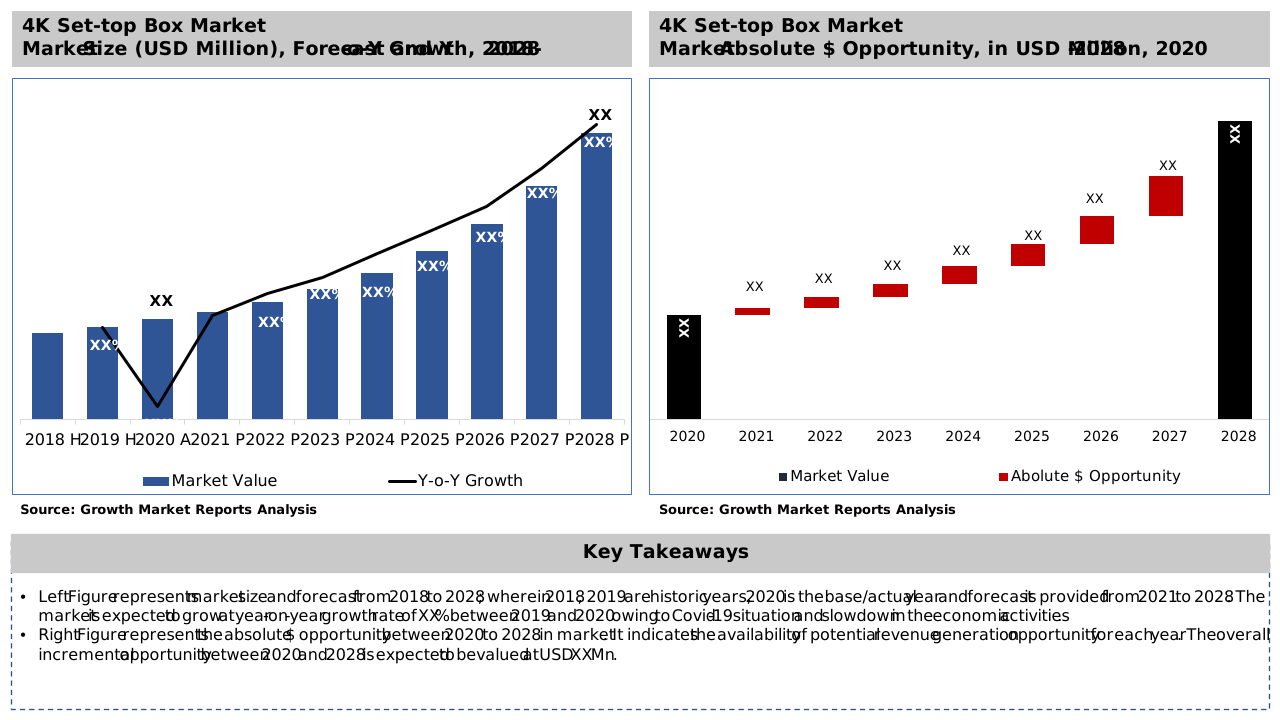
According to our latest research, the 4K Set-top Box market size reached USD 6.2 billion in 2024, reflecting robust adoption across both developed and emerging economies. The market is expected to grow at a CAGR of 8.7% from 2025 to 2033, with projections indicating that the global market will reach approximately USD 13.1 billion by 2033. This expansion is primarily driven by the escalating demand for ultra-high-definition (UHD) content, rapid advancements in broadcast and streaming technologies, and the increasing penetration of high-speed internet infrastructure worldwide.

One of the primary growth factors fueling the 4K Set-top Box market is the surging consumer appetite for high-resolution content, particularly as 4K televisions become more affordable and widely available. The proliferation of streaming services offering UHD content, combined with the growing catalog of 4K movies, sports, and live events, has created a compelling need for advanced set-top boxes capable of delivering seamless, high-quality viewing experiences. Additionally, the integration of smart features such as voice control, AI-driven content recommendations, and compatibility with home automation systems further enhances the value proposition of 4K set-top boxes, making them an essential component in modern home entertainment ecosystems.

Another significant growth driver is the rapid evolution of broadband and fiber-optic networks, which has enabled faster and more reliable data transmission necessary for streaming 4K content without buffering or quality degradation. Telecom operators and cable service providers are leveraging these technological advancements to upgrade their infrastructure and offer bundled services that include 4K set-top boxes, thereby increasing customer retention and average revenue per user. Furthermore, government initiatives in several regions aimed at expanding digital connectivity and promoting high-definition broadcasting standards are accelerating the transition from legacy systems to 4K-enabled solutions.

The commercial sector is also contributing to the expansion of the 4K Set-top Box market, with hospitality, education, and healthcare institutions increasingly adopting UHD solutions to enhance their service offerings. Hotels and resorts are deploying 4K set-top boxes to provide premium in-room entertainment, while educational institutions utilize high-definition content delivery for distance learning and interactive classrooms. In healthcare, 4K set-top boxes support telemedicine and remote diagnostics by delivering clearer visuals, which are critical for accurate assessments. This diversification of applications is broadening the marketÂ’s addressable base and stimulating sustained growth across various end-user segments.

The role of the Set-Top Box in the modern entertainment landscape cannot be overstated. As consumers increasingly seek out high-quality viewing experiences, the demand for advanced set-top boxes that can seamlessly integrate with 4K televisions and deliver ultra-high-definition content is on the rise. These devices are not just about receiving signals anymore; they have evolved into sophisticated hubs that manage a variety of content sources, from traditional cable and satellite to the latest streaming services. The ability to handle multiple inputs and provide a unified viewing experience is what sets the modern set-top box apart, making it an indispensable part of home entertainment systems.

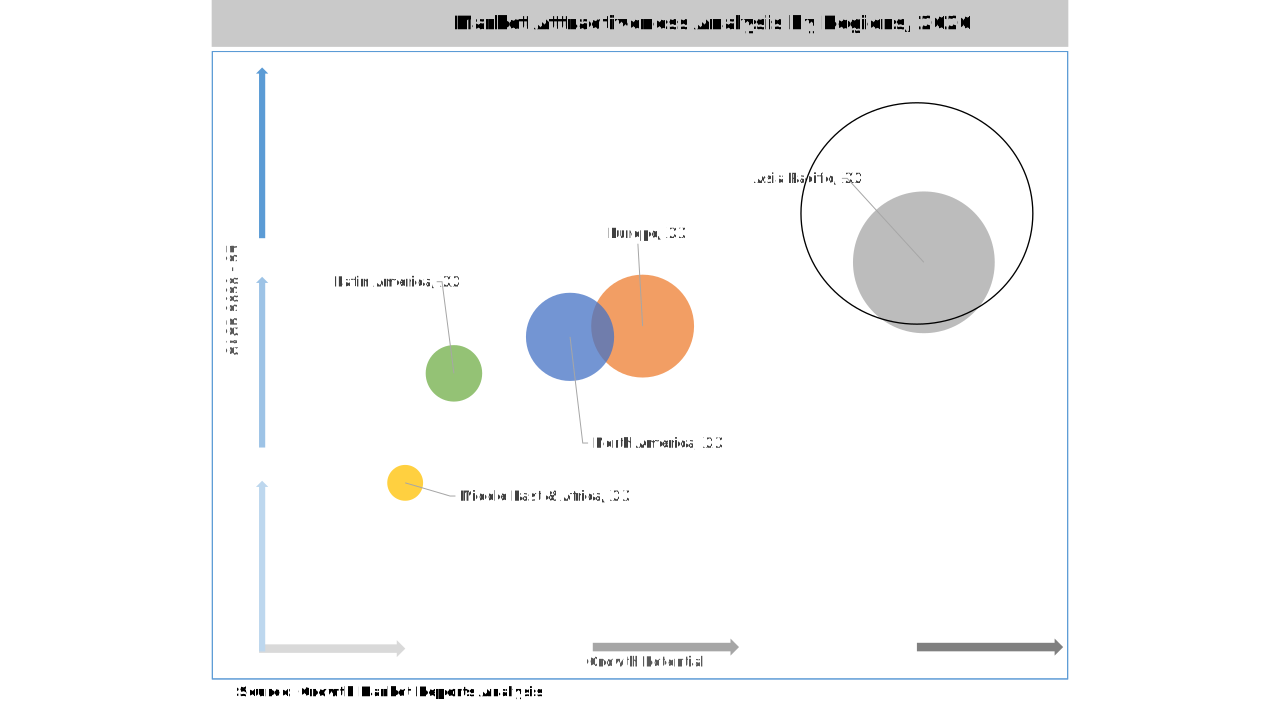
Regionally, Asia Pacific is emerging as a dominant force in the global 4K Set-top Box market, propelled by burgeoning middle-class populations, aggressive digitalization strategies, and the rapid rollout of next-generation broadband networks. North America and Europe continue to demonstrate strong demand, driven by high consumer expectations for quality and innovation, as well as the presence of leading content providers and technology companies. Meanwhile, Latin America and the Middle East & Africa are witnessing steady growth, supported by ongoing infrastructure investments and rising consumer awareness about the benefits of UHD content. Collectively, these regional dynamics underscore the global appeal and long-term potential of the 4K Set-top Box market.

Global 4K Set-top Box Industry Outlook

Product Type Analysis

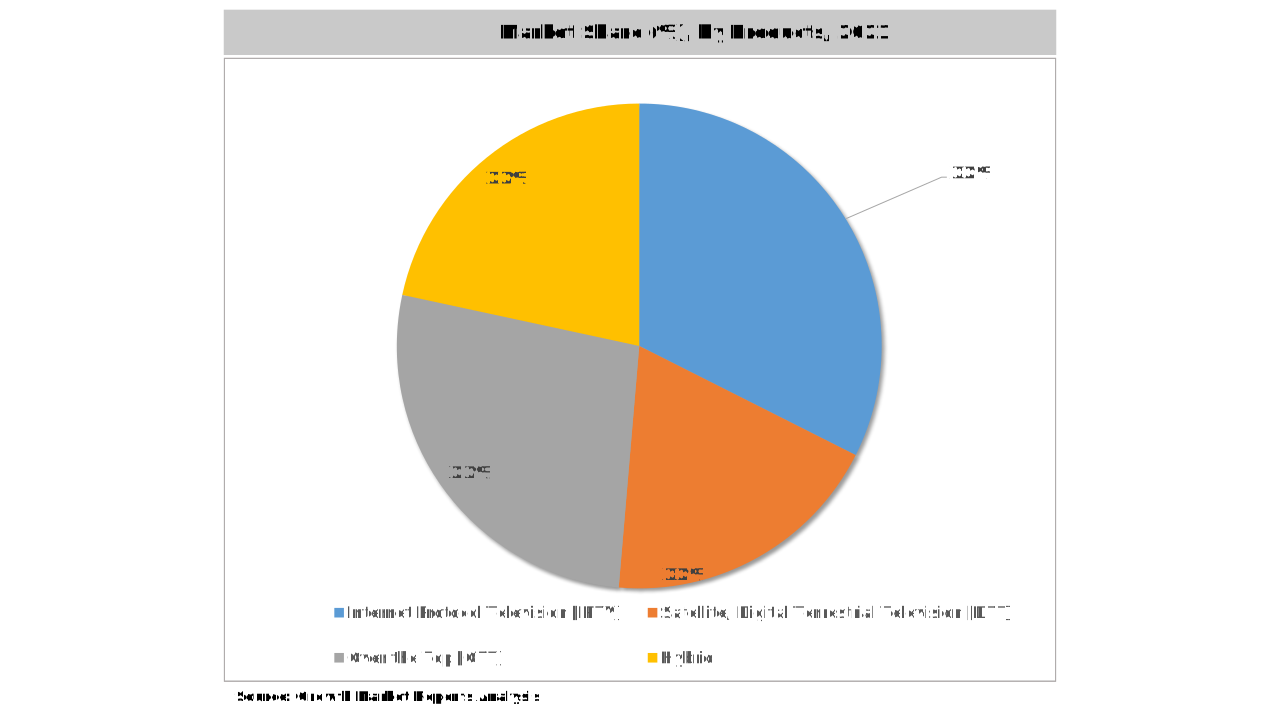
The 4K Set-top Box market by product type encompasses Internet Protocol TV (IPTV), Over-the-Top (OTT), Satellite, Cable, and Others, each catering to distinct consumer and commercial needs. IPTV set-top boxes are gaining significant traction, particularly in regions with advanced broadband infrastructure, as they enable the delivery of high-quality, interactive content over IP networks. The flexibility of IPTV solutions allows service providers to offer customizable packages and on-demand services, which is increasingly preferred by tech-savvy consumers. Moreover, the integration of IPTV with smart home systems and voice assistants is further enhancing user engagement and driving adoption across both residential and commercial sectors.

OTT set-top boxes, which stream content directly from internet-based platforms, have witnessed exponential growth over the past few years. The widespread popularity of streaming giants such as Netflix, Amazon Prime Video, and Disney+, all of which offer extensive 4K content libraries, has been instrumental in propelling the demand for OTT-enabled 4K set-top boxes. These devices are particularly favored by cord-cutters who prefer flexible, subscription-based models over traditional cable or satellite services. The competitive landscape for OTT set-top boxes is marked by continuous innovation, with manufacturers focusing on user-friendly interfaces, seamless integration with multiple streaming apps, and enhanced connectivity options.

Satellite 4K set-top boxes continue to hold a significant share in markets where terrestrial broadband infrastructure is less developed. Satellite technology offers the advantage of wide coverage, making it a preferred choice for rural and remote areas. The transition from standard definition (SD) and high definition (HD) to 4K satellite broadcasting is being driven by both consumer demand for superior picture quality and the efforts of satellite service providers to differentiate their offerings. However, the adoption rate is somewhat constrained by the higher costs associated with satellite transmission and the need for compatible receiving equipment.

Cable 4K set-top boxes remain a staple in regions with established cable TV networks, particularly in North America and parts of Europe. Cable operators are upgrading their networks to support 4K transmission, often bundling these advanced set-top boxes with high-speed internet and voice services to create comprehensive entertainment packages. The primary advantage of cable-based 4K set-top boxes lies in their reliability and the ability to deliver consistent, high-quality content without dependence on internet speeds. The "Others" segment, which includes hybrid and specialty set-top boxes, is also growing, especially in niche markets where unique content delivery requirements exist, such as for gaming or enterprise applications.

Overall, the product type landscape in the 4K Set-top Box market is characterized by dynamic competition and rapid technological advancements. Manufacturers and service providers are continually innovating to address evolving consumer preferences, regulatory requirements, and the competitive pressures exerted by alternative content delivery platforms. This ongoing evolution is expected to sustain robust growth across all product categories, with IPTV and OTT set-top boxes anticipated to experience the fastest adoption rates through 2033.

Report Scope

Attributes Details
Report Title 4K Set-top Box Market Research Report 2033
By Product Type Internet Protocol TV (IPTV), Over-the-Top (OTT), Satellite, Cable, Others
By Resolution UHD, Full HD, HD
By Application Residential, Commercial
By Distribution Channel Online, Offline
By End-User Individual, Hospitality, Education, Healthcare, Others
Regions Covered North America, Europe, APAC, Latin America, MEA
Base Year 2024
Historic Data 2018-2023
Forecast Period 2025-2033
Number of Pages 279
Number of Tables & Figures 384
Customization Available Yes, the report can be customized as per your need.

Resolution Analysis

The resolution segment of the 4K Set-top Box market is primarily divided into UHD, Full HD, and HD, with UHD emerging as the dominant category in recent years. UHD, or Ultra High Definition, offers a resolution of 3840 x 2160 pixels, delivering four times the detail of Full HD. The increasing affordability of UHD televisions and the growing availability of native 4K content from broadcasters and streaming platforms have fueled consumer demand for UHD-capable set-top boxes. This trend is particularly pronounced in urban centers, where consumers are more likely to invest in premium home entertainment systems and seek the best possible viewing experience.

Full HD set-top boxes, while still relevant, are gradually losing market share to their UHD counterparts as content providers phase out standard and high-definition broadcasts in favor of 4K. However, Full HD devices continue to serve as an entry point for budget-conscious consumers and in regions where 4K content is not yet widely available. Manufacturers are responding to this transitional phase by offering hybrid set-top boxes that support both Full HD and UHD, ensuring compatibility with a broad range of televisions and content sources. This approach helps to bridge the gap for consumers who are upgrading their home entertainment setups incrementally.

HD set-top boxes, which deliver 720p or 1080i resolution, are now largely considered legacy products in mature markets but still maintain a presence in developing regions. The gradual phase-out of HD broadcasting in favor of higher resolutions is being accelerated by regulatory mandates and consumer expectations for superior picture quality. Nonetheless, HD set-top boxes continue to be relevant in applications where bandwidth constraints or cost considerations limit the feasibility of UHD deployment, such as in rural or low-income areas.

The evolution of resolution standards in the 4K Set-top Box market is closely linked to advancements in display technology and content production. As more broadcasters and streaming services invest in 4K and even 8K content creation, the demand for compatible set-top boxes is expected to surge. This shift is also being supported by improvements in video compression technologies, such as HEVC (High-Efficiency Video Coding), which enable efficient transmission of high-resolution content without overwhelming network bandwidth.

In summary, the resolution segment of the 4K Set-top Box market is undergoing a rapid transformation, with UHD emerging as the new standard for both residential and commercial applications. The transition from HD and Full HD to UHD is being driven by a combination of technological innovation, consumer demand, and competitive differentiation among content providers. As this trend continues, manufacturers and service providers will need to focus on delivering scalable, future-proof solutions that can adapt to evolving resolution standards and content delivery requirements.

Application Analysis

The application landscape of the 4K Set-top Box market is segmented into residential and commercial uses, each presenting unique growth opportunities and challenges. In the residential sector, 4K set-top boxes have become an integral part of modern home entertainment systems, enabling consumers to access a vast array of UHD content from both traditional broadcasters and online streaming platforms. The increasing adoption of smart homes and connected devices is further driving demand for advanced set-top boxes that offer features such as voice control, personalized content recommendations, and seamless integration with other smart home technologies.

Within the commercial segment, the hospitality industry is at the forefront of adopting 4K set-top boxes to enhance guest experiences. Hotels, resorts, and luxury serviced apartments are deploying these devices to provide premium in-room entertainment, differentiating themselves in a highly competitive market. The ability to deliver high-quality, on-demand content is becoming a key factor in guest satisfaction and loyalty, prompting hospitality providers to invest in state-of-the-art set-top box solutions that support UHD streaming and interactive services.

Educational institutions are also leveraging 4K set-top boxes to facilitate distance learning and interactive classrooms. The superior clarity and detail offered by UHD content are particularly beneficial in educational settings, where visual aids and multimedia presentations play a crucial role in enhancing learning outcomes. Schools, colleges, and universities are increasingly adopting 4K-enabled solutions to deliver lectures, tutorials, and collaborative projects, both on-campus and remotely. This trend is expected to accelerate as digital learning becomes more mainstream and educational content providers expand their UHD offerings.

In the healthcare sector, 4K set-top boxes are being used to support telemedicine, remote diagnostics, and medical training. The enhanced image quality provided by UHD devices is critical for accurate assessments and effective communication between patients and healthcare professionals. Hospitals, clinics, and telehealth providers are integrating 4K set-top boxes into their digital infrastructure to deliver high-definition consultations, surgical demonstrations, and medical education programs. This application is particularly relevant in regions with advanced healthcare systems and a strong focus on digital transformation.

The diversification of applications for 4K set-top boxes is broadening the marketÂ’s addressable base and creating new revenue streams for manufacturers and service providers. By catering to the unique requirements of residential, hospitality, education, and healthcare sectors, the 4K Set-top Box market is well-positioned to capitalize on the growing demand for high-quality, immersive content delivery solutions across a wide range of use cases. This trend is expected to drive sustained growth and innovation throughout the forecast period.

Distribution Channel Analysis

The distribution channel segment of the 4K Set-top Box market is bifurcated into online and offline channels, each playing a pivotal role in shaping consumer purchasing behavior and market dynamics. Online distribution channels, including e-commerce platforms and manufacturer websites, have gained significant momentum in recent years, driven by the convenience, competitive pricing, and extensive product selection they offer. Consumers increasingly prefer to research, compare, and purchase 4K set-top boxes online, leveraging detailed product descriptions, user reviews, and personalized recommendations to make informed decisions. The COVID-19 pandemic further accelerated this shift towards online shopping, with many consumers opting for contactless delivery and installation services.

Offline distribution channels, comprising brick-and-mortar electronics stores, specialty retailers, and service provider outlets, continue to play a crucial role, particularly in regions where internet penetration and e-commerce adoption are lower. These channels offer the advantage of hands-on product demonstrations, expert advice, and immediate availability, which are important factors for consumers who prefer a tactile shopping experience. Retailers are increasingly enhancing their in-store offerings with interactive displays and knowledgeable staff to educate customers about the benefits and features of 4K set-top boxes.

Service providers, such as cable and satellite operators, also serve as key offline distribution partners by bundling 4K set-top boxes with subscription packages and value-added services. This approach not only simplifies the purchasing process for consumers but also enables service providers to upsell premium content and generate recurring revenue streams. The integration of set-top boxes into larger service ecosystems, including broadband and home automation solutions, is becoming a common strategy among leading operators to differentiate their offerings and increase customer loyalty.

The interplay between online and offline distribution channels is shaping the competitive landscape of the 4K Set-top Box market. Manufacturers and retailers are adopting omnichannel strategies to provide a seamless and consistent shopping experience across all touchpoints. This includes offering online-to-offline (O2O) services such as click-and-collect, virtual consultations, and home installation support. By leveraging data analytics and customer insights, companies can tailor their marketing and sales efforts to target specific consumer segments and maximize conversion rates.

Looking ahead, the continued growth of online distribution channels is expected to outpace offline sales, particularly as younger, digitally-savvy consumers become the primary buyers of 4K set-top boxes. However, offline channels will remain relevant, especially for high-value or complex purchases that benefit from in-person guidance and support. The ability to effectively integrate and optimize both distribution channels will be a key success factor for market participants seeking to capture a larger share of the expanding 4K Set-top Box market.

End-User Analysis

The end-user segment of the 4K Set-top Box market is diverse, encompassing individuals, hospitality, education, healthcare, and other institutional users. Individual consumers represent the largest end-user group, driven by the widespread adoption of 4K televisions and the growing popularity of UHD content. The desire for immersive home entertainment experiences, coupled with the increasing availability of affordable 4K set-top boxes, is fueling demand among households worldwide. Manufacturers are responding by offering user-friendly devices with advanced features such as voice assistants, personalized content curation, and seamless integration with smart home ecosystems.

The hospitality sector is a significant adopter of 4K set-top boxes, utilizing these devices to enhance guest experiences and differentiate their offerings in a competitive market. Hotels, resorts, and serviced apartments are investing in UHD-capable set-top boxes to provide premium in-room entertainment, including access to a wide range of on-demand movies, live sports, and interactive services. The ability to deliver high-quality content is increasingly viewed as a key factor in guest satisfaction and loyalty, prompting hospitality providers to prioritize the deployment of advanced set-top box solutions.

Educational institutions are leveraging 4K set-top boxes to support digital learning initiatives and enhance the delivery of multimedia content in classrooms and lecture halls. The superior visual clarity offered by UHD devices is particularly beneficial for subjects that rely heavily on visual aids, such as science, engineering, and the arts. Schools, colleges, and universities are adopting 4K-enabled solutions to facilitate distance learning, virtual classrooms, and collaborative projects, thereby improving learning outcomes and engagement among students.

In the healthcare sector, 4K set-top boxes are being used to support telemedicine, medical training, and remote diagnostics. The enhanced image quality provided by UHD devices is critical for accurate assessments and effective communication between healthcare professionals and patients. Hospitals, clinics, and telehealth providers are integrating 4K set-top boxes into their digital infrastructure to deliver high-definition consultations, surgical demonstrations, and medical education programs. This application is particularly relevant in regions with advanced healthcare systems and a strong focus on digital transformation.

Other end-users, including government agencies, corporate enterprises, and public venues, are also adopting 4K set-top boxes to support a wide range of applications, from digital signage and public information displays to corporate training and communications. The versatility and scalability of 4K set-top box solutions make them an attractive option for organizations seeking to deliver high-quality content across multiple locations and user groups. As the market continues to evolve, manufacturers and service providers will need to develop tailored solutions that address the unique requirements of each end-user segment, ensuring sustained growth and innovation in the years ahead.

Opportunities & Threats

The 4K Set-top Box market presents a multitude of opportunities for growth and innovation, particularly as advancements in display technology and content production continue to accelerate. One of the most promising opportunities lies in the integration of artificial intelligence (AI) and machine learning capabilities into set-top boxes, enabling personalized content recommendations, voice-controlled navigation, and predictive maintenance features. These smart functionalities not only enhance the user experience but also create new avenues for monetization through targeted advertising and value-added services. Additionally, the expansion of 5G networks and the increasing availability of high-speed internet in emerging markets are expected to drive the adoption of 4K set-top boxes, unlocking new revenue streams for manufacturers and service providers.

Another significant opportunity is the growing demand for 4K set-top boxes in commercial sectors such as hospitality, education, and healthcare. As organizations seek to enhance their service offerings and improve operational efficiency, the deployment of advanced set-top box solutions is becoming a strategic priority. The ability to deliver high-quality, interactive content in diverse settings is opening up new applications and use cases for 4K set-top boxes, from remote learning and telemedicine to digital signage and corporate communications. Manufacturers that can develop tailored, scalable solutions to meet the unique requirements of these sectors are well-positioned to capture a larger share of the expanding market.

Despite these opportunities, the 4K Set-top Box market faces several restraints that could impede growth. One of the primary challenges is the high cost associated with upgrading existing infrastructure to support 4K content delivery, particularly in regions with limited broadband penetration or outdated broadcast networks. Additionally, the rapid pace of technological change poses a risk of obsolescence for both manufacturers and consumers, as new standards and formats continue to emerge. Regulatory hurdles, intellectual property concerns, and intense competition from alternative content delivery platforms, such as smart TVs and streaming sticks, also present significant barriers to entry and growth in the market.

Regional Outlook

The regional analysis of the 4K Set-top Box market reveals significant variations in adoption rates, growth drivers, and competitive dynamics across different geographies. Asia Pacific is the largest regional market, accounting for approximately USD 2.2 billion of the global market size in 2024. The regionÂ’s rapid digital transformation, expanding middle-class population, and aggressive investments in broadband infrastructure are fueling demand for 4K set-top boxes. Countries such as China, India, Japan, and South Korea are leading the charge, with government initiatives aimed at promoting digital connectivity and high-definition broadcasting standards further accelerating market growth. The Asia Pacific market is expected to grow at a CAGR of 10.2% through 2033, outpacing other regions and solidifying its position as a global leader in UHD content delivery.

North America holds the second-largest share of the 4K Set-top Box market, with a market size of approximately USD 1.6 billion in 2024. The regionÂ’s mature consumer electronics market, high disposable incomes, and widespread adoption of streaming services are key factors driving demand for advanced set-top box solutions. Leading content providers and technology companies based in the United States and Canada are continuously innovating to deliver cutting-edge features and seamless integration with smart home ecosystems. The commercial sector, particularly hospitality and healthcare, is also contributing to market growth, as organizations seek to differentiate their offerings and enhance service quality through UHD content delivery.

Europe represents a significant market for 4K set-top boxes, with a market size of approximately USD 1.3 billion in 2024. The regionÂ’s strong regulatory framework, emphasis on digital inclusion, and high consumer expectations for quality and innovation are driving the transition from HD and Full HD to UHD content. Major markets such as the United Kingdom, Germany, France, and Italy are witnessing steady adoption of 4K set-top boxes, supported by ongoing investments in broadband and broadcast infrastructure. Meanwhile, Latin America and the Middle East & Africa are emerging as promising growth markets, with a combined market size of around USD 1.1 billion in 2024. These regions are benefiting from rising consumer awareness, expanding digital networks, and targeted government initiatives aimed at promoting high-definition content delivery. Collectively, these regional dynamics underscore the global appeal and long-term potential of the 4K Set-top Box market.

4K Set-top Box Market Statistics

Competitor Outlook

The competitive landscape of the 4K Set-top Box market is characterized by intense rivalry among established players and new entrants, all vying for market share through innovation, strategic partnerships, and aggressive marketing initiatives. Leading manufacturers are continually investing in research and development to introduce advanced features such as AI-driven content recommendations, voice control, and seamless integration with smart home systems. The ability to offer differentiated, value-added solutions is becoming a key success factor, as consumers increasingly seek devices that deliver not only superior picture quality but also enhanced convenience and interactivity. Additionally, companies are expanding their global footprint through mergers, acquisitions, and collaborations with content providers, telecom operators, and technology partners.

Service providers, including cable, satellite, and telecom operators, play a pivotal role in shaping the competitive dynamics of the market. Many operators are upgrading their networks and service offerings to support UHD content delivery, often bundling 4K set-top boxes with high-speed internet and premium content packages. This approach enables them to increase customer retention, drive average revenue per user, and differentiate themselves in an increasingly crowded marketplace. The integration of set-top boxes into broader service ecosystems, including home automation and IoT platforms, is also emerging as a key trend, with companies seeking to create seamless, end-to-end entertainment solutions for consumers.

The entry of technology giants and consumer electronics brands into the 4K Set-top Box market is further intensifying competition. These companies leverage their extensive R&D capabilities, global distribution networks, and brand recognition to capture market share and set new benchmarks for product quality and innovation. The proliferation of OTT and IPTV platforms is also creating opportunities for niche players and startups to enter the market with specialized solutions tailored to specific content delivery requirements or user segments. As a result, the market is witnessing a continuous influx of new products, features, and business models, driving rapid evolution and growth.

Major companies operating in the 4K Set-top Box market include Apple Inc., Samsung Electronics Co. Ltd., Huawei Technologies Co. Ltd., ARRIS International plc (now part of CommScope), Technicolor SA, Roku Inc., Amazon.com Inc., Skyworth Digital Holdings Ltd., and Infomir Group. Apple Inc. is renowned for its Apple TV 4K, which offers seamless integration with the Apple ecosystem and a user-friendly interface. Samsung Electronics is a leader in smart home integration, leveraging its expertise in display technology to deliver high-performance set-top boxes. Huawei Technologies is a major player in the IPTV and OTT segments, offering scalable solutions for telecom operators and service providers worldwide.

ARRIS International (CommScope) and Technicolor SA are recognized for their extensive portfolios of cable and satellite set-top boxes, serving both residential and commercial customers. Roku Inc. and Amazon.com Inc. are dominant forces in the OTT space, with their respective streaming devices offering access to vast content libraries and advanced features such as voice control and personalized recommendations. Skyworth Digital and Infomir Group are key players in the Asia Pacific and EMEA regions, specializing in cost-effective, high-quality set-top box solutions for emerging markets. Collectively, these companies are driving innovation, setting industry standards, and shaping the future trajectory of the global 4K Set-top Box market.

Key Players

  • Amazon
  • Apple Inc.
  • ARRIS International (now part of CommScope)
  • AT&T Inc.
  • Broadcom Inc.
  • Cisco Systems, Inc.
  • Comcast Corporation
  • Dish Network Corporation
  • EchoStar Corporation
  • Humax Co., Ltd.
  • Infomir
  • LG Electronics Inc.
  • NVIDIA Corporation
  • Pace plc (now part of ARRIS/CommScope)
  • Roku, Inc.
  • Samsung Electronics Co., Ltd.
  • Skyworth Digital Holdings Ltd.
  • Sony Corporation
  • Technicolor SA (now Vantiva)
  • Xiaomi Corporation
4K Set-top Box Market Overview

Segments

The 4K Set-top Box market has been segmented on the basis of

Product Type

  • Internet Protocol TV (IPTV)
  • Over-the-Top (OTT)
  • Satellite
  • Cable
  • Others

Resolution

  • UHD
  • Full HD
  • HD

Application

  • Residential
  • Commercial

Distribution Channel

  • Online
  • Offline

End-User

  • Individual
  • Hospitality
  • Education
  • Healthcare
  • Others

Competitive Landscape

Key players in the market include ZTE, Technicolor, Roku, Mstar, Huawei, Infomir, Humax, EchoStar, and Amazon. Growing demand for UHD, immersive, and 3D TVs is projected to provide significant growth opportunities for industry entrants. Manufacturers have begun to incorporate features such as sleep mode in order to overcome questions posed by numerous energy-efficiency communities about the energy consumption of devices.
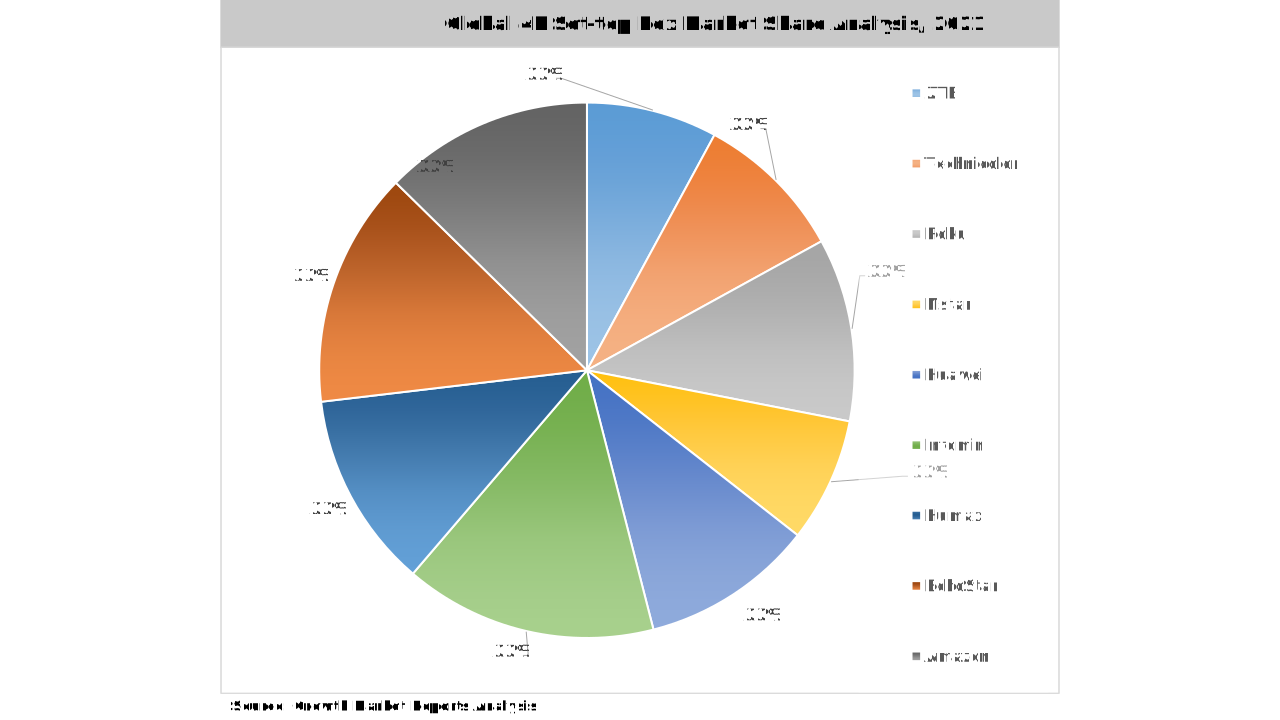

 Global 4K Set Top Box Market Key Players

Frequently Asked Questions

Key players include Amazon, Apple Inc., ARRIS International (CommScope), Samsung Electronics, Roku Inc., Technicolor SA (Vantiva), Huawei Technologies, Skyworth Digital Holdings, Infomir, and others.

Opportunities include AI integration, 5G expansion, and commercial sector adoption. Challenges include high infrastructure upgrade costs, rapid technological change, regulatory hurdles, and competition from smart TVs and streaming sticks.

Major end-users include individual consumers, hospitality providers, educational institutions, healthcare organizations, and other institutional users such as government agencies and enterprises.

4K Set-top Boxes are sold through both online (e-commerce platforms, manufacturer websites) and offline (electronics stores, service provider outlets) channels. Online sales are growing rapidly, but offline channels remain important for hands-on experiences.

4K Set-top Boxes are used in both residential and commercial settings. Commercial applications include hospitality (hotels and resorts), education (distance learning and interactive classrooms), and healthcare (telemedicine and remote diagnostics).

The market is segmented into UHD (Ultra High Definition), Full HD, and HD. UHD is the dominant category, driven by increasing affordability of 4K TVs and the availability of native 4K content.

The main types include Internet Protocol TV (IPTV), Over-the-Top (OTT), Satellite, Cable, and hybrid or specialty set-top boxes. IPTV and OTT are experiencing the fastest adoption rates.

Asia Pacific is the largest and fastest-growing region, followed by North America and Europe. Latin America and the Middle East & Africa are also experiencing steady growth due to infrastructure investments and rising consumer awareness.

Key growth drivers include rising demand for ultra-high-definition (UHD) content, rapid advancements in broadcast and streaming technologies, increased penetration of high-speed internet, and the integration of smart features such as voice control and AI-driven recommendations.

As of 2024, the global 4K Set-top Box market is valued at USD 6.2 billion and is expected to reach approximately USD 13.1 billion by 2033, growing at a CAGR of 8.7%.

Table Of Content

Chapter 1 Executive Summary
Chapter 2 Assumptions and Acronyms Used
Chapter 3 Research Methodology
Chapter 4 4K Set-top Box Market Overview
   4.1 Introduction
      4.1.1 Market Taxonomy
      4.1.2 Market Definition
      4.1.3 Macro-Economic Factors Impacting the Market Growth
   4.2 4K Set-top Box Market Dynamics
      4.2.1 Market Drivers
      4.2.2 Market Restraints
      4.2.3 Market Opportunity
   4.3 4K Set-top Box Market - Supply Chain Analysis
      4.3.1 List of Key Suppliers
      4.3.2 List of Key Distributors
      4.3.3 List of Key Consumers
   4.4 Key Forces Shaping the 4K Set-top Box Market
      4.4.1 Bargaining Power of Suppliers
      4.4.2 Bargaining Power of Buyers
      4.4.3 Threat of Substitution
      4.4.4 Threat of New Entrants
      4.4.5 Competitive Rivalry
   4.5 Global 4K Set-top Box Market Size & Forecast, 2023-2032
      4.5.1 4K Set-top Box Market Size and Y-o-Y Growth
      4.5.2 4K Set-top Box Market Absolute $ Opportunity

Chapter 5 Global 4K Set-top Box Market Analysis and Forecast By Product Type
   5.1 Introduction
      5.1.1 Key Market Trends & Growth Opportunities By Product Type
      5.1.2 Basis Point Share (BPS) Analysis By Product Type
      5.1.3 Absolute $ Opportunity Assessment By Product Type
   5.2 4K Set-top Box Market Size Forecast By Product Type
      5.2.1 Internet Protocol TV (IPTV)
      5.2.2 Over-the-Top (OTT)
      5.2.3 Satellite
      5.2.4 Cable
      5.2.5 Others
   5.3 Market Attractiveness Analysis By Product Type

Chapter 6 Global 4K Set-top Box Market Analysis and Forecast By Resolution
   6.1 Introduction
      6.1.1 Key Market Trends & Growth Opportunities By Resolution
      6.1.2 Basis Point Share (BPS) Analysis By Resolution
      6.1.3 Absolute $ Opportunity Assessment By Resolution
   6.2 4K Set-top Box Market Size Forecast By Resolution
      6.2.1 UHD
      6.2.2 Full HD
      6.2.3 HD
   6.3 Market Attractiveness Analysis By Resolution

Chapter 7 Global 4K Set-top Box Market Analysis and Forecast By Application
   7.1 Introduction
      7.1.1 Key Market Trends & Growth Opportunities By Application
      7.1.2 Basis Point Share (BPS) Analysis By Application
      7.1.3 Absolute $ Opportunity Assessment By Application
   7.2 4K Set-top Box Market Size Forecast By Application
      7.2.1 Residential
      7.2.2 Commercial
   7.3 Market Attractiveness Analysis By Application

Chapter 8 Global 4K Set-top Box Market Analysis and Forecast By Distribution Channel
   8.1 Introduction
      8.1.1 Key Market Trends & Growth Opportunities By Distribution Channel
      8.1.2 Basis Point Share (BPS) Analysis By Distribution Channel
      8.1.3 Absolute $ Opportunity Assessment By Distribution Channel
   8.2 4K Set-top Box Market Size Forecast By Distribution Channel
      8.2.1 Online
      8.2.2 Offline
   8.3 Market Attractiveness Analysis By Distribution Channel

Chapter 9 Global 4K Set-top Box Market Analysis and Forecast By End-User
   9.1 Introduction
      9.1.1 Key Market Trends & Growth Opportunities By End-User
      9.1.2 Basis Point Share (BPS) Analysis By End-User
      9.1.3 Absolute $ Opportunity Assessment By End-User
   9.2 4K Set-top Box Market Size Forecast By End-User
      9.2.1 Individual
      9.2.2 Hospitality
      9.2.3 Education
      9.2.4 Healthcare
      9.2.5 Others
   9.3 Market Attractiveness Analysis By End-User

Chapter 10 Global 4K Set-top Box Market Analysis and Forecast by Region
   10.1 Introduction
      10.1.1 Key Market Trends & Growth Opportunities By Region
      10.1.2 Basis Point Share (BPS) Analysis By Region
      10.1.3 Absolute $ Opportunity Assessment By Region
   10.2 4K Set-top Box Market Size Forecast By Region
      10.2.1 North America
      10.2.2 Europe
      10.2.3 Asia Pacific
      10.2.4 Latin America
      10.2.5 Middle East & Africa (MEA)
   10.3 Market Attractiveness Analysis By Region

Chapter 11 Coronavirus Disease (COVID-19) Impact 
   11.1 Introduction 
   11.2 Current & Future Impact Analysis 
   11.3 Economic Impact Analysis 
   11.4 Government Policies 
   11.5 Investment Scenario

Chapter 12 North America 4K Set-top Box Analysis and Forecast
   12.1 Introduction
   12.2 North America 4K Set-top Box Market Size Forecast by Country
      12.2.1 U.S.
      12.2.2 Canada
   12.3 Basis Point Share (BPS) Analysis by Country
   12.4 Absolute $ Opportunity Assessment by Country
   12.5 Market Attractiveness Analysis by Country
   12.6 North America 4K Set-top Box Market Size Forecast By Product Type
      12.6.1 Internet Protocol TV (IPTV)
      12.6.2 Over-the-Top (OTT)
      12.6.3 Satellite
      12.6.4 Cable
      12.6.5 Others
   12.7 Basis Point Share (BPS) Analysis By Product Type 
   12.8 Absolute $ Opportunity Assessment By Product Type 
   12.9 Market Attractiveness Analysis By Product Type
   12.10 North America 4K Set-top Box Market Size Forecast By Resolution
      12.10.1 UHD
      12.10.2 Full HD
      12.10.3 HD
   12.11 Basis Point Share (BPS) Analysis By Resolution 
   12.12 Absolute $ Opportunity Assessment By Resolution 
   12.13 Market Attractiveness Analysis By Resolution
   12.14 North America 4K Set-top Box Market Size Forecast By Application
      12.14.1 Residential
      12.14.2 Commercial
   12.15 Basis Point Share (BPS) Analysis By Application 
   12.16 Absolute $ Opportunity Assessment By Application 
   12.17 Market Attractiveness Analysis By Application
   12.18 North America 4K Set-top Box Market Size Forecast By Distribution Channel
      12.18.1 Online
      12.18.2 Offline
   12.19 Basis Point Share (BPS) Analysis By Distribution Channel 
   12.20 Absolute $ Opportunity Assessment By Distribution Channel 
   12.21 Market Attractiveness Analysis By Distribution Channel
   12.22 North America 4K Set-top Box Market Size Forecast By End-User
      12.22.1 Individual
      12.22.2 Hospitality
      12.22.3 Education
      12.22.4 Healthcare
      12.22.5 Others
   12.23 Basis Point Share (BPS) Analysis By End-User 
   12.24 Absolute $ Opportunity Assessment By End-User 
   12.25 Market Attractiveness Analysis By End-User

Chapter 13 Europe 4K Set-top Box Analysis and Forecast
   13.1 Introduction
   13.2 Europe 4K Set-top Box Market Size Forecast by Country
      13.2.1 Germany
      13.2.2 France
      13.2.3 Italy
      13.2.4 U.K.
      13.2.5 Spain
      13.2.6 Russia
      13.2.7 Rest of Europe
   13.3 Basis Point Share (BPS) Analysis by Country
   13.4 Absolute $ Opportunity Assessment by Country
   13.5 Market Attractiveness Analysis by Country
   13.6 Europe 4K Set-top Box Market Size Forecast By Product Type
      13.6.1 Internet Protocol TV (IPTV)
      13.6.2 Over-the-Top (OTT)
      13.6.3 Satellite
      13.6.4 Cable
      13.6.5 Others
   13.7 Basis Point Share (BPS) Analysis By Product Type 
   13.8 Absolute $ Opportunity Assessment By Product Type 
   13.9 Market Attractiveness Analysis By Product Type
   13.10 Europe 4K Set-top Box Market Size Forecast By Resolution
      13.10.1 UHD
      13.10.2 Full HD
      13.10.3 HD
   13.11 Basis Point Share (BPS) Analysis By Resolution 
   13.12 Absolute $ Opportunity Assessment By Resolution 
   13.13 Market Attractiveness Analysis By Resolution
   13.14 Europe 4K Set-top Box Market Size Forecast By Application
      13.14.1 Residential
      13.14.2 Commercial
   13.15 Basis Point Share (BPS) Analysis By Application 
   13.16 Absolute $ Opportunity Assessment By Application 
   13.17 Market Attractiveness Analysis By Application
   13.18 Europe 4K Set-top Box Market Size Forecast By Distribution Channel
      13.18.1 Online
      13.18.2 Offline
   13.19 Basis Point Share (BPS) Analysis By Distribution Channel 
   13.20 Absolute $ Opportunity Assessment By Distribution Channel 
   13.21 Market Attractiveness Analysis By Distribution Channel
   13.22 Europe 4K Set-top Box Market Size Forecast By End-User
      13.22.1 Individual
      13.22.2 Hospitality
      13.22.3 Education
      13.22.4 Healthcare
      13.22.5 Others
   13.23 Basis Point Share (BPS) Analysis By End-User 
   13.24 Absolute $ Opportunity Assessment By End-User 
   13.25 Market Attractiveness Analysis By End-User

Chapter 14 Asia Pacific 4K Set-top Box Analysis and Forecast
   14.1 Introduction
   14.2 Asia Pacific 4K Set-top Box Market Size Forecast by Country
      14.2.1 China
      14.2.2 Japan
      14.2.3 South Korea
      14.2.4 India
      14.2.5 Australia
      14.2.6 South East Asia (SEA)
      14.2.7 Rest of Asia Pacific (APAC)
   14.3 Basis Point Share (BPS) Analysis by Country
   14.4 Absolute $ Opportunity Assessment by Country
   14.5 Market Attractiveness Analysis by Country
   14.6 Asia Pacific 4K Set-top Box Market Size Forecast By Product Type
      14.6.1 Internet Protocol TV (IPTV)
      14.6.2 Over-the-Top (OTT)
      14.6.3 Satellite
      14.6.4 Cable
      14.6.5 Others
   14.7 Basis Point Share (BPS) Analysis By Product Type 
   14.8 Absolute $ Opportunity Assessment By Product Type 
   14.9 Market Attractiveness Analysis By Product Type
   14.10 Asia Pacific 4K Set-top Box Market Size Forecast By Resolution
      14.10.1 UHD
      14.10.2 Full HD
      14.10.3 HD
   14.11 Basis Point Share (BPS) Analysis By Resolution 
   14.12 Absolute $ Opportunity Assessment By Resolution 
   14.13 Market Attractiveness Analysis By Resolution
   14.14 Asia Pacific 4K Set-top Box Market Size Forecast By Application
      14.14.1 Residential
      14.14.2 Commercial
   14.15 Basis Point Share (BPS) Analysis By Application 
   14.16 Absolute $ Opportunity Assessment By Application 
   14.17 Market Attractiveness Analysis By Application
   14.18 Asia Pacific 4K Set-top Box Market Size Forecast By Distribution Channel
      14.18.1 Online
      14.18.2 Offline
   14.19 Basis Point Share (BPS) Analysis By Distribution Channel 
   14.20 Absolute $ Opportunity Assessment By Distribution Channel 
   14.21 Market Attractiveness Analysis By Distribution Channel
   14.22 Asia Pacific 4K Set-top Box Market Size Forecast By End-User
      14.22.1 Individual
      14.22.2 Hospitality
      14.22.3 Education
      14.22.4 Healthcare
      14.22.5 Others
   14.23 Basis Point Share (BPS) Analysis By End-User 
   14.24 Absolute $ Opportunity Assessment By End-User 
   14.25 Market Attractiveness Analysis By End-User

Chapter 15 Latin America 4K Set-top Box Analysis and Forecast
   15.1 Introduction
   15.2 Latin America 4K Set-top Box Market Size Forecast by Country
      15.2.1 Brazil
      15.2.2 Mexico
      15.2.3 Rest of Latin America (LATAM)
   15.3 Basis Point Share (BPS) Analysis by Country
   15.4 Absolute $ Opportunity Assessment by Country
   15.5 Market Attractiveness Analysis by Country
   15.6 Latin America 4K Set-top Box Market Size Forecast By Product Type
      15.6.1 Internet Protocol TV (IPTV)
      15.6.2 Over-the-Top (OTT)
      15.6.3 Satellite
      15.6.4 Cable
      15.6.5 Others
   15.7 Basis Point Share (BPS) Analysis By Product Type 
   15.8 Absolute $ Opportunity Assessment By Product Type 
   15.9 Market Attractiveness Analysis By Product Type
   15.10 Latin America 4K Set-top Box Market Size Forecast By Resolution
      15.10.1 UHD
      15.10.2 Full HD
      15.10.3 HD
   15.11 Basis Point Share (BPS) Analysis By Resolution 
   15.12 Absolute $ Opportunity Assessment By Resolution 
   15.13 Market Attractiveness Analysis By Resolution
   15.14 Latin America 4K Set-top Box Market Size Forecast By Application
      15.14.1 Residential
      15.14.2 Commercial
   15.15 Basis Point Share (BPS) Analysis By Application 
   15.16 Absolute $ Opportunity Assessment By Application 
   15.17 Market Attractiveness Analysis By Application
   15.18 Latin America 4K Set-top Box Market Size Forecast By Distribution Channel
      15.18.1 Online
      15.18.2 Offline
   15.19 Basis Point Share (BPS) Analysis By Distribution Channel 
   15.20 Absolute $ Opportunity Assessment By Distribution Channel 
   15.21 Market Attractiveness Analysis By Distribution Channel
   15.22 Latin America 4K Set-top Box Market Size Forecast By End-User
      15.22.1 Individual
      15.22.2 Hospitality
      15.22.3 Education
      15.22.4 Healthcare
      15.22.5 Others
   15.23 Basis Point Share (BPS) Analysis By End-User 
   15.24 Absolute $ Opportunity Assessment By End-User 
   15.25 Market Attractiveness Analysis By End-User

Chapter 16 Middle East & Africa (MEA) 4K Set-top Box Analysis and Forecast
   16.1 Introduction
   16.2 Middle East & Africa (MEA) 4K Set-top Box Market Size Forecast by Country
      16.2.1 Saudi Arabia
      16.2.2 South Africa
      16.2.3 UAE
      16.2.4 Rest of Middle East & Africa (MEA)
   16.3 Basis Point Share (BPS) Analysis by Country
   16.4 Absolute $ Opportunity Assessment by Country
   16.5 Market Attractiveness Analysis by Country
   16.6 Middle East & Africa (MEA) 4K Set-top Box Market Size Forecast By Product Type
      16.6.1 Internet Protocol TV (IPTV)
      16.6.2 Over-the-Top (OTT)
      16.6.3 Satellite
      16.6.4 Cable
      16.6.5 Others
   16.7 Basis Point Share (BPS) Analysis By Product Type 
   16.8 Absolute $ Opportunity Assessment By Product Type 
   16.9 Market Attractiveness Analysis By Product Type
   16.10 Middle East & Africa (MEA) 4K Set-top Box Market Size Forecast By Resolution
      16.10.1 UHD
      16.10.2 Full HD
      16.10.3 HD
   16.11 Basis Point Share (BPS) Analysis By Resolution 
   16.12 Absolute $ Opportunity Assessment By Resolution 
   16.13 Market Attractiveness Analysis By Resolution
   16.14 Middle East & Africa (MEA) 4K Set-top Box Market Size Forecast By Application
      16.14.1 Residential
      16.14.2 Commercial
   16.15 Basis Point Share (BPS) Analysis By Application 
   16.16 Absolute $ Opportunity Assessment By Application 
   16.17 Market Attractiveness Analysis By Application
   16.18 Middle East & Africa (MEA) 4K Set-top Box Market Size Forecast By Distribution Channel
      16.18.1 Online
      16.18.2 Offline
   16.19 Basis Point Share (BPS) Analysis By Distribution Channel 
   16.20 Absolute $ Opportunity Assessment By Distribution Channel 
   16.21 Market Attractiveness Analysis By Distribution Channel
   16.22 Middle East & Africa (MEA) 4K Set-top Box Market Size Forecast By End-User
      16.22.1 Individual
      16.22.2 Hospitality
      16.22.3 Education
      16.22.4 Healthcare
      16.22.5 Others
   16.23 Basis Point Share (BPS) Analysis By End-User 
   16.24 Absolute $ Opportunity Assessment By End-User 
   16.25 Market Attractiveness Analysis By End-User

Chapter 17 Competition Landscape 
   17.1 4K Set-top Box Market: Competitive Dashboard
   17.2 Global 4K Set-top Box Market: Market Share Analysis, 2023
   17.3 Company Profiles (Details – Overview, Financials, Developments, Strategy) 
      17.3.1 Amazon
Apple Inc.
ARRIS International (now part of CommScope)
AT&T Inc.
Broadcom Inc.
Cisco Systems, Inc.
Comcast Corporation
Dish Network Corporation
EchoStar Corporation
Humax Co., Ltd.
Infomir
LG Electronics Inc.
NVIDIA Corporation
Pace plc (now part of ARRIS/CommScope)
Roku, Inc.
Samsung Electronics Co., Ltd.
Skyworth Digital Holdings Ltd.
Sony Corporation
Technicolor SA (now Vantiva)
Xiaomi Corporation

Methodology

Our Clients

Siemens Healthcare
Nestle SA
Deloitte
General Electric
Microsoft
Dassault Aviation
FedEx Logistics
sinopec