Segments - by Product Type (Televisions, Monitors, Projectors, Digital Signage, Others), by Resolution (3840 x 2160, 4096 x 2160, Others), by Panel Technology (LED, OLED, QLED, LCD, Others), by Application (Consumer Electronics, Commercial, Healthcare, Education, Retail, Others), by Distribution Channel (Online, Offline)
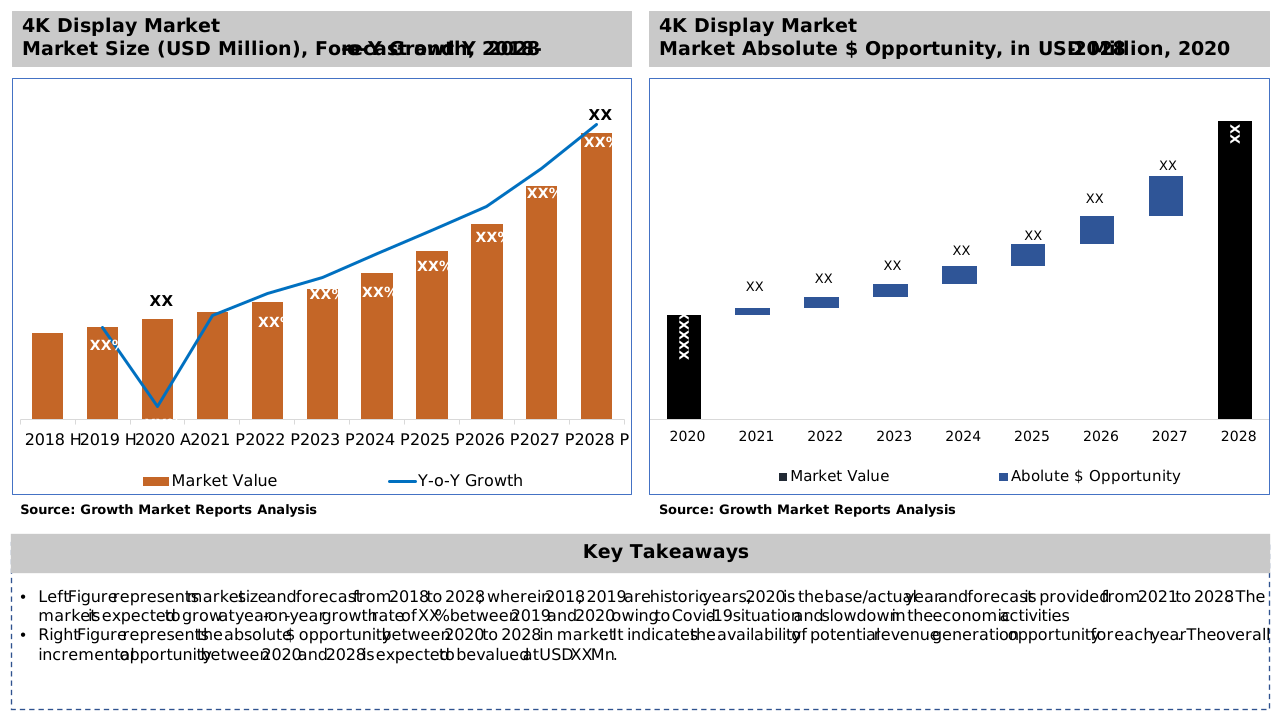
According to our latest research, the 4K display market size reached a valuation of USD 87.6 billion in 2024, driven by surging demand for ultra-high-definition visual experiences across both consumer and commercial sectors. With a robust compound annual growth rate (CAGR) of 13.2% from 2025 to 2033, the market is forecasted to reach USD 254.1 billion by 2033. This impressive growth trajectory is primarily fueled by rapid technological advancements, increasing affordability of 4K displays, and their expanding adoption in diverse applications such as entertainment, education, retail, and healthcare.
A key driver propelling the global 4K display market is the widespread consumer shift toward high-resolution content consumption. The proliferation of 4K streaming services, gaming consoles, and ultra-high-definition Blu-ray content has significantly boosted demand for 4K televisions and monitors. As content creators increasingly adopt 4K production standards, consumers are motivated to upgrade their home entertainment setups, fostering a virtuous cycle of content and hardware growth. Additionally, falling prices of 4K panels, thanks to advances in manufacturing and economies of scale, have made these displays accessible to a broader audience. This democratization of high-resolution technology is a major catalyst for sustained market expansion.
Another prominent growth factor is the rapid integration of 4K displays in commercial environments. Sectors such as retail, hospitality, and corporate offices are leveraging 4K digital signage and interactive displays to enhance customer engagement and deliver visually compelling experiences. The superior clarity, color accuracy, and immersive quality of 4K displays make them ideal for advertising, presentations, and collaborative workspaces. Furthermore, the healthcare industry is increasingly adopting 4K monitors for medical imaging, diagnostics, and telemedicine, where high resolution is critical for precision and accuracy. Educational institutions are also deploying 4K projectors and interactive whiteboards to facilitate dynamic and effective teaching methods.
Technological innovation continues to be a pivotal growth lever for the 4K display market. The emergence of advanced panel technologies such as OLED, QLED, and Mini-LED has elevated display performance in terms of brightness, contrast, and color reproduction. These innovations are not only enhancing the viewing experience but also expanding the range of applications for 4K displays. Manufacturers are investing heavily in research and development to introduce thinner, lighter, and more energy-efficient panels, further driving adoption across both consumer and enterprise segments. The integration of smart features and seamless connectivity with IoT devices is also contributing to the marketÂ’s upward trajectory.
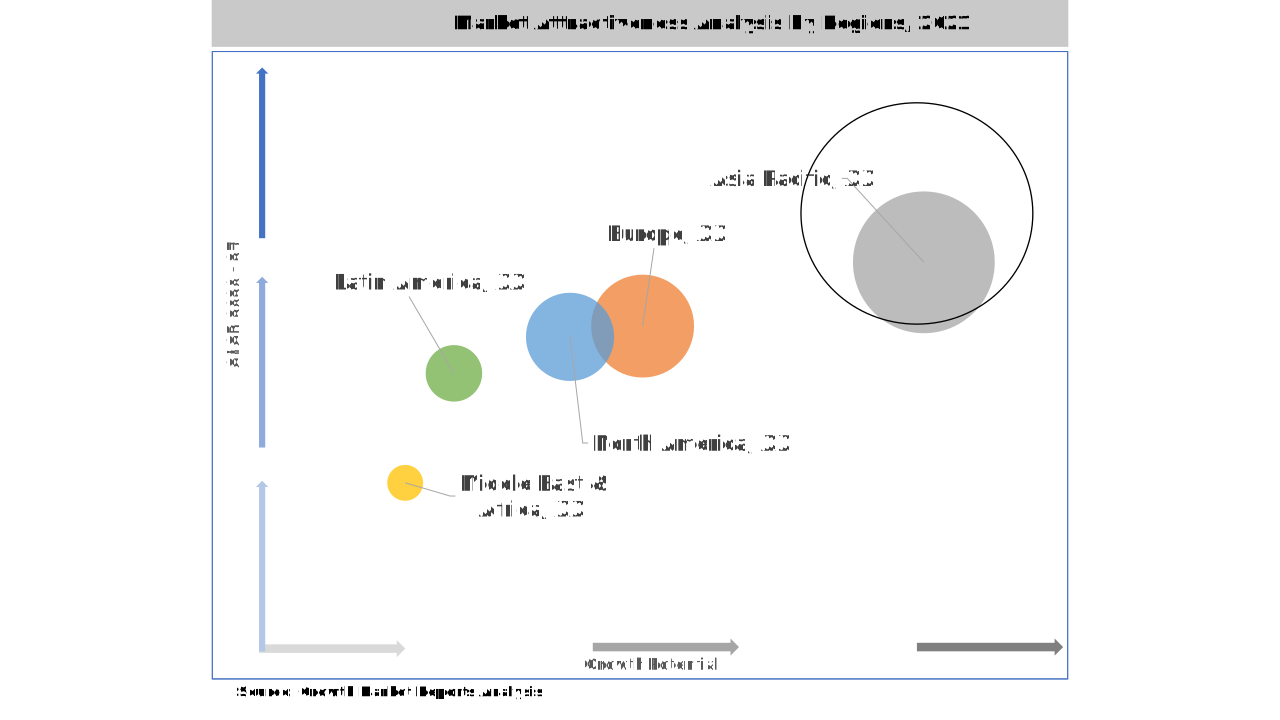
Regionally, Asia Pacific leads the global 4K display market, accounting for the largest share in 2024, followed by North America and Europe. The dominance of Asia Pacific is underpinned by the presence of major display manufacturers in China, South Korea, and Japan, coupled with the regionÂ’s burgeoning middle class and increasing disposable income. North America remains a key market due to early adoption trends and high consumer awareness, while Europe is witnessing steady growth driven by digital transformation initiatives across various sectors. The Middle East & Africa and Latin America are emerging as promising markets, buoyed by infrastructure development and growing interest in advanced display technologies.
As the market continues to evolve, Quad High Definition (QHD) displays are gaining traction as a complementary technology to 4K displays. While 4K offers a higher resolution, QHD provides a balanced option for consumers seeking enhanced clarity without the higher costs associated with 4K. This resolution, typically 2560 x 1440 pixels, is particularly popular in gaming monitors and professional displays where higher refresh rates and performance are prioritized. The affordability and performance of QHD make it an attractive option for consumers who want a step up from Full HD without fully committing to 4K, thus expanding the options available to different market segments.
The 4K display market is segmented by product type into televisions, monitors, projectors, digital signage, and others. Among these, 4K televisions represent the largest segment, capturing a substantial share of global revenues in 2024. The surge in demand for home entertainment systems, coupled with the increasing availability of 4K content on streaming platforms, has driven widespread adoption of 4K TVs. Leading manufacturers are continuously innovating in terms of screen size, smart features, and panel technologies to cater to evolving consumer preferences. The trend toward larger screen sizes and the integration of voice assistants and smart home compatibility are further stimulating market growth within this segment.
The monitor segment is experiencing robust growth, particularly in the gaming and professional content creation markets. Gamers are increasingly seeking high-refresh-rate 4K monitors to enhance their immersive experience, while professionals in graphic design, video editing, and photography require ultra-high-definition displays for precise and detailed work. The proliferation of remote work and virtual collaboration has also spurred demand for 4K monitors in home office setups. Manufacturers are responding by introducing monitors with advanced ergonomics, color calibration, and connectivity options to address the diverse needs of consumers and professionals alike.
Projectors equipped with 4K resolution are gaining traction in both commercial and educational settings. The ability to deliver large, crisp, and vibrant images makes 4K projectors ideal for conference rooms, lecture halls, and entertainment venues. Recent advancements in laser and LED projection technologies have improved brightness, color accuracy, and energy efficiency, making 4K projectors more appealing and accessible. Educational institutions are leveraging these projectors for interactive learning, while the events and entertainment industry is utilizing them for immersive visual experiences at concerts and exhibitions.
The digital signage segment is witnessing significant adoption across retail, hospitality, transportation, and public spaces. Businesses are investing in 4K digital signage solutions to attract and engage customers with dynamic, high-impact visuals. The superior resolution and clarity of 4K displays enable businesses to showcase products, promotions, and information more effectively, enhancing brand perception and customer experience. The integration of touch and interactive capabilities is further expanding the use cases for 4K digital signage, particularly in wayfinding, self-service kiosks, and interactive advertising.
Other product types, including video walls and specialty displays, are also contributing to the marketÂ’s growth. These solutions are being deployed in control rooms, command centers, and broadcast studios where high resolution and reliability are paramount. As the ecosystem of 4K-enabled devices continues to expand, the market is expected to witness further diversification in product offerings, catering to niche applications and emerging use cases.
| Attributes | Details |
| Report Title | 4K Display Market Research Report 2033 |
| By Product Type | Televisions, Monitors, Projectors, Digital Signage, Others |
| By Resolution | 3840 x 2160, 4096 x 2160, Others |
| By Panel Technology | LED, OLED, QLED, LCD, Others |
| By Application | Consumer Electronics, Commercial, Healthcare, Education, Retail, Others |
| By Distribution Channel | Online, Offline |
| Regions Covered | North America, Europe, APAC, Latin America, MEA |
| Base Year | 2024 |
| Historic Data | 2018-2023 |
| Forecast Period | 2025-2033 |
| Number of Pages | 279 |
| Number of Tables & Figures | 385 |
| Customization Available | Yes, the report can be customized as per your need. |
The 4K display market is segmented by resolution into 3840 x 2160, 4096 x 2160, and others. The 3840 x 2160 resolution, commonly referred to as Ultra HD (UHD), dominates the market due to its widespread adoption in consumer electronics, particularly televisions and monitors. This resolution offers a 16:9 aspect ratio, making it ideal for mainstream entertainment and multimedia applications. The proliferation of UHD content on streaming platforms, coupled with the affordability of UHD panels, has cemented 3840 x 2160 as the industry standard for 4K displays. Manufacturers are leveraging this resolution to deliver high-quality visuals at competitive price points, driving mass-market appeal.
The 4096 x 2160 resolution, known as DCI 4K, is primarily utilized in professional and cinematic applications. This resolution features a slightly wider aspect ratio (17:9), catering to the needs of filmmakers, post-production studios, and digital cinema projection. The adoption of DCI 4K is accelerating in the media and entertainment industry, where content creators demand the highest levels of detail and color fidelity. The increasing use of 4K cameras and editing suites in film production is further driving demand for displays that support this resolution, enabling professionals to view and edit content in its native format.
Other resolutions within the 4K spectrum, such as 3840 x 2400 and 4096 x 2304, are gaining traction in specialized applications. These resolutions are often found in high-end monitors, medical imaging devices, and industrial displays where unique aspect ratios and pixel densities are required. The customization of 4K resolutions to meet specific industry needs is fostering innovation and expanding the addressable market for 4K display manufacturers. As new use cases emerge, particularly in scientific research and advanced visualization, the demand for non-standard 4K resolutions is expected to rise.
The evolution of content standards and the proliferation of 4K-compatible devices are driving the standardization of 4K resolutions across the ecosystem. Display manufacturers are collaborating with content creators and technology providers to ensure seamless compatibility and optimal performance. This collaborative approach is facilitating the transition from Full HD to 4K across a wide range of devices, including TVs, monitors, projectors, and digital signage.
Looking ahead, the continued development of 8K and higher resolutions is expected to influence the 4K display market. While 8K displays are still in the early stages of adoption, they serve as a catalyst for further innovation in 4K technology. Manufacturers are focusing on enhancing the value proposition of 4K displays through improved panel technologies, smart features, and connectivity options, ensuring that 4K remains the preferred choice for mainstream applications in the foreseeable future.
Panel technology is a critical determinant of display performance, and the 4K display market is segmented into LED, OLED, QLED, LCD, and others. LED technology remains the most widely adopted, accounting for the largest share of the market in 2024. LED panels offer a compelling balance of cost, energy efficiency, and picture quality, making them the preferred choice for mass-market televisions, monitors, and digital signage. Continuous advancements in LED backlighting, such as Mini-LED and Micro-LED, are further enhancing brightness, contrast, and color accuracy, solidifying LEDÂ’s position as the mainstream technology for 4K displays.
OLED technology is gaining significant traction, particularly in premium segments. OLED panels deliver exceptional picture quality with true blacks, infinite contrast, and vibrant colors, making them highly sought after by enthusiasts and professionals. The flexibility of OLED technology also enables the development of ultra-thin, curved, and even foldable displays, expanding its application scope. However, higher production costs and concerns over burn-in have limited OLED adoption to high-end televisions, monitors, and specialty displays. As manufacturing processes mature and economies of scale are achieved, OLED is expected to capture a larger share of the 4K display market.
QLED (Quantum Dot LED) represents another major advancement in panel technology, offering enhanced color reproduction and brightness compared to traditional LED displays. QLED panels are particularly popular in the premium television market, where consumers demand superior visual performance for home entertainment. The integration of quantum dot technology enables manufacturers to deliver displays with wider color gamuts and improved energy efficiency. QLEDÂ’s ability to deliver high peak brightness and resistance to burn-in makes it an attractive alternative to OLED, especially for users who prioritize longevity and performance.
LCD technology, while gradually being supplanted by LED and OLED, still retains a significant presence in the 4K display market. LCD panels are valued for their affordability and versatility, making them suitable for entry-level and mid-range products. Innovations such as IPS (In-Plane Switching) and VA (Vertical Alignment) have improved viewing angles and color consistency, ensuring that LCD remains a viable option for a wide range of applications. The continued demand for cost-effective 4K displays in emerging markets is expected to sustain LCDÂ’s relevance in the coming years.
Other panel technologies, including Micro-LED and Mini-LED, are emerging as disruptive forces in the 4K display landscape. These technologies promise to combine the best attributes of LED and OLED, offering superior brightness, contrast, and energy efficiency without the drawbacks of burn-in or limited lifespan. As research and development efforts accelerate, the commercialization of these next-generation panels is poised to reshape the competitive dynamics of the 4K display market, unlocking new opportunities for differentiation and growth.
The application landscape for 4K displays is diverse, encompassing consumer electronics, commercial, healthcare, education, retail, and others. Consumer electronics remains the largest application segment, driven by the insatiable demand for high-definition televisions, monitors, and gaming displays. The growing availability of 4K content, coupled with the trend toward smart and connected devices, has transformed 4K displays into a staple of modern home entertainment. Manufacturers are catering to this segment by offering a wide range of products with varying features, sizes, and price points to appeal to different consumer demographics.
The commercial application segment is experiencing rapid growth as businesses across industries recognize the value of 4K displays for communication, collaboration, and customer engagement. Corporate offices are investing in 4K monitors and video walls to enhance productivity and facilitate virtual meetings, while the hospitality and transportation sectors are deploying 4K digital signage to deliver dynamic information and advertisements. The retail industry, in particular, is leveraging 4K displays to create immersive shopping experiences, showcase products in stunning detail, and drive sales through eye-catching visual merchandising.
In the healthcare sector, the adoption of 4K displays is accelerating due to their critical role in medical imaging, diagnostics, and telemedicine. High-resolution monitors are essential for accurately interpreting medical scans, performing minimally invasive surgeries, and conducting remote consultations. The ability to visualize fine anatomical details with precision enhances clinical outcomes and supports the growing trend toward digital healthcare. Hospitals and clinics are increasingly integrating 4K displays into their workflows, driving demand for specialized medical-grade panels with advanced calibration and hygiene features.
Education is another promising application area for 4K displays. Schools, universities, and training centers are deploying 4K projectors, interactive whiteboards, and monitors to facilitate engaging and effective learning experiences. The superior clarity and detail of 4K visuals enable educators to present complex information more effectively, while interactive features support collaborative and hands-on learning. The shift toward hybrid and remote education models is further boosting demand for 4K displays that can deliver high-quality visuals in both physical and virtual classrooms.
Other application areas, including government, defense, and industrial sectors, are also adopting 4K displays for mission-critical operations, surveillance, and control room environments. The versatility and scalability of 4K technology make it suitable for a wide range of use cases, from public safety to scientific research. As the ecosystem of 4K-compatible devices and content continues to expand, the application landscape is expected to diversify further, unlocking new growth opportunities for market participants.
The 4K display market is segmented by distribution channel into online and offline channels. Offline channels, including brick-and-mortar electronics stores, specialty retailers, and authorized dealers, accounted for the largest share of market revenues in 2024. Consumers continue to value the ability to physically inspect and compare displays before making a purchase, particularly for high-value items such as televisions and monitors. Retailers are enhancing the in-store experience through interactive demos, knowledgeable staff, and bundled offers, which helps drive conversion rates and customer loyalty.
However, the online distribution channel is witnessing exponential growth, fueled by the convenience, variety, and competitive pricing offered by e-commerce platforms. The proliferation of online marketplaces, coupled with the increasing digital literacy of consumers, has transformed the way 4K displays are researched, compared, and purchased. Manufacturers and retailers are investing in robust online strategies, including virtual product demos, augmented reality visualization tools, and personalized recommendations, to capture the growing segment of digital-first shoppers.
The COVID-19 pandemic accelerated the shift toward online purchasing, as lockdowns and social distancing measures compelled consumers to embrace e-commerce. This trend has persisted, with a significant portion of 4K display sales now occurring through online channels. The availability of detailed product specifications, customer reviews, and hassle-free return policies has further boosted consumer confidence in buying high-value electronics online. Logistics and supply chain improvements have also enabled faster and more reliable delivery of large-format displays.
Hybrid distribution models are emerging as a key strategy for market players seeking to maximize reach and customer satisfaction. Many brands are adopting omnichannel approaches, integrating their online and offline presence to offer seamless shopping experiences. Initiatives such as click-and-collect, virtual consultations, and extended warranties are bridging the gap between digital and physical retail, ensuring that consumers can access the best of both worlds. This approach is particularly effective in capturing diverse consumer preferences and adapting to evolving market dynamics.
Looking ahead, the balance between online and offline channels is expected to continue evolving, with digital channels gaining further traction. Manufacturers and retailers that invest in digital transformation, customer engagement, and supply chain optimization will be well-positioned to capitalize on the growing demand for 4K displays across both traditional and emerging distribution channels.
The 4K display market presents a wealth of opportunities for growth, innovation, and value creation. One of the most compelling opportunities lies in the ongoing convergence of display technology with smart and connected ecosystems. The integration of 4K displays with voice assistants, IoT devices, and home automation platforms is transforming the way consumers interact with their environments. Smart 4K TVs and monitors are becoming central hubs for entertainment, communication, and productivity, opening new avenues for differentiation and monetization. Additionally, the rise of augmented reality (AR) and virtual reality (VR) applications is creating demand for high-resolution displays that can deliver immersive and lifelike experiences, further expanding the addressable market.
Another significant opportunity is the expansion of 4K display adoption in emerging markets. Rapid urbanization, rising disposable incomes, and increasing digital literacy are driving demand for advanced consumer electronics in regions such as Asia Pacific, Latin America, and the Middle East & Africa. Local manufacturers and global brands are investing in tailored product offerings, affordable pricing strategies, and localized content to capture these high-growth markets. The deployment of 4K digital signage and displays in public infrastructure projects, smart cities, and transportation networks is also creating new opportunities for market expansion and value-added services.
Despite the promising outlook, the 4K display market faces notable threats and challenges. One of the primary restrainers is the intense competition and price erosion resulting from commoditization. As 4K technology becomes mainstream, manufacturers are under pressure to differentiate their offerings and maintain profitability in the face of shrinking margins. The rapid pace of technological change also poses risks, as companies must continuously invest in research and development to stay ahead of evolving standards and consumer expectations. Additionally, the transition to 8K and higher resolutions may cannibalize demand for 4K displays in the long term, necessitating ongoing innovation and market adaptation.
The Asia Pacific region is the undisputed leader in the global 4K display market, accounting for approximately 38.5% of total revenues in 2024, or around USD 33.7 billion. This dominance is driven by the presence of major display manufacturers such as Samsung, LG, and BOE, as well as the regionÂ’s large and rapidly growing consumer base. China, South Korea, and Japan are at the forefront of technological innovation, production capacity, and export activity, while India and Southeast Asia are emerging as high-growth markets due to rising disposable incomes and increasing urbanization. The Asia Pacific market is expected to maintain a strong CAGR of 14.1% through 2033, outpacing other regions and solidifying its position as the global growth engine for 4K displays.
North America represents the second-largest regional market, with a market size of approximately USD 23.4 billion in 2024. The region benefits from early adoption trends, high consumer awareness, and a strong ecosystem of content creators, broadcasters, and technology providers. The United States leads the market, driven by robust demand for 4K televisions, monitors, and digital signage in both residential and commercial settings. Canada and Mexico are also experiencing steady growth, supported by investments in digital infrastructure and smart city initiatives. North America is expected to achieve a CAGR of 12.3% from 2025 to 2033, driven by ongoing innovation and the proliferation of connected devices.
Europe follows closely, with a market size of USD 18.8 billion in 2024. The region is characterized by strong demand for premium consumer electronics, widespread adoption of digital signage in retail and transportation, and a growing focus on digital transformation across industries. Germany, the United Kingdom, and France are key markets, while Eastern Europe is witnessing rising demand for affordable 4K displays. The European market is projected to grow at a CAGR of 11.7% through 2033, supported by regulatory initiatives, sustainability trends, and investments in education and healthcare. The Middle East & Africa and Latin America, while smaller in size, are emerging as promising markets with increasing adoption of 4K displays in public infrastructure, hospitality, and entertainment sectors.
The 4K display market is highly competitive, characterized by the presence of global technology giants, specialized display manufacturers, and a growing number of regional players. The competitive landscape is shaped by continuous innovation, rapid product cycles, and a relentless focus on performance, features, and price. Leading companies are investing heavily in research and development to introduce next-generation panel technologies, smart features, and differentiated designs. Strategic partnerships, mergers and acquisitions, and collaborations with content providers are common strategies employed to enhance market presence and capture new growth opportunities.
Brand reputation, distribution reach, and after-sales support are critical differentiators in the 4K display market. Companies that offer comprehensive product portfolios, seamless integration with smart ecosystems, and robust customer service are better positioned to capture market share and foster customer loyalty. The shift toward online and omnichannel retail is prompting manufacturers to invest in digital marketing, e-commerce platforms, and direct-to-consumer initiatives. Sustainability and energy efficiency are also emerging as key focus areas, with leading brands introducing eco-friendly materials, recyclable packaging, and energy-saving technologies to appeal to environmentally conscious consumers.
The competitive dynamics are further intensified by the entry of new players and the rapid evolution of technology standards. Startups and niche manufacturers are introducing innovative form factors, specialized displays, and value-added services to address unmet needs and carve out unique market positions. At the same time, established players are leveraging their scale, brand equity, and global supply chains to maintain leadership and drive industry standards. Intellectual property, patents, and proprietary technologies are important assets in this environment, enabling companies to protect their innovations and secure long-term competitive advantages.
Some of the major companies operating in the 4K display market include Samsung Electronics, LG Electronics, Sony Corporation, Panasonic Corporation, BOE Technology Group, TCL Corporation, Hisense Group, Sharp Corporation, Vizio Inc., and Philips (TPV Technology). Samsung and LG are recognized for their leadership in OLED, QLED, and Micro-LED technologies, offering a broad range of 4K TVs, monitors, and signage solutions. Sony is renowned for its premium 4K televisions and professional monitors, widely used in both consumer and cinematic applications. Panasonic and Sharp are prominent in the commercial and specialty display segments, while BOE and TCL are rapidly expanding their global footprint through innovation and aggressive pricing strategies.
These companies are at the forefront of technological advancements, introducing features such as AI-powered image processing, voice control, and seamless integration with smart home platforms. They are also expanding their presence in emerging markets through localized manufacturing, distribution partnerships, and tailored product offerings. Strategic investments in research and development, sustainability, and customer experience are central to their long-term growth strategies. As the 4K display market continues to evolve, the ability to anticipate consumer trends, adapt to technological shifts, and deliver compelling value propositions will determine the success of market participants.
The 4K Display market has been segmented on the basis of
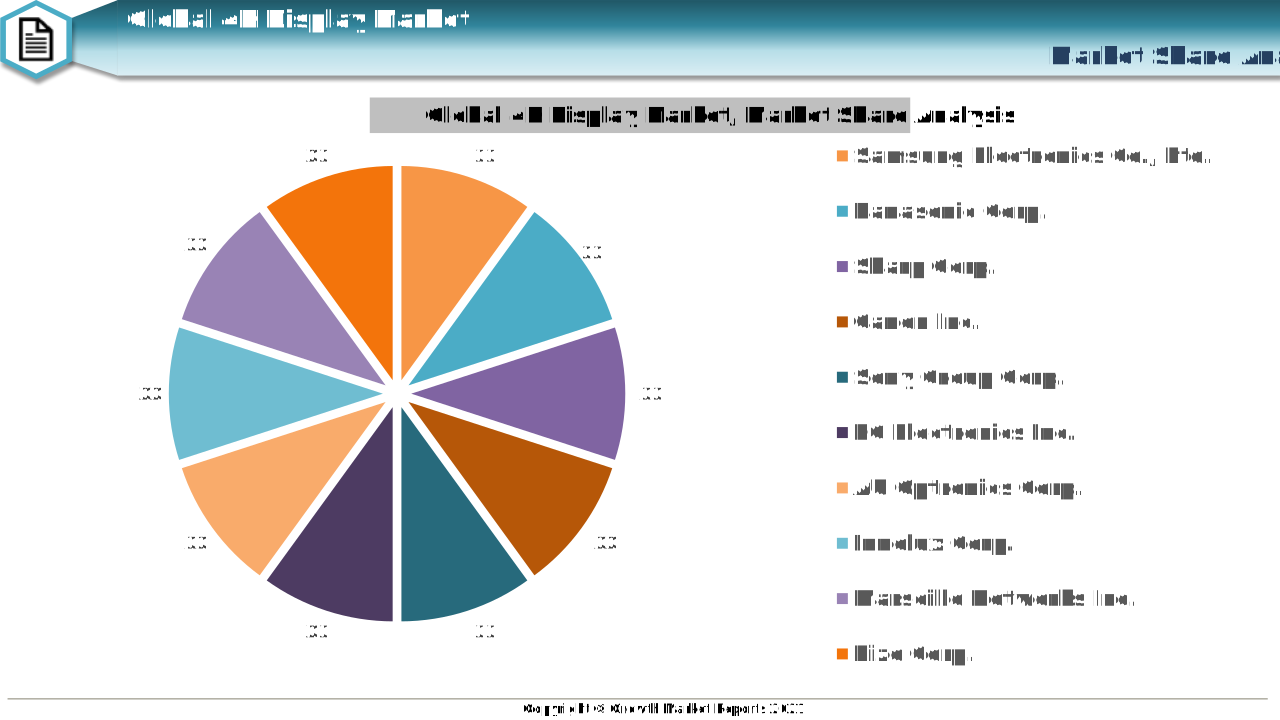
Key players competing in the global 4K display market are Samsung Electronics Co., Ltd.; Panasonic Corp.; Sharp Corp.; Canon Inc.; Sony Group Corp.; LG Electronics Inc.; AU Optronics Corp.; Innolux Corp.; Marseille Networks Inc.; and Eizo Corp. Companies are focusing on investments in R&D sector for advancements in 4K display technology to fulfil the demand from the market and maintain their competitive position in the market. Companies have been widely engaged in strategic partnership, merger & acquisition, new product launch, and collaborations to boost their market share and acquiring new buyers.
For instance, in February 2019 Sony Group Corp. a Japan based multinational conglomerate corporation announced a launch of the Xperia 1 smartphone, which is the first ever 21:9 4K display. The aim of introducing the smartphone was to come back into the mobile device market after back to back many severe losses in this segment. In April 2019, LG material and chemical division of LG corp. acquired 500 patented materials from DuPont a US based chemistry company. The acquired patents were mainly related to soluble organic light-emitting diodes for development of that technology into its next generation displays.
Opportunities include integration with smart home and IoT ecosystems, expansion in emerging markets, and growth in AR/VR applications. Challenges include intense competition, price erosion, rapid technological changes, and the emergence of 8K displays.
Key companies include Samsung Electronics, LG Electronics, Sony Corporation, Panasonic Corporation, TCL Corporation, Hisense Group, Sharp Corporation, Vizio Inc., Philips, BOE Technology Group, and others.
4K displays are sold through both offline channels (electronics stores, specialty retailers) and online channels (e-commerce platforms). Online sales are growing rapidly due to convenience and competitive pricing.
4K displays are widely used in consumer electronics (TVs, monitors, gaming), commercial environments (digital signage, corporate offices), healthcare (medical imaging, diagnostics), education (interactive whiteboards, projectors), and retail.
The market is segmented into 3840 x 2160 (Ultra HD), 4096 x 2160 (DCI 4K), and other specialized resolutions. 3840 x 2160 dominates consumer electronics, while 4096 x 2160 is preferred in professional and cinematic applications.
The primary panel technologies are LED, OLED, QLED, and LCD. LED is most widely adopted, while OLED and QLED are popular in premium segments for their superior picture quality and color reproduction.
The main product types are televisions, monitors, projectors, digital signage, and specialty displays. 4K televisions hold the largest market share, while monitors and projectors are seeing rapid growth in gaming, professional, and educational applications.
Asia Pacific leads the global 4K display market, followed by North America and Europe. Asia Pacific's dominance is due to major manufacturers, a growing middle class, and increasing disposable income.
Key growth drivers include rising demand for ultra-high-definition content, technological advancements in panel technology, decreasing prices, and expanding adoption in sectors like entertainment, education, retail, and healthcare.
The 4K display market reached a valuation of USD 87.6 billion in 2024 and is projected to grow at a CAGR of 13.2% from 2025 to 2033, reaching USD 254.1 billion by 2033.