3D Machine Vision Market Research Report 2033

3D Machine Vision Market Research Report 2033

Segments - by Offering (Hardware, Software, Services), by Product (Smart Camera-Based, PC-Based), by Application (Quality Assurance & Inspection, Positioning & Guidance, Measurement, Identification, Others), by Industry Vertical (Automotive, Electronics & Semiconductor, Pharmaceuticals & Chemicals, Food & Beverage, Packaging, Logistics, Others)

https://growthmarketreports.com/Raksha
Author : Raksha Sharma
https://growthmarketreports.com/Vaibhav
Fact-checked by : V. Chandola
https://growthmarketreports.com/Shruti
Editor : Shruti Bhat

Upcoming | Report ID :ICT-SE-2231 | 4.1 Rating | 43 Reviews | 300 Pages | Format : Docx PDF

Report Description


3D Machine Vision Market Outlook

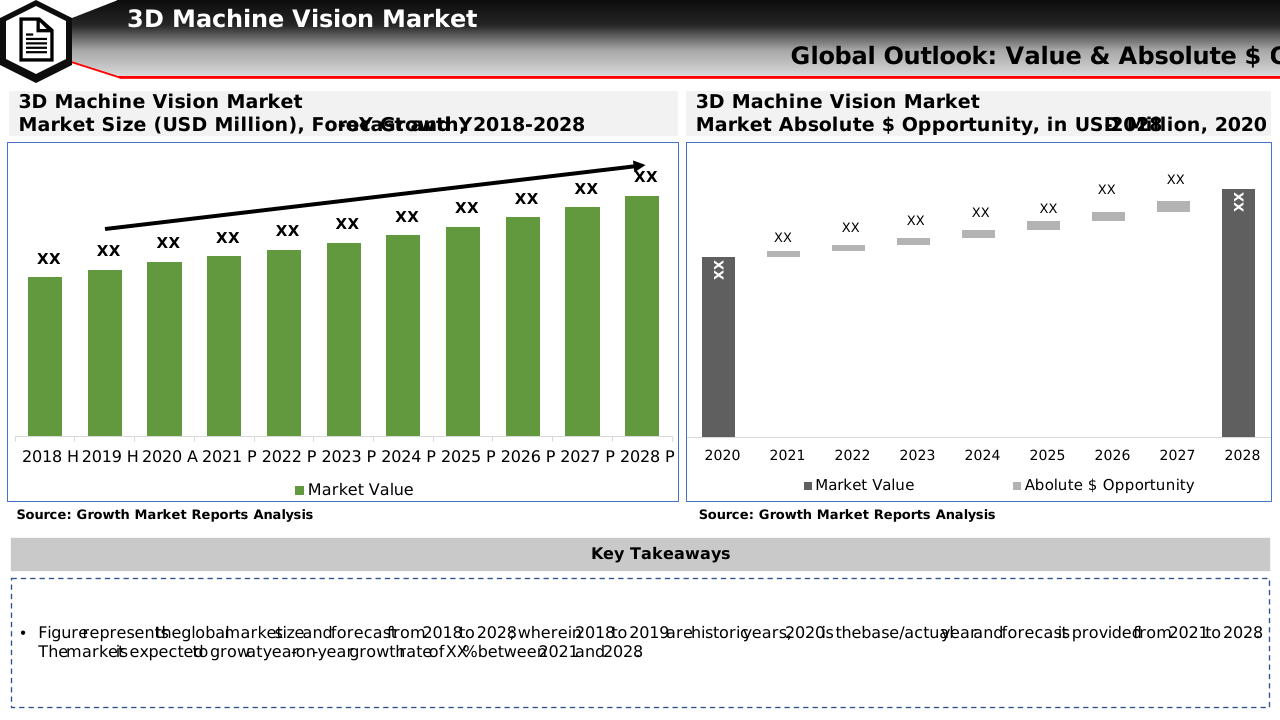
According to our latest research, the global 3D Machine Vision market size reached USD 2.45 billion in 2024, underpinned by rapid advancements in automation and smart manufacturing. Driven by the integration of artificial intelligence and the proliferation of Industry 4.0 initiatives, the market is poised for robust expansion, exhibiting a CAGR of 12.1% from 2025 to 2033. By 2033, the 3D Machine Vision market is forecasted to attain a value of USD 6.84 billion. The primary growth factor fueling this trajectory is the increasing demand for precise quality inspection and automation across diverse industry verticals such as automotive, electronics, pharmaceuticals, and logistics.

One of the most significant growth drivers for the 3D Machine Vision market is the escalating adoption of automation across manufacturing sectors. As industries strive for higher productivity and reduced operational costs, the deployment of 3D machine vision systems has become indispensable for quality assurance and process optimization. These systems offer unparalleled accuracy in defect detection, measurement, and positioning, which is crucial for industries like automotive and electronics where precision is paramount. Furthermore, the growing trend of smart factories and the integration of IoT and AI technologies within industrial processes are accelerating the transition towards automated visual inspection, thus propelling the market forward.

Another critical factor contributing to the marketÂ’s growth is the advancement in imaging technologies and the decreasing cost of high-resolution cameras and sensors. The proliferation of smart camera-based and PC-based 3D vision systems has enabled manufacturers to achieve faster and more reliable inspections, even in complex and high-speed production environments. Enhanced software algorithms, coupled with powerful hardware, are enabling real-time data processing and analytics, which further enhances the capabilities of 3D machine vision systems. The expanding application scope, from traditional manufacturing to emerging sectors like logistics and pharmaceuticals, is also broadening the potential market base.

Additionally, stringent regulatory standards and the rising emphasis on product quality and traceability are compelling industries to invest in advanced inspection solutions. In sectors such as food & beverage and pharmaceuticals, compliance with safety and quality regulations is non-negotiable, driving the adoption of 3D machine vision for tasks such as contamination detection, packaging inspection, and serialization. The need for non-contact and high-speed inspection methods is particularly acute in these industries, making 3D machine vision an attractive solution. Furthermore, ongoing research and development activities aimed at enhancing machine vision algorithms and expanding the range of detectable defects are expected to unlock new avenues for market growth throughout the forecast period.

In the realm of advanced manufacturing, the Machine-Vision Reticle Handler is emerging as a pivotal component in enhancing the precision and efficiency of production lines. This technology is particularly beneficial in semiconductor manufacturing, where the meticulous handling and inspection of reticles are crucial for maintaining the integrity of photolithography processes. By integrating machine vision capabilities, reticle handlers can automatically detect and correct misalignments or defects, thereby reducing the risk of costly errors and downtime. The ability to perform real-time analysis and adjustments ensures that the production process remains seamless, ultimately contributing to higher yields and improved product quality. As industries continue to push the boundaries of miniaturization and complexity, the demand for sophisticated reticle handling solutions is set to rise, underscoring the importance of innovation in machine vision technologies.

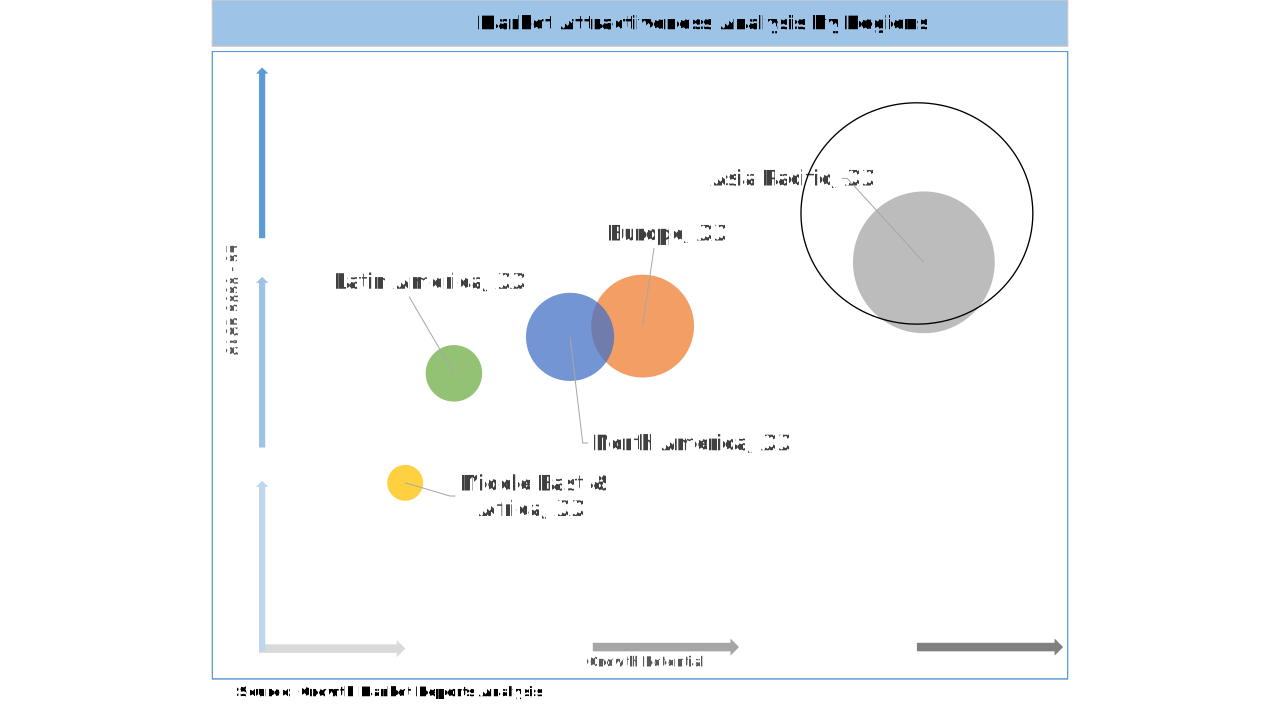
From a regional perspective, Asia Pacific continues to dominate the global 3D Machine Vision market, accounting for the largest share in 2024, followed by North America and Europe. The rapid industrialization in countries such as China, Japan, South Korea, and India, coupled with substantial investments in automation technologies, has significantly contributed to the regionÂ’s leadership. North America and Europe are also witnessing considerable growth due to the presence of leading technology providers and the early adoption of Industry 4.0 practices. Meanwhile, emerging markets in Latin America and the Middle East & Africa are gradually increasing their adoption rates, spurred by investments in manufacturing and infrastructure development.

Global 3D Machine Vision Industry Outlook

Offering Analysis

The Offering segment in the 3D Machine Vision market is categorized into hardware, software, and services, each playing a pivotal role in the overall value chain. The hardware sub-segment, which includes cameras, sensors, processors, and lighting equipment, remains the backbone of the market, contributing the largest revenue share in 2024. The demand for high-resolution and high-speed cameras, coupled with the introduction of advanced 3D sensors, has significantly enhanced the capability of machine vision systems. The evolution of compact and integrated hardware solutions has also enabled easier deployment and reduced system complexity, making 3D machine vision more accessible to a wider range of industries.

Software, another crucial offering, is witnessing rapid advancements as vendors strive to provide robust image processing, analysis, and decision-making capabilities. The increasing integration of artificial intelligence and deep learning algorithms into 3D machine vision software has revolutionized defect detection, object recognition, and pattern matching. These advancements are allowing end users to achieve higher accuracy rates and automate more complex inspection tasks. Furthermore, software platforms are increasingly being designed with user-friendly interfaces and compatibility with various hardware components, facilitating seamless integration into existing production lines.

Services, encompassing installation, integration, maintenance, and consulting, are gaining prominence as end users seek customized solutions tailored to their specific operational requirements. As the complexity of 3D machine vision systems grows, so does the need for expert guidance in system design, implementation, and ongoing support. Service providers are also offering training programs to help clients maximize the return on investment by optimizing the use of installed systems. The trend towards outsourcing maintenance and upgrades is further boosting the demand for professional services, ensuring that systems remain up-to-date and operate at peak efficiency.

The interplay between hardware, software, and services is crucial for delivering a comprehensive 3D machine vision solution. Vendors are increasingly adopting a holistic approach, offering bundled solutions that combine best-in-class hardware with advanced software and value-added services. This approach not only enhances the performance and reliability of machine vision systems but also simplifies procurement and deployment for end users. As the market continues to evolve, the emphasis on interoperability, scalability, and ease of integration across offerings will remain a key differentiator for leading vendors.

Report Scope

Attributes Details
Report Title 3D Machine Vision Market Research Report 2033
By Offering Hardware, Software, Services
By Product Smart Camera-Based, PC-Based
By Application Quality Assurance & Inspection, Positioning & Guidance, Measurement, Identification, Others
By Industry Vertical Automotive, Electronics & Semiconductor, Pharmaceuticals & Chemicals, Food & Beverage, Packaging, Logistics, Others
Regions Covered North America, Europe, APAC, Latin America, MEA
Base Year 2024
Historic Data 2018-2023
Forecast Period 2025-2033
Number of Pages 300
Number of Tables & Figures 255
Customization Available Yes, the report can be customized as per your need.

Product Analysis

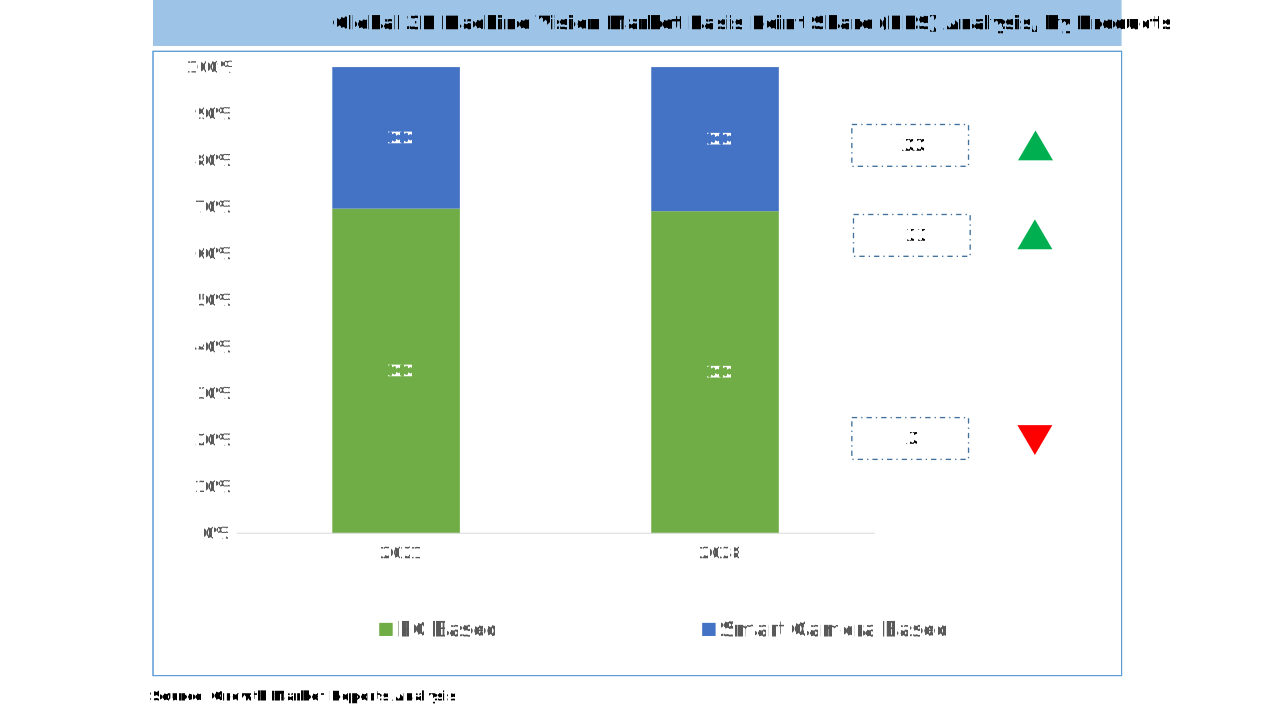
The Product segment of the 3D Machine Vision market is primarily divided into smart camera-based systems and PC-based systems, each catering to distinct application requirements. Smart camera-based systems, characterized by their compact design and integrated processing capabilities, have gained significant traction in recent years. These systems are particularly favored for applications requiring decentralized processing, ease of installation, and scalability. The integration of advanced image sensors and embedded processors within smart cameras has enabled real-time analysis and decision-making at the edge, reducing latency and enhancing operational efficiency.

PC-based 3D machine vision systems, on the other hand, offer superior processing power and flexibility, making them ideal for complex and high-speed inspection tasks. These systems leverage powerful CPUs and GPUs to handle large volumes of image data and execute sophisticated algorithms, which is essential for applications demanding high accuracy and throughput. The modular architecture of PC-based systems allows for easy customization and integration with other automation equipment, making them a preferred choice in industries with dynamic production environments.

The choice between smart camera-based and PC-based systems largely depends on the specific needs of the application, such as the level of complexity, required processing speed, and integration requirements. While smart cameras are well-suited for straightforward inspection tasks and decentralized installations, PC-based systems excel in scenarios that demand advanced analytics, multi-camera setups, and high-resolution imaging. The ongoing advancements in both product categories are blurring the lines between them, with smart cameras becoming increasingly powerful and PC-based systems becoming more compact and user-friendly.

Vendors are continuously innovating to enhance the performance, reliability, and ease of use of both product types. Smart camera-based systems are incorporating features such as wireless connectivity, onboard storage, and AI-driven analytics, while PC-based systems are being optimized for faster data transfer, parallel processing, and seamless integration with cloud platforms. The growing adoption of both product types across various industry verticals underscores the importance of offering a diverse product portfolio to address the evolving needs of end users in the 3D Machine Vision market.

Application Analysis

The Application segment of the 3D Machine Vision market encompasses a wide range of use cases, including quality assurance & inspection, positioning & guidance, measurement, identification, and other specialized applications. Quality assurance & inspection remains the largest and most critical application, as manufacturers increasingly rely on machine vision systems to detect defects, ensure product consistency, and comply with regulatory standards. The ability of 3D machine vision to perform non-contact and high-speed inspections makes it indispensable for industries such as automotive, electronics, and pharmaceuticals, where even minor defects can have significant consequences.

Positioning & guidance is another key application area, particularly in robotics and automated material handling systems. 3D machine vision enables precise localization and orientation of objects, facilitating accurate pick-and-place operations, assembly, and robotic guidance. This capability is essential for enhancing the efficiency and flexibility of automated production lines, especially in industries with high-mix, low-volume manufacturing requirements. The adoption of 3D vision for positioning and guidance is also expanding in logistics and warehousing, where it enables efficient sorting, palletizing, and order fulfillment.

Measurement applications leverage the high accuracy and repeatability of 3D machine vision systems to perform dimensional analysis, surface profiling, and volumetric measurements. These systems are capable of capturing intricate details and complex geometries that are challenging for traditional measurement tools, making them ideal for precision engineering, electronics manufacturing, and quality control in pharmaceuticals. The integration of advanced algorithms and machine learning techniques is further enhancing the capabilities of 3D measurement systems, enabling automated and real-time analysis of complex components.

Identification applications, including barcode reading, optical character recognition, and part tracking, are also benefiting from the adoption of 3D machine vision. The ability to capture depth information and handle challenging lighting conditions enables reliable identification even in environments where traditional 2D systems may struggle. This is particularly valuable in sectors such as packaging, logistics, and food & beverage, where accurate identification and traceability are critical for operational efficiency and regulatory compliance. The versatility of 3D machine vision is driving its adoption across a growing array of applications, underscoring its importance as a foundational technology in modern manufacturing and logistics.

Industry Vertical Analysis

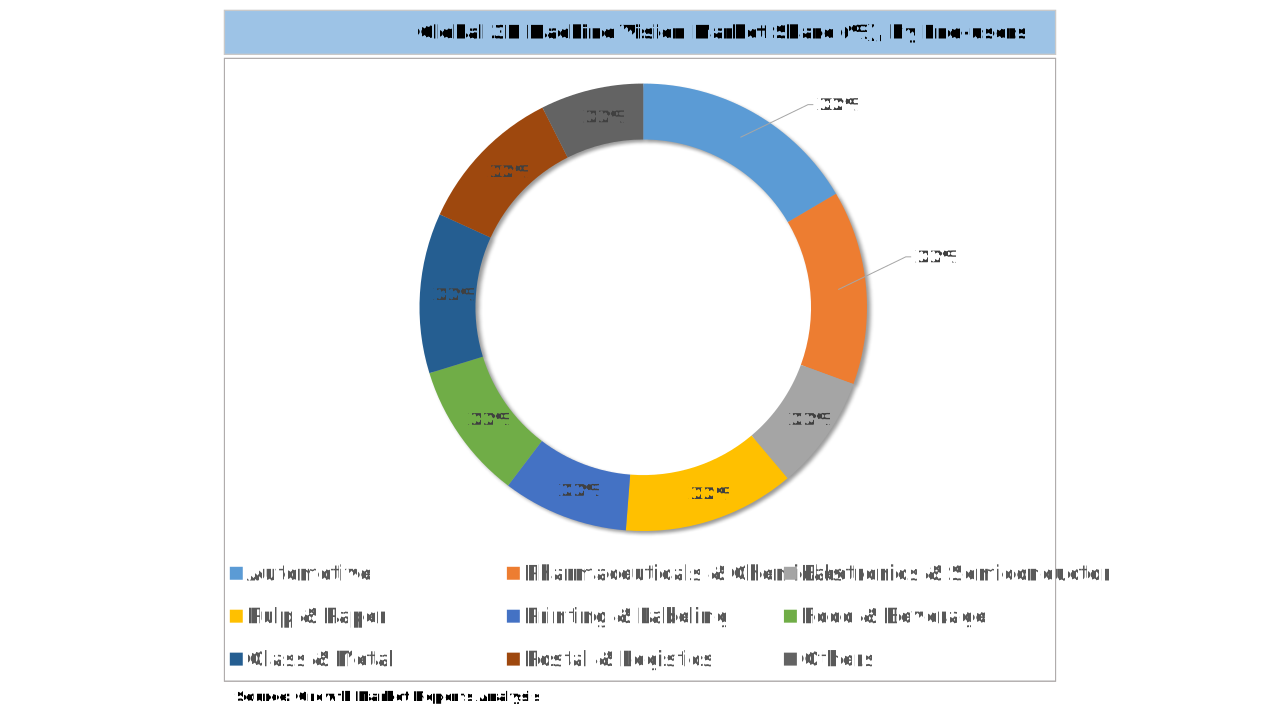
The Industry Vertical segment highlights the widespread adoption of 3D Machine Vision across diverse sectors, each with unique requirements and growth drivers. The automotive industry stands out as the largest adopter, leveraging 3D machine vision for applications such as surface inspection, assembly verification, and robotic guidance. The need for high precision and zero-defect manufacturing in automotive production lines has made 3D vision systems a critical component for ensuring quality and operational efficiency. The trend towards electric vehicles and autonomous driving is further fueling demand for advanced inspection and measurement solutions within the sector.

The electronics & semiconductor industry is another major contributor to the growth of the 3D Machine Vision market. The miniaturization of electronic components and the increasing complexity of semiconductor manufacturing processes necessitate highly accurate and reliable inspection systems. 3D machine vision is widely used for tasks such as solder joint inspection, component alignment, and wafer inspection, where traditional 2D systems fall short. The rapid pace of innovation in consumer electronics and the growing demand for high-performance chips are driving continuous investments in advanced machine vision technologies.

Pharmaceuticals & chemicals, along with the food & beverage industry, are increasingly adopting 3D machine vision to meet stringent quality and safety standards. In pharmaceuticals, 3D vision systems are utilized for tasks such as tablet inspection, packaging verification, and serialization, ensuring compliance with regulatory requirements and minimizing the risk of contamination. In the food & beverage sector, these systems enable automated inspection of packaging, fill levels, and contamination detection, enhancing product quality and safety.

Other industry verticals, including packaging, logistics, and emerging sectors, are also recognizing the value of 3D machine vision for improving efficiency and accuracy. In packaging, machine vision is used for label inspection, seal integrity, and package dimensioning. In logistics, it plays a crucial role in automated sorting, tracking, and warehouse management. The versatility and scalability of 3D machine vision systems make them well-suited for a broad spectrum of applications, ensuring sustained demand across both traditional and emerging industry verticals.

Opportunities & Threats

The 3D Machine Vision market presents a multitude of opportunities for growth and innovation, particularly as industries continue to embrace automation and digital transformation. One of the most promising opportunities lies in the integration of artificial intelligence and deep learning algorithms into machine vision systems. AI-powered 3D vision solutions are capable of learning from data, adapting to new inspection scenarios, and delivering higher accuracy rates than traditional rule-based systems. This opens up new possibilities for automating complex inspection tasks, reducing false positives, and improving overall process efficiency. Additionally, the rising adoption of collaborative robots and flexible manufacturing systems is creating a strong demand for advanced vision solutions that can seamlessly integrate with robotic platforms and adapt to dynamic production environments.

Another significant opportunity for the 3D Machine Vision market is the expansion into emerging applications and industry verticals. The logistics and warehousing sector, for instance, is experiencing a surge in demand for automated sorting, tracking, and inventory management solutions powered by 3D vision. Similarly, the healthcare and medical device industries are exploring the use of 3D machine vision for applications such as surgical navigation, tissue analysis, and medical imaging. The ongoing development of compact, cost-effective, and easy-to-integrate 3D vision systems is lowering the barriers to entry for small and medium-sized enterprises, further broadening the marketÂ’s addressable base. As technology continues to evolve, the potential for new use cases and business models will continue to expand.

Despite the numerous opportunities, the 3D Machine Vision market faces certain restraining factors that could impede its growth. One of the primary challenges is the high initial investment and complexity associated with deploying advanced 3D vision systems. The need for specialized hardware, sophisticated software, and skilled personnel can be a barrier for smaller organizations with limited resources. Additionally, integration challenges, compatibility issues, and the need for ongoing maintenance and support can further increase the total cost of ownership. Addressing these challenges will require continued innovation in system design, user interfaces, and support services to make 3D machine vision more accessible and cost-effective for a broader range of users.

Regional Outlook

The regional analysis of the 3D Machine Vision market reveals distinct trends and growth patterns across key geographies. Asia Pacific leads the market, accounting for approximately USD 1.1 billion in revenue in 2024, driven by rapid industrialization, robust manufacturing activity, and significant investments in automation technologies. Countries such as China, Japan, and South Korea are at the forefront of adopting 3D machine vision, supported by government initiatives promoting smart manufacturing and Industry 4.0. The regionÂ’s dominance is further reinforced by the presence of major electronics and automotive manufacturing hubs, which are among the largest consumers of advanced inspection and measurement solutions.

North America is the second-largest market, with a market size of around USD 670 million in 2024. The region benefits from the early adoption of cutting-edge technologies, a strong presence of leading machine vision vendors, and a high level of automation across industries such as automotive, electronics, and pharmaceuticals. The United States, in particular, is witnessing increased investments in research and development, driving innovation in AI-powered machine vision solutions. The market in North America is expected to grow at a steady pace, with a projected CAGR of 11.5% from 2025 to 2033, as industries continue to prioritize quality, efficiency, and regulatory compliance.

Europe follows closely, with a market value of approximately USD 480 million in 2024. The region is characterized by a strong focus on precision engineering, stringent quality standards, and a well-established industrial base. Germany, the United Kingdom, and France are leading adopters of 3D machine vision, particularly in the automotive, electronics, and pharmaceutical sectors. The market is also witnessing growing interest from the food & beverage and logistics industries, as manufacturers seek to enhance product quality and traceability. Meanwhile, Latin America and Middle East & Africa are emerging markets, collectively accounting for less than USD 200 million in 2024, but expected to grow at above-average rates as investments in manufacturing and infrastructure development accelerate in these regions.

3D Machine Vision Market Statistics

Competitor Outlook

The 3D Machine Vision market is characterized by intense competition, with a diverse mix of global technology giants, specialized machine vision vendors, and innovative startups vying for market share. The competitive landscape is shaped by rapid technological advancements, frequent product launches, and ongoing investments in research and development. Leading players are focused on expanding their product portfolios, enhancing system performance, and offering integrated solutions that combine hardware, software, and services. Strategic partnerships, mergers, and acquisitions are common strategies employed to strengthen market presence, access new technologies, and enter emerging markets.

Innovation remains a key differentiator in the 3D Machine Vision market, with vendors continuously striving to develop systems that offer higher accuracy, faster processing speeds, and greater flexibility. The integration of artificial intelligence and machine learning is a major trend, enabling the development of self-learning and adaptive vision systems capable of handling complex inspection tasks. Additionally, the shift towards user-friendly interfaces, plug-and-play installation, and cloud-based analytics is making 3D machine vision more accessible to a wider range of users. Vendors are also investing in training and support services to help customers maximize the value of their machine vision investments.

The competitive dynamics are further influenced by the increasing demand for industry-specific solutions and the need for customization. Vendors are tailoring their offerings to address the unique requirements of different industry verticals, such as automotive, electronics, pharmaceuticals, and logistics. This approach not only enhances customer satisfaction but also helps vendors establish long-term relationships and secure repeat business. As the market continues to evolve, the ability to offer end-to-end solutions, from system design and installation to ongoing support and upgrades, will be a critical success factor.

Major companies operating in the 3D Machine Vision market include Cognex Corporation, Keyence Corporation, Basler AG, Sick AG, Omron Corporation, ISRA Vision AG, Teledyne Technologies Incorporated, National Instruments Corporation, and Hexagon AB. Cognex Corporation is renowned for its advanced vision systems and AI-powered inspection solutions, serving a broad spectrum of industries worldwide. Keyence Corporation offers a comprehensive range of smart camera-based and PC-based vision systems, with a strong focus on innovation and customer support. Basler AG is a leading provider of high-quality cameras and imaging components, known for its commitment to quality and reliability. Sick AG specializes in industrial sensors and machine vision solutions, catering to the needs of manufacturing, logistics, and process automation.

Omron Corporation is a global leader in automation and machine vision, offering integrated solutions that combine hardware, software, and services. ISRA Vision AG, now part of Atlas Copco, is recognized for its expertise in surface inspection and 3D measurement systems, particularly in the automotive and electronics sectors. Teledyne Technologies Incorporated provides a wide range of imaging and sensing solutions, leveraging its expertise in high-performance cameras and sensors. National Instruments Corporation offers flexible and modular machine vision platforms, enabling seamless integration with other automation systems. Hexagon AB is a prominent player in precision measurement and industrial automation, with a strong focus on innovation and digital transformation. These companies are at the forefront of shaping the future of the 3D Machine Vision market, driving technological advancements and setting new benchmarks for performance and reliability.

Key Players

  • Cognex Corporation
  • Keyence Corporation
  • SICK AG
  • Basler AG
  • ISRA VISION AG
  • LMI Technologies
  • Omron Corporation
  • Hexagon AB
  • National Instruments Corporation
  • Stemmer Imaging AG
  • Photoneo
  • Teledyne Technologies Incorporated
  • Canon Inc.
  • Sony Corporation
  • Intel Corporation
  • MVTec Software GmbH
  • Hermary Opto Electronics Inc.
  • Perceptron, Inc.
  • ifm electronic GmbH
  • Wenglor Sensoric GmbH
3D Machine Vision Market Overview

Segments

The 3D Machine Vision market has been segmented on the basis of

Offering

  • Hardware
  • Software
  • Services

Product

  • Smart Camera-Based
  • PC-Based

Application

  • Quality Assurance & Inspection
  • Positioning & Guidance
  • Measurement
  • Identification
  • Others

Industry Vertical

  • Automotive
  • Electronics & Semiconductor
  • Pharmaceuticals & Chemicals
  • Food & Beverage
  • Packaging
  • Logistics
  • Others

Competitive Landscape

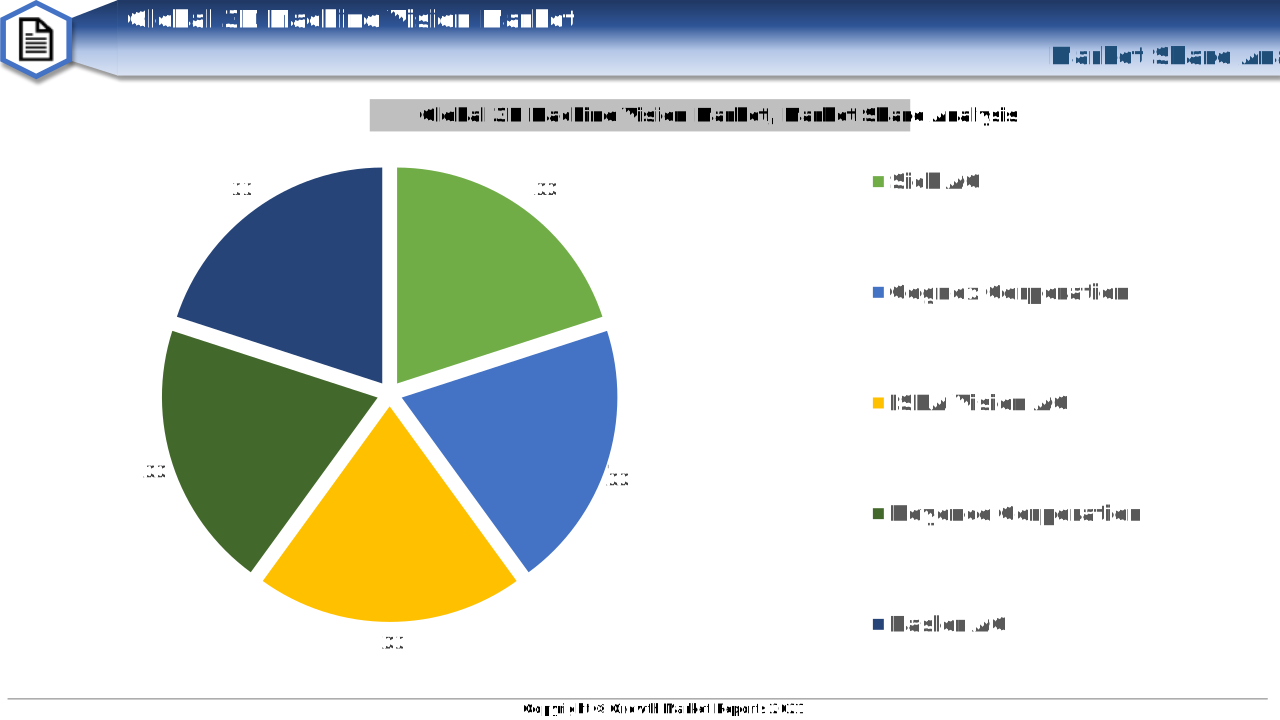
The key players in the global 3D machine vision market are Sick AG; Cognex Corporation; ISRA Vision AG; Keyence Corporation; and Basler AG. These key players have adopted a series of market strategies including new product launching, entering into partnership, collaboration, and production expansion to enhance their market position and expand their consumer base.

3D Machine Vision Market By Key Players

Frequently Asked Questions

The market offers hardware (cameras, sensors, processors), software (image processing, AI algorithms), and services (installation, integration, maintenance, consulting, and training).

Leading companies include Cognex Corporation, Keyence Corporation, Basler AG, Sick AG, Omron Corporation, ISRA Vision AG, Teledyne Technologies, National Instruments Corporation, and Hexagon AB.

AI and deep learning are enabling more accurate defect detection, adaptive inspection scenarios, and automation of complex tasks, improving overall efficiency and expanding potential applications.

Key challenges include high initial investment, system complexity, need for skilled personnel, integration and compatibility issues, and ongoing maintenance costs.

Asia Pacific dominates the market, followed by North America and Europe. Rapid industrialization and investments in automation in countries like China, Japan, and South Korea drive APAC's leadership.

The market is divided into smart camera-based systems, known for their compact and integrated processing, and PC-based systems, which offer superior processing power and flexibility for complex tasks.

Primary applications include quality assurance & inspection, positioning & guidance, measurement, identification (such as barcode reading and part tracking), and other specialized uses.

Major industries using 3D Machine Vision include automotive, electronics & semiconductor, pharmaceuticals & chemicals, food & beverage, packaging, and logistics.

Key growth drivers include rapid automation in manufacturing, integration of artificial intelligence, adoption of Industry 4.0, advancements in imaging technologies, and increasing demand for precise quality inspection across industries.

The global 3D Machine Vision market reached USD 2.45 billion in 2024 and is projected to grow at a CAGR of 12.1% from 2025 to 2033, reaching USD 6.84 billion by 2033.

Table Of Content

Chapter 1 Executive Summary
Chapter 2 Assumptions and Acronyms Used
Chapter 3 Research Methodology
Chapter 4 3D Machine Vision Market Overview
   4.1 Introduction
      4.1.1 Market Taxonomy
      4.1.2 Market Definition
      4.1.3 Macro-Economic Factors Impacting the Market Growth
   4.2 3D Machine Vision Market Dynamics
      4.2.1 Market Drivers
      4.2.2 Market Restraints
      4.2.3 Market Opportunity
   4.3 3D Machine Vision Market - Supply Chain Analysis
      4.3.1 List of Key Suppliers
      4.3.2 List of Key Distributors
      4.3.3 List of Key Consumers
   4.4 Key Forces Shaping the 3D Machine Vision Market
      4.4.1 Bargaining Power of Suppliers
      4.4.2 Bargaining Power of Buyers
      4.4.3 Threat of Substitution
      4.4.4 Threat of New Entrants
      4.4.5 Competitive Rivalry
   4.5 Global 3D Machine Vision Market Size & Forecast, 2023-2032
      4.5.1 3D Machine Vision Market Size and Y-o-Y Growth
      4.5.2 3D Machine Vision Market Absolute $ Opportunity

Chapter 5 Global 3D Machine Vision Market Analysis and Forecast By Offering
   5.1 Introduction
      5.1.1 Key Market Trends & Growth Opportunities By Offering
      5.1.2 Basis Point Share (BPS) Analysis By Offering
      5.1.3 Absolute $ Opportunity Assessment By Offering
   5.2 3D Machine Vision Market Size Forecast By Offering
      5.2.1 Hardware
      5.2.2 Software
      5.2.3 Services
   5.3 Market Attractiveness Analysis By Offering

Chapter 6 Global 3D Machine Vision Market Analysis and Forecast By Product
   6.1 Introduction
      6.1.1 Key Market Trends & Growth Opportunities By Product
      6.1.2 Basis Point Share (BPS) Analysis By Product
      6.1.3 Absolute $ Opportunity Assessment By Product
   6.2 3D Machine Vision Market Size Forecast By Product
      6.2.1 Smart Camera-Based
      6.2.2 PC-Based
   6.3 Market Attractiveness Analysis By Product

Chapter 7 Global 3D Machine Vision Market Analysis and Forecast By Application
   7.1 Introduction
      7.1.1 Key Market Trends & Growth Opportunities By Application
      7.1.2 Basis Point Share (BPS) Analysis By Application
      7.1.3 Absolute $ Opportunity Assessment By Application
   7.2 3D Machine Vision Market Size Forecast By Application
      7.2.1 Quality Assurance & Inspection
      7.2.2 Positioning & Guidance
      7.2.3 Measurement
      7.2.4 Identification
      7.2.5 Others
   7.3 Market Attractiveness Analysis By Application

Chapter 8 Global 3D Machine Vision Market Analysis and Forecast By Industry Vertical
   8.1 Introduction
      8.1.1 Key Market Trends & Growth Opportunities By Industry Vertical
      8.1.2 Basis Point Share (BPS) Analysis By Industry Vertical
      8.1.3 Absolute $ Opportunity Assessment By Industry Vertical
   8.2 3D Machine Vision Market Size Forecast By Industry Vertical
      8.2.1 Automotive
      8.2.2 Electronics & Semiconductor
      8.2.3 Pharmaceuticals & Chemicals
      8.2.4 Food & Beverage
      8.2.5 Packaging
      8.2.6 Logistics
      8.2.7 Others
   8.3 Market Attractiveness Analysis By Industry Vertical

Chapter 9 Global 3D Machine Vision Market Analysis and Forecast by Region
   9.1 Introduction
      9.1.1 Key Market Trends & Growth Opportunities By Region
      9.1.2 Basis Point Share (BPS) Analysis By Region
      9.1.3 Absolute $ Opportunity Assessment By Region
   9.2 3D Machine Vision Market Size Forecast By Region
      9.2.1 North America
      9.2.2 Europe
      9.2.3 Asia Pacific
      9.2.4 Latin America
      9.2.5 Middle East & Africa (MEA)
   9.3 Market Attractiveness Analysis By Region

Chapter 10 Coronavirus Disease (COVID-19) Impact 
   10.1 Introduction 
   10.2 Current & Future Impact Analysis 
   10.3 Economic Impact Analysis 
   10.4 Government Policies 
   10.5 Investment Scenario

Chapter 11 North America 3D Machine Vision Analysis and Forecast
   11.1 Introduction
   11.2 North America 3D Machine Vision Market Size Forecast by Country
      11.2.1 U.S.
      11.2.2 Canada
   11.3 Basis Point Share (BPS) Analysis by Country
   11.4 Absolute $ Opportunity Assessment by Country
   11.5 Market Attractiveness Analysis by Country
   11.6 North America 3D Machine Vision Market Size Forecast By Offering
      11.6.1 Hardware
      11.6.2 Software
      11.6.3 Services
   11.7 Basis Point Share (BPS) Analysis By Offering 
   11.8 Absolute $ Opportunity Assessment By Offering 
   11.9 Market Attractiveness Analysis By Offering
   11.10 North America 3D Machine Vision Market Size Forecast By Product
      11.10.1 Smart Camera-Based
      11.10.2 PC-Based
   11.11 Basis Point Share (BPS) Analysis By Product 
   11.12 Absolute $ Opportunity Assessment By Product 
   11.13 Market Attractiveness Analysis By Product
   11.14 North America 3D Machine Vision Market Size Forecast By Application
      11.14.1 Quality Assurance & Inspection
      11.14.2 Positioning & Guidance
      11.14.3 Measurement
      11.14.4 Identification
      11.14.5 Others
   11.15 Basis Point Share (BPS) Analysis By Application 
   11.16 Absolute $ Opportunity Assessment By Application 
   11.17 Market Attractiveness Analysis By Application
   11.18 North America 3D Machine Vision Market Size Forecast By Industry Vertical
      11.18.1 Automotive
      11.18.2 Electronics & Semiconductor
      11.18.3 Pharmaceuticals & Chemicals
      11.18.4 Food & Beverage
      11.18.5 Packaging
      11.18.6 Logistics
      11.18.7 Others
   11.19 Basis Point Share (BPS) Analysis By Industry Vertical 
   11.20 Absolute $ Opportunity Assessment By Industry Vertical 
   11.21 Market Attractiveness Analysis By Industry Vertical

Chapter 12 Europe 3D Machine Vision Analysis and Forecast
   12.1 Introduction
   12.2 Europe 3D Machine Vision Market Size Forecast by Country
      12.2.1 Germany
      12.2.2 France
      12.2.3 Italy
      12.2.4 U.K.
      12.2.5 Spain
      12.2.6 Russia
      12.2.7 Rest of Europe
   12.3 Basis Point Share (BPS) Analysis by Country
   12.4 Absolute $ Opportunity Assessment by Country
   12.5 Market Attractiveness Analysis by Country
   12.6 Europe 3D Machine Vision Market Size Forecast By Offering
      12.6.1 Hardware
      12.6.2 Software
      12.6.3 Services
   12.7 Basis Point Share (BPS) Analysis By Offering 
   12.8 Absolute $ Opportunity Assessment By Offering 
   12.9 Market Attractiveness Analysis By Offering
   12.10 Europe 3D Machine Vision Market Size Forecast By Product
      12.10.1 Smart Camera-Based
      12.10.2 PC-Based
   12.11 Basis Point Share (BPS) Analysis By Product 
   12.12 Absolute $ Opportunity Assessment By Product 
   12.13 Market Attractiveness Analysis By Product
   12.14 Europe 3D Machine Vision Market Size Forecast By Application
      12.14.1 Quality Assurance & Inspection
      12.14.2 Positioning & Guidance
      12.14.3 Measurement
      12.14.4 Identification
      12.14.5 Others
   12.15 Basis Point Share (BPS) Analysis By Application 
   12.16 Absolute $ Opportunity Assessment By Application 
   12.17 Market Attractiveness Analysis By Application
   12.18 Europe 3D Machine Vision Market Size Forecast By Industry Vertical
      12.18.1 Automotive
      12.18.2 Electronics & Semiconductor
      12.18.3 Pharmaceuticals & Chemicals
      12.18.4 Food & Beverage
      12.18.5 Packaging
      12.18.6 Logistics
      12.18.7 Others
   12.19 Basis Point Share (BPS) Analysis By Industry Vertical 
   12.20 Absolute $ Opportunity Assessment By Industry Vertical 
   12.21 Market Attractiveness Analysis By Industry Vertical

Chapter 13 Asia Pacific 3D Machine Vision Analysis and Forecast
   13.1 Introduction
   13.2 Asia Pacific 3D Machine Vision Market Size Forecast by Country
      13.2.1 China
      13.2.2 Japan
      13.2.3 South Korea
      13.2.4 India
      13.2.5 Australia
      13.2.6 South East Asia (SEA)
      13.2.7 Rest of Asia Pacific (APAC)
   13.3 Basis Point Share (BPS) Analysis by Country
   13.4 Absolute $ Opportunity Assessment by Country
   13.5 Market Attractiveness Analysis by Country
   13.6 Asia Pacific 3D Machine Vision Market Size Forecast By Offering
      13.6.1 Hardware
      13.6.2 Software
      13.6.3 Services
   13.7 Basis Point Share (BPS) Analysis By Offering 
   13.8 Absolute $ Opportunity Assessment By Offering 
   13.9 Market Attractiveness Analysis By Offering
   13.10 Asia Pacific 3D Machine Vision Market Size Forecast By Product
      13.10.1 Smart Camera-Based
      13.10.2 PC-Based
   13.11 Basis Point Share (BPS) Analysis By Product 
   13.12 Absolute $ Opportunity Assessment By Product 
   13.13 Market Attractiveness Analysis By Product
   13.14 Asia Pacific 3D Machine Vision Market Size Forecast By Application
      13.14.1 Quality Assurance & Inspection
      13.14.2 Positioning & Guidance
      13.14.3 Measurement
      13.14.4 Identification
      13.14.5 Others
   13.15 Basis Point Share (BPS) Analysis By Application 
   13.16 Absolute $ Opportunity Assessment By Application 
   13.17 Market Attractiveness Analysis By Application
   13.18 Asia Pacific 3D Machine Vision Market Size Forecast By Industry Vertical
      13.18.1 Automotive
      13.18.2 Electronics & Semiconductor
      13.18.3 Pharmaceuticals & Chemicals
      13.18.4 Food & Beverage
      13.18.5 Packaging
      13.18.6 Logistics
      13.18.7 Others
   13.19 Basis Point Share (BPS) Analysis By Industry Vertical 
   13.20 Absolute $ Opportunity Assessment By Industry Vertical 
   13.21 Market Attractiveness Analysis By Industry Vertical

Chapter 14 Latin America 3D Machine Vision Analysis and Forecast
   14.1 Introduction
   14.2 Latin America 3D Machine Vision Market Size Forecast by Country
      14.2.1 Brazil
      14.2.2 Mexico
      14.2.3 Rest of Latin America (LATAM)
   14.3 Basis Point Share (BPS) Analysis by Country
   14.4 Absolute $ Opportunity Assessment by Country
   14.5 Market Attractiveness Analysis by Country
   14.6 Latin America 3D Machine Vision Market Size Forecast By Offering
      14.6.1 Hardware
      14.6.2 Software
      14.6.3 Services
   14.7 Basis Point Share (BPS) Analysis By Offering 
   14.8 Absolute $ Opportunity Assessment By Offering 
   14.9 Market Attractiveness Analysis By Offering
   14.10 Latin America 3D Machine Vision Market Size Forecast By Product
      14.10.1 Smart Camera-Based
      14.10.2 PC-Based
   14.11 Basis Point Share (BPS) Analysis By Product 
   14.12 Absolute $ Opportunity Assessment By Product 
   14.13 Market Attractiveness Analysis By Product
   14.14 Latin America 3D Machine Vision Market Size Forecast By Application
      14.14.1 Quality Assurance & Inspection
      14.14.2 Positioning & Guidance
      14.14.3 Measurement
      14.14.4 Identification
      14.14.5 Others
   14.15 Basis Point Share (BPS) Analysis By Application 
   14.16 Absolute $ Opportunity Assessment By Application 
   14.17 Market Attractiveness Analysis By Application
   14.18 Latin America 3D Machine Vision Market Size Forecast By Industry Vertical
      14.18.1 Automotive
      14.18.2 Electronics & Semiconductor
      14.18.3 Pharmaceuticals & Chemicals
      14.18.4 Food & Beverage
      14.18.5 Packaging
      14.18.6 Logistics
      14.18.7 Others
   14.19 Basis Point Share (BPS) Analysis By Industry Vertical 
   14.20 Absolute $ Opportunity Assessment By Industry Vertical 
   14.21 Market Attractiveness Analysis By Industry Vertical

Chapter 15 Middle East & Africa (MEA) 3D Machine Vision Analysis and Forecast
   15.1 Introduction
   15.2 Middle East & Africa (MEA) 3D Machine Vision Market Size Forecast by Country
      15.2.1 Saudi Arabia
      15.2.2 South Africa
      15.2.3 UAE
      15.2.4 Rest of Middle East & Africa (MEA)
   15.3 Basis Point Share (BPS) Analysis by Country
   15.4 Absolute $ Opportunity Assessment by Country
   15.5 Market Attractiveness Analysis by Country
   15.6 Middle East & Africa (MEA) 3D Machine Vision Market Size Forecast By Offering
      15.6.1 Hardware
      15.6.2 Software
      15.6.3 Services
   15.7 Basis Point Share (BPS) Analysis By Offering 
   15.8 Absolute $ Opportunity Assessment By Offering 
   15.9 Market Attractiveness Analysis By Offering
   15.10 Middle East & Africa (MEA) 3D Machine Vision Market Size Forecast By Product
      15.10.1 Smart Camera-Based
      15.10.2 PC-Based
   15.11 Basis Point Share (BPS) Analysis By Product 
   15.12 Absolute $ Opportunity Assessment By Product 
   15.13 Market Attractiveness Analysis By Product
   15.14 Middle East & Africa (MEA) 3D Machine Vision Market Size Forecast By Application
      15.14.1 Quality Assurance & Inspection
      15.14.2 Positioning & Guidance
      15.14.3 Measurement
      15.14.4 Identification
      15.14.5 Others
   15.15 Basis Point Share (BPS) Analysis By Application 
   15.16 Absolute $ Opportunity Assessment By Application 
   15.17 Market Attractiveness Analysis By Application
   15.18 Middle East & Africa (MEA) 3D Machine Vision Market Size Forecast By Industry Vertical
      15.18.1 Automotive
      15.18.2 Electronics & Semiconductor
      15.18.3 Pharmaceuticals & Chemicals
      15.18.4 Food & Beverage
      15.18.5 Packaging
      15.18.6 Logistics
      15.18.7 Others
   15.19 Basis Point Share (BPS) Analysis By Industry Vertical 
   15.20 Absolute $ Opportunity Assessment By Industry Vertical 
   15.21 Market Attractiveness Analysis By Industry Vertical

Chapter 16 Competition Landscape 
   16.1 3D Machine Vision Market: Competitive Dashboard
   16.2 Global 3D Machine Vision Market: Market Share Analysis, 2023
   16.3 Company Profiles (Details – Overview, Financials, Developments, Strategy) 
      16.3.1 Cognex Corporation
Keyence Corporation
SICK AG
Basler AG
ISRA VISION AG
LMI Technologies
Omron Corporation
Hexagon AB
National Instruments Corporation
Stemmer Imaging AG
Photoneo
Teledyne Technologies Incorporated
Canon Inc.
Sony Corporation
Intel Corporation
MVTec Software GmbH
Hermary Opto Electronics Inc.
Perceptron, Inc.
ifm electronic GmbH
Wenglor Sensoric GmbH

Methodology

Our Clients

sinopec
General Mills
Siemens Healthcare
FedEx Logistics
Honda Motor Co. Ltd.
Deloitte
Nestle SA
The John Holland Group