Segments - by Component (Software, Services), by Deployment Mode (On-Premises, Cloud-Based), by Application (Media & Entertainment, Gaming, Architecture, Healthcare, Education, Advertising, Others), by End-User (Individual, Enterprises, Educational Institutions, Others)
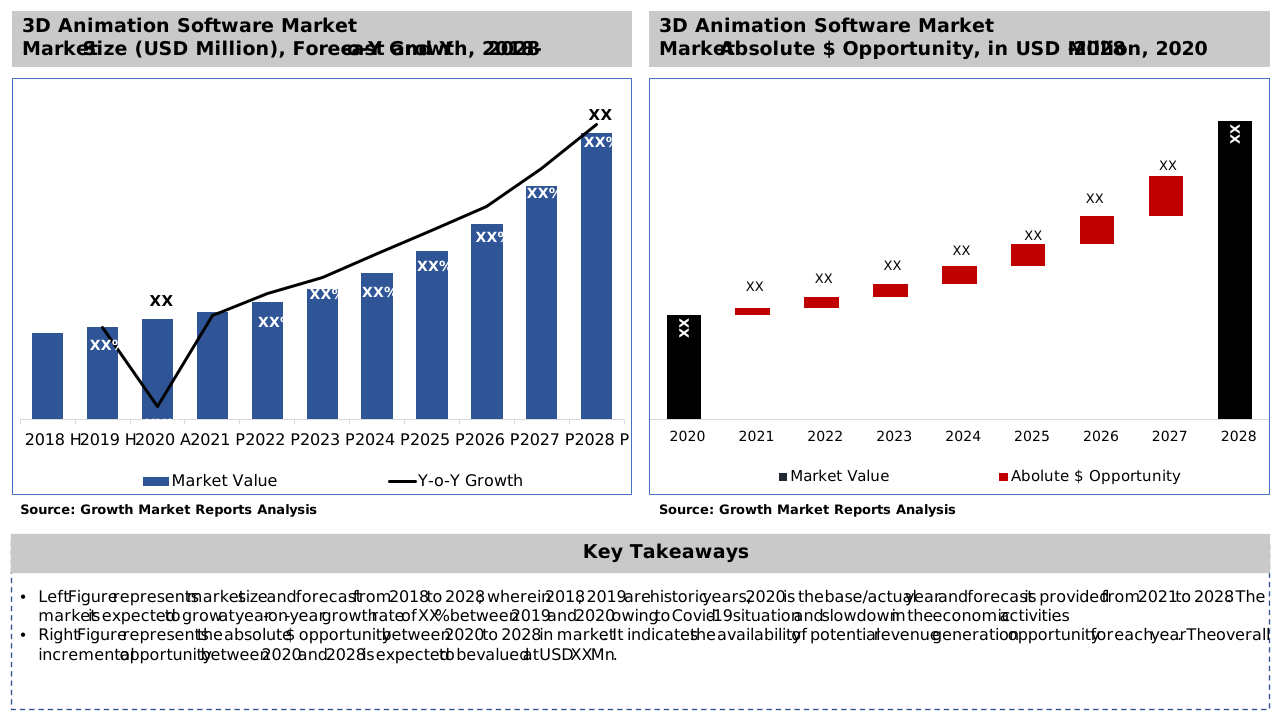
According to our latest research, the 3D Animation Software market size reached USD 20.6 billion in 2024, reflecting robust growth driven by the increasing adoption of 3D visualization across various industries. The market is expected to expand at a CAGR of 11.4% from 2025 to 2033, reaching a projected value of USD 55.5 billion by 2033. This growth trajectory is primarily fueled by technological advancements in rendering, the rising demand for visually immersive content, and expanding applications in sectors such as entertainment, healthcare, and architecture. As per our latest research, the proliferation of cloud-based solutions and the integration of artificial intelligence into animation workflows are accelerating the marketÂ’s evolution and adoption worldwide.
One of the most significant growth factors for the 3D Animation Software market is the surging demand for high-quality visual content in the media and entertainment industry. The global film, television, and gaming sectors are increasingly leveraging 3D animation software to create visually stunning effects, realistic characters, and immersive environments. The popularity of animated movies and the rise of streaming platforms have further amplified the need for advanced animation tools. Studios and content creators are investing heavily in sophisticated software solutions to meet consumer expectations for lifelike visuals and engaging storytelling. Additionally, the integration of virtual reality (VR) and augmented reality (AR) technologies has expanded the creative possibilities, encouraging further adoption and innovation in 3D animation workflows.
Another critical driver propelling the 3D Animation Software market is the growing implementation of 3D modeling and visualization in architecture, engineering, and construction (AEC). Architects and designers are increasingly utilizing 3D animation software to visualize complex structures, simulate real-world scenarios, and communicate designs to clients and stakeholders with greater clarity and precision. The ability to create interactive walkthroughs and realistic renderings has revolutionized project planning and client engagement. Moreover, the integration of Building Information Modeling (BIM) with 3D animation tools is streamlining design processes, reducing errors, and enhancing overall project efficiency. This trend is further supported by the adoption of cloud-based platforms, which enable seamless collaboration and remote access to animation projects.
The healthcare sector is also emerging as a prominent end-user of 3D animation software, contributing to the marketÂ’s expansion. Medical professionals and educators are leveraging 3D animation to create detailed anatomical models, visualize complex procedures, and enhance patient education. These applications are not only improving the quality of medical training but also facilitating better communication between doctors and patients. Pharmaceutical companies are using 3D animation to illustrate drug mechanisms and clinical processes, aiding in marketing and regulatory submissions. The increasing focus on personalized medicine and minimally invasive procedures is expected to drive further innovation and demand for 3D animation solutions in healthcare.
In the realm of 3D animation, 3D Rigging Software plays a crucial role in bringing characters and objects to life. This specialized software is essential for creating the skeletal frameworks that allow for realistic movement and articulation in animated models. As the demand for more lifelike and complex animations grows, the capabilities of 3D Rigging Software are continuously evolving. These tools enable animators to define intricate motion paths and control points, ensuring that characters move naturally and convincingly. The integration of advanced rigging features into animation workflows is enhancing the quality of output, making it possible to achieve unprecedented levels of detail and realism in animated productions.
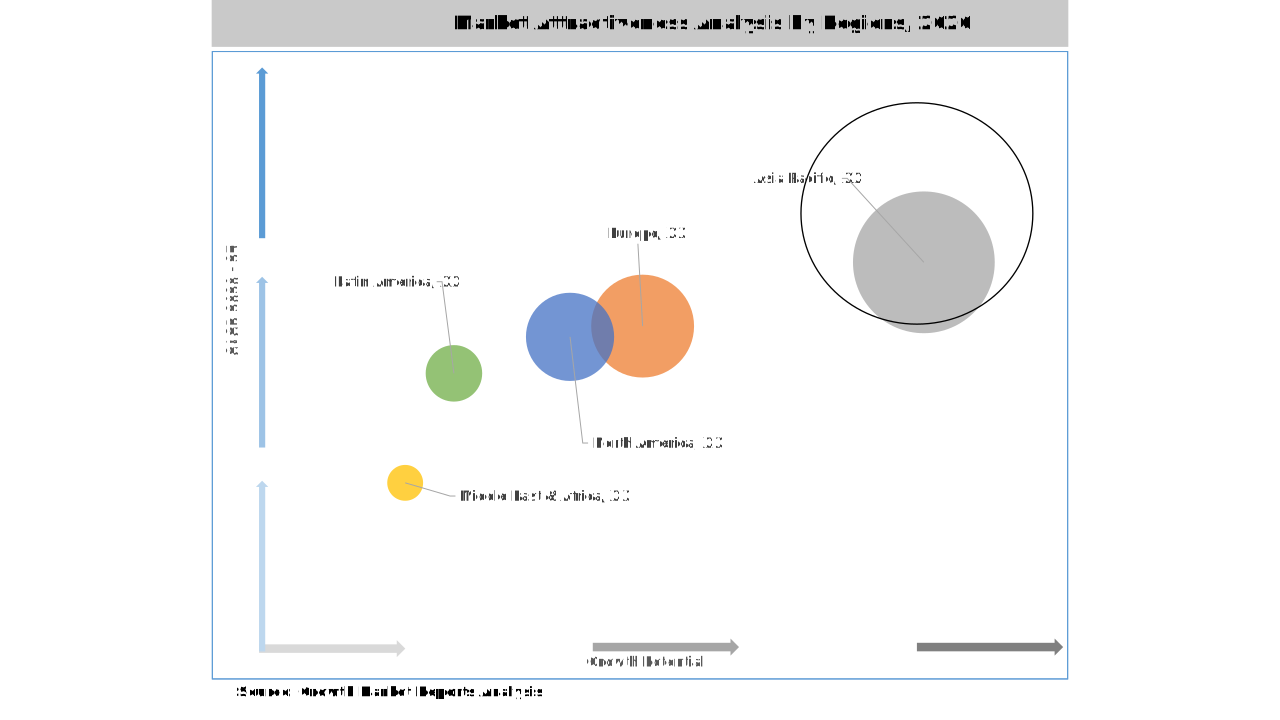
From a regional perspective, North America continues to dominate the 3D Animation Software market, accounting for the largest share in 2024 due to the presence of major animation studios, technology innovators, and a strong entertainment industry. However, the Asia Pacific region is witnessing the fastest growth, driven by rising investments in digital infrastructure, a burgeoning gaming industry, and increasing adoption of animation in education and advertising. Europe is also making significant strides, particularly in architectural visualization and automotive design. The Middle East & Africa and Latin America are gradually catching up, fueled by growing digitalization and creative industry initiatives. These regional dynamics are shaping the competitive landscape and creating new opportunities for both global and local market players.
The 3D Animation Software market is segmented by component into software and services, each playing a critical role in the overall ecosystem. The software segment encompasses a wide array of solutions, including modeling, rendering, simulation, and motion graphics tools. These software platforms are the backbone of the animation process, enabling creators to design, animate, and render complex scenes with high fidelity. Leading vendors continually enhance their offerings with new features, improved user interfaces, and integration capabilities, catering to both professional studios and independent creators. The demand for user-friendly and scalable software is particularly high, as it allows users across experience levels to produce high-quality animations efficiently.
Within the software segment, the proliferation of specialized tools tailored for industry-specific applications has contributed to market growth. For instance, architectural visualization software provides advanced rendering capabilities and real-time walkthroughs, while medical animation tools offer precise anatomical modeling and simulation features. The integration of artificial intelligence and machine learning into 3D animation software is further streamlining workflows, automating repetitive tasks, and enhancing creative possibilities. Cloud-based software solutions are gaining traction as they offer flexibility, scalability, and collaborative features that are essential in todayÂ’s distributed work environments.
The services segment, which includes consulting, training, support, and maintenance, is equally vital in supporting the adoption and effective utilization of 3D animation software. As organizations and individuals increasingly invest in advanced animation tools, the need for expert guidance and technical support has grown. Service providers assist clients with software implementation, workflow optimization, and troubleshooting, ensuring that users derive maximum value from their investments. Training services are particularly important in helping users stay updated with the latest features and best practices, thereby enhancing productivity and creative output.
Moreover, the services segment is witnessing growth due to the rising trend of outsourcing animation projects to specialized studios and freelancers. This approach enables organizations to access expert talent and sophisticated tools without the need for significant in-house investments. Managed services and subscription-based support models are becoming increasingly popular, providing users with ongoing access to updates, technical assistance, and cloud resources. As the complexity of animation projects increases, the demand for comprehensive service offerings is expected to rise, driving further expansion of this segment.
| Attributes | Details |
| Report Title | 3D Animation Software Market Research Report 2033 |
| By Component | Software, Services |
| By Deployment Mode | On-Premises, Cloud-Based |
| By Application | Media & Entertainment, Gaming, Architecture, Healthcare, Education, Advertising, Others |
| By End-User | Individual, Enterprises, Educational Institutions, Others |
| Regions Covered | North America, Europe, APAC, Latin America, MEA |
| Base Year | 2024 |
| Historic Data | 2018-2023 |
| Forecast Period | 2025-2033 |
| Number of Pages | 251 |
| Number of Tables & Figures | 358 |
| Customization Available | Yes, the report can be customized as per your need. |
The deployment mode segment of the 3D Animation Software market is bifurcated into on-premises and cloud-based solutions, each offering distinct advantages and catering to different user preferences. On-premises deployment remains a preferred choice for large studios and enterprises that require complete control over their software environment, data security, and customization. These organizations often have the necessary IT infrastructure and resources to manage and maintain complex animation workflows in-house. On-premises solutions are valued for their reliability, performance, and ability to handle resource-intensive tasks, especially in environments where data privacy and intellectual property protection are paramount.
Despite the enduring popularity of on-premises deployment, cloud-based solutions are rapidly gaining ground, particularly among small and medium-sized enterprises (SMEs), independent creators, and educational institutions. Cloud-based 3D animation software offers unparalleled flexibility, scalability, and cost-effectiveness, allowing users to access powerful tools and resources from any location with an internet connection. This deployment model eliminates the need for significant upfront investments in hardware and infrastructure, making advanced animation capabilities accessible to a broader audience. The collaborative features of cloud platforms enable real-time teamwork, file sharing, and project management, which are essential in todayÂ’s distributed and remote work environments.
The rise of cloud computing has also facilitated the integration of artificial intelligence, machine learning, and big data analytics into 3D animation workflows. Cloud-based solutions can leverage vast computational resources to accelerate rendering times, automate repetitive tasks, and enhance the quality of output. Vendors are increasingly offering subscription-based pricing models, enabling users to pay only for the features and resources they need. This approach not only reduces costs but also encourages experimentation and innovation, as users can easily scale their usage based on project requirements.
Furthermore, the adoption of hybrid deployment models is emerging as a trend, allowing organizations to combine the strengths of both on-premises and cloud-based solutions. Hybrid models enable users to maintain sensitive data and core processes on-premises while leveraging the cloud for rendering, collaboration, and backup. This flexibility is particularly valuable for enterprises with diverse needs and global teams. As the 3D Animation Software market continues to evolve, deployment mode choices will play a pivotal role in shaping user experiences and driving market growth.
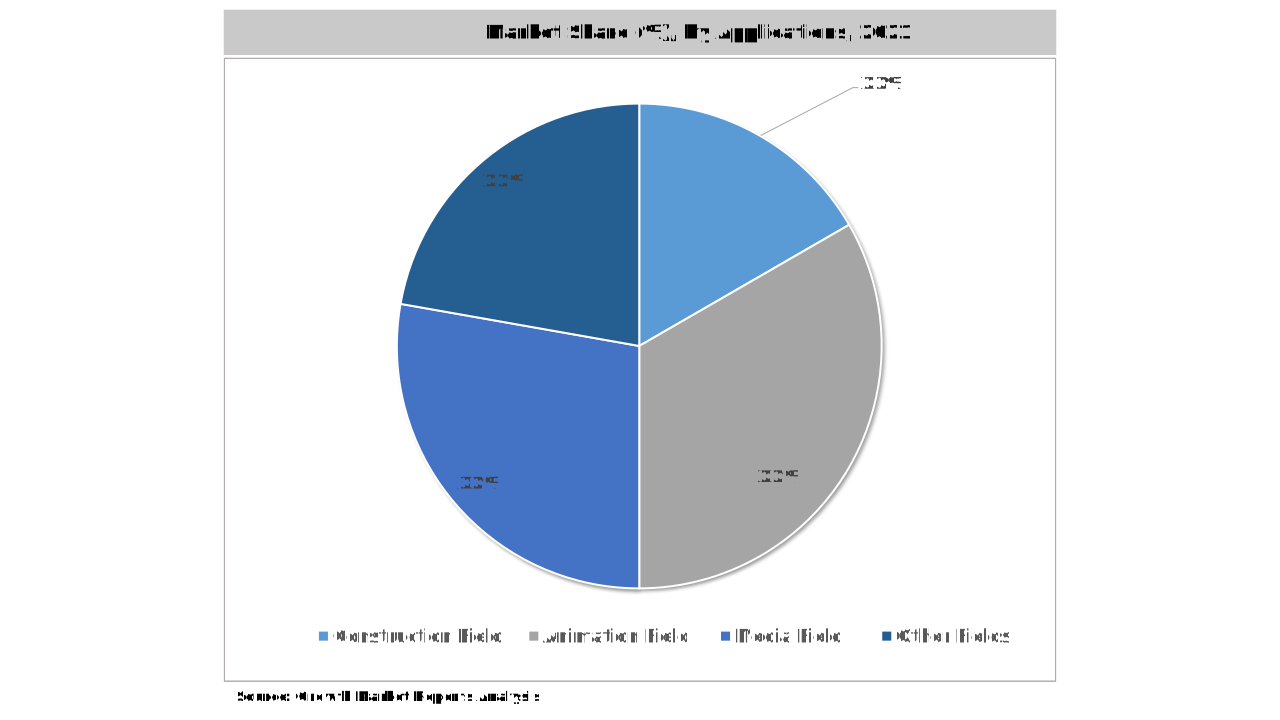
The 3D Animation Software market serves a diverse range of applications, with media and entertainment being the most prominent segment. The film, television, and gaming industries have long been at the forefront of 3D animation adoption, utilizing advanced software to create visually captivating content, special effects, and interactive experiences. The increasing demand for high-definition graphics, immersive storytelling, and realistic character animations has driven continuous innovation in animation tools. Streaming platforms and digital content creators are further amplifying the need for efficient, scalable, and feature-rich software solutions that can meet tight production deadlines and evolving audience expectations.
The gaming industry, in particular, has emerged as a major driver of the 3D Animation Software market. The shift towards hyper-realistic graphics, open-world environments, and interactive gameplay experiences necessitates the use of sophisticated animation tools. Game developers are leveraging 3D animation software for character modeling, motion capture, environment design, and real-time rendering. The integration of virtual reality (VR) and augmented reality (AR) technologies is further expanding the creative possibilities, enabling developers to create immersive and engaging gaming experiences. As the global gaming market continues to grow, the demand for cutting-edge animation software is expected to rise in tandem.
Beyond entertainment and gaming, the architecture segment is increasingly adopting 3D animation software for visualization, simulation, and client presentations. Architects and designers use animation tools to create photorealistic renderings, walkthroughs, and flythroughs that bring their designs to life. These visualizations aid in design validation, stakeholder communication, and marketing, ultimately enhancing project outcomes. The integration of 3D animation with Building Information Modeling (BIM) is streamlining design processes, reducing errors, and improving collaboration among project teams.
In healthcare, 3D animation software is revolutionizing medical education, training, and patient communication. Medical professionals use animation tools to create detailed anatomical models, simulate surgical procedures, and visualize complex biological processes. These applications enhance the quality of medical training, improve patient understanding, and support pharmaceutical marketing efforts. The education and advertising segments are also leveraging 3D animation to create engaging learning materials, interactive simulations, and compelling marketing campaigns. As organizations across industries recognize the value of visual storytelling and immersive experiences, the application landscape for 3D animation software is expected to expand further.
The end-user segment of the 3D Animation Software market encompasses individuals, enterprises, educational institutions, and others, each with unique requirements and usage patterns. Individual users, including freelance animators, independent filmmakers, and hobbyists, represent a growing segment fueled by the democratization of animation tools and the availability of affordable software solutions. These users seek intuitive interfaces, flexible licensing models, and community support to create high-quality animations for personal projects, social media content, and independent productions. The rise of online tutorials, forums, and marketplaces has empowered individuals to learn new skills, share their work, and collaborate with peers globally.
Enterprises, including animation studios, game developers, architectural firms, and advertising agencies, constitute the largest end-user segment in terms of market share and revenue. These organizations require robust, scalable, and feature-rich software solutions to manage complex projects, collaborate across teams, and deliver high-quality output under tight deadlines. Enterprises often invest in customized workflows, integration with other design tools, and dedicated support services to optimize their animation processes. The need for data security, intellectual property protection, and compliance with industry standards drives the preference for enterprise-grade solutions and on-premises deployments.
Educational institutions are increasingly adopting 3D animation software to enhance their curricula and equip students with industry-relevant skills. Universities, colleges, and vocational schools offer specialized courses in animation, game design, and digital arts, leveraging professional-grade software to provide hands-on training. The availability of educational licenses, cloud-based platforms, and remote learning resources has made it easier for institutions to incorporate 3D animation into their programs. Partnerships between software vendors and educational organizations are fostering talent development and bridging the gap between academia and industry.
Other end-users, such as government agencies, non-profit organizations, and research institutions, are also exploring the potential of 3D animation software for various applications. These include scientific visualization, public awareness campaigns, and cultural heritage preservation. As the versatility and accessibility of animation tools continue to improve, the end-user base is expected to diversify further, creating new opportunities for market growth and innovation.
The 3D Animation Software market presents numerous opportunities for growth and innovation, particularly in emerging applications such as virtual reality, augmented reality, and real-time rendering. The convergence of animation with AI and machine learning is enabling the automation of complex tasks, enhancing creative possibilities, and reducing production times. The expansion of cloud-based platforms is democratizing access to advanced animation tools, allowing small businesses, startups, and individual creators to participate in the digital content economy. Moreover, the growing demand for personalized and interactive experiences in marketing, education, and healthcare is driving the development of new animation solutions tailored to specific industry needs.
Another significant opportunity lies in the integration of 3D animation software with other digital technologies, such as IoT, big data analytics, and simulation platforms. This integration is opening up new use cases in fields like smart city planning, industrial design, and scientific research. The rise of e-learning and remote collaboration is further boosting the demand for animation tools that facilitate engaging and effective communication. As global internet penetration and digital literacy continue to rise, the addressable market for 3D animation software is expected to expand, creating ample opportunities for vendors, service providers, and content creators.
Despite the positive outlook, the 3D Animation Software market faces certain challenges that could restrain growth. One of the primary threats is the high cost of advanced software solutions and the steep learning curve associated with mastering professional-grade tools. Small businesses and individual users may find it difficult to justify the investment in expensive licenses and training programs. Additionally, the rapid pace of technological change requires continuous updates and skill development, which can strain resources and hinder adoption. Data security, intellectual property protection, and compatibility issues also pose risks, particularly in cloud-based and collaborative environments. Vendors must address these challenges by offering flexible pricing models, user-friendly interfaces, robust security features, and comprehensive support services to sustain long-term market growth.
North America remains the largest regional market for 3D Animation Software, with a market size of USD 8.2 billion in 2024. The region is home to leading animation studios, technology innovators, and a vibrant entertainment industry that drives the adoption of advanced animation tools. The presence of major software vendors, a skilled workforce, and a culture of innovation further enhance North AmericaÂ’s leadership position. The demand for high-quality visual content in film, television, gaming, and advertising continues to fuel market growth. Additionally, the regionÂ’s strong digital infrastructure and widespread adoption of cloud computing are supporting the expansion of cloud-based animation solutions.
The Asia Pacific region is experiencing the fastest growth in the 3D Animation Software market, with a projected CAGR of 14.2% from 2025 to 2033. The market size in Asia Pacific reached USD 5.7 billion in 2024, driven by increasing investments in digital infrastructure, a rapidly expanding gaming industry, and rising demand for animation in education and advertising. Countries such as China, Japan, India, and South Korea are emerging as key hubs for animation production and innovation. Government initiatives to promote digital skills, the proliferation of smartphones and internet access, and the growth of local content creation are further accelerating market development in the region.
Europe accounted for USD 4.1 billion in 2024 and is making significant advances, particularly in architectural visualization, automotive design, and scientific research. The regionÂ’s strong emphasis on design, engineering, and cultural heritage is driving the adoption of 3D animation tools across various sectors. Collaborative projects between academic institutions, industry players, and government agencies are fostering innovation and talent development. The Middle East & Africa and Latin America are gradually increasing their market presence, with a combined market size of USD 2.6 billion in 2024. These regions are benefiting from growing digitalization, creative industry initiatives, and increasing adoption of animation in advertising, education, and entertainment.
The competitive landscape of the 3D Animation Software market is characterized by intense rivalry among leading vendors, continuous innovation, and a dynamic mix of global and regional players. Major companies are investing heavily in research and development to enhance their software offerings, integrate emerging technologies, and expand their customer base. The market is witnessing frequent product launches, strategic partnerships, mergers and acquisitions, and collaborations aimed at strengthening market positions and addressing evolving customer needs. Vendors are also focusing on user experience, scalability, and interoperability to differentiate their solutions and capture new growth opportunities.
The shift towards cloud-based platforms and subscription-based pricing models is reshaping the competitive dynamics, enabling smaller vendors and new entrants to compete with established players. Open-source and community-driven animation tools are gaining traction among individual creators and educational institutions, providing cost-effective alternatives to proprietary software. However, established vendors maintain a competitive edge through comprehensive feature sets, robust support services, and extensive partner networks. The ability to offer end-to-end solutions, including software, services, and training, is becoming a key differentiator in the market.
Customer-centric innovation is at the core of the competitive strategy, with vendors prioritizing the development of intuitive interfaces, AI-powered automation, and seamless integration with other design and production tools. The growing importance of interoperability and cross-platform compatibility is driving efforts to create open ecosystems that facilitate collaboration and workflow efficiency. Security, data privacy, and compliance are also critical factors influencing vendor selection, particularly among enterprise customers and organizations handling sensitive content.
Key players in the 3D Animation Software market include Autodesk Inc., Adobe Systems Incorporated, Maxon Computer GmbH, SideFX (Side Effects Software Inc.), NewTek Inc., Corel Corporation, and Toon Boom Animation Inc.. Autodesk is renowned for its industry-leading solutions such as Maya and 3ds Max, which are widely used in film, gaming, and design. Adobe offers a comprehensive suite of creative tools, including After Effects and Animate, catering to multimedia professionals and content creators. Maxon is known for Cinema 4D, a popular choice among motion graphics artists and designers. SideFX specializes in Houdini, a powerful tool for procedural animation and visual effects. NewTek and Corel provide innovative solutions for video production and digital art, while Toon Boom focuses on 2D and 3D animation for television and film.
These companies are continuously enhancing their product portfolios through technological advancements, customer feedback, and strategic acquisitions. Partnerships with educational institutions, content creators, and industry associations are fostering talent development and expanding market reach. As the 3D Animation Software market continues to evolve, competition is expected to intensify, driving further innovation, price competitiveness, and value-added services for customers worldwide.
The 3D Animation Software market has been segmented on the basis of
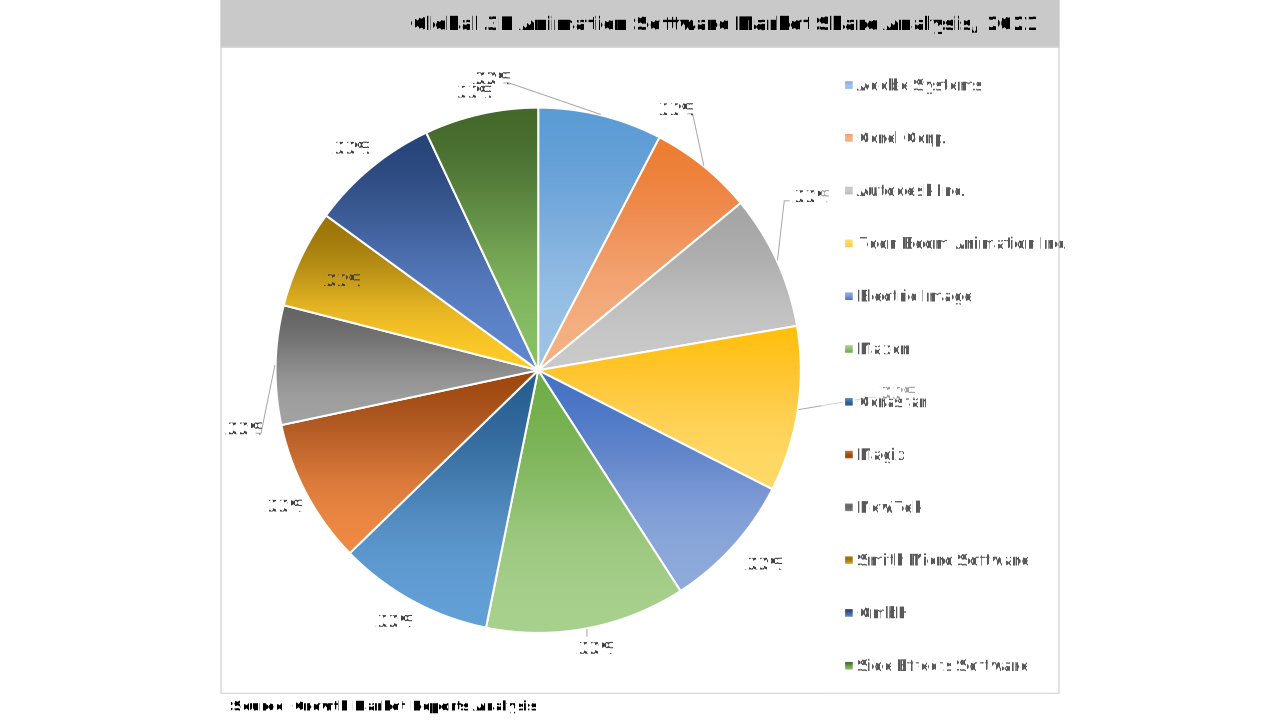
Key players in the market include Adobe Systems, Corel Corp., Autodesk Inc., Toon Boom Animation Inc., Electric Image, Maxon, Corastar, Magix, NewTek, Smith Micro Software, GmbH, and Side Effects Software. These players are implementing numerous strategic such as mergers and acquisitions, strategic partnerships, new product development, and capacity expansions and majorly focuses on innovations and new technological progress.
Yes, the 3D Animation Software Market Research Report 2033 can be customized according to specific client needs.
Challenges include the high cost of advanced software, steep learning curves, data security concerns, and the need for continuous updates and skill development.
Key trends include the rise of cloud-based and AI-powered animation tools, integration with VR/AR technologies, and growing use in healthcare and architectural visualization. Opportunities exist in real-time rendering, e-learning, and personalized content creation.
Major applications include film and television production, gaming, architectural visualization, medical education and training, advertising, and educational content creation.
Key players include Autodesk Inc., Adobe Systems Incorporated, Maxon Computer GmbH, SideFX, NewTek Inc., Corel Corporation, Toon Boom Animation Inc., Blender Foundation, Pixologic, The Foundry Visionmongers Ltd., and others.
North America leads the market due to its strong entertainment industry and major studios, while Asia Pacific is the fastest-growing region, driven by digital infrastructure investments and a booming gaming industry.
Artificial intelligence is streamlining animation workflows by automating repetitive tasks, enhancing creative possibilities, and accelerating rendering times. AI integration is a key factor in the market’s evolution.
3D animation software is available in on-premises and cloud-based deployment modes. On-premises solutions are favored by large enterprises for control and security, while cloud-based solutions offer flexibility, scalability, and cost-effectiveness, especially for SMEs and educational institutions.
Key industries driving demand include media and entertainment, gaming, architecture, healthcare, education, and advertising, with media & entertainment and gaming being the most prominent.
The 3D Animation Software market reached USD 20.6 billion in 2024 and is projected to grow at a CAGR of 11.4% from 2025 to 2033, reaching USD 55.5 billion by 2033.